Adding Ginger to Curry: Boost Flavor and Health
When working with Adding ginger to curry, the practice of mixing fresh or ground ginger into a simmering curry to lift aroma, heat, and nutrition. Also known as ginger curry infusion, it brings a zing that balances other spices. The core ingredient ginger, a rhizome with a sharp, citrus‑spicy profile and anti‑inflammatory compounds works hand‑in‑hand with the dish itself curry, a sauce‑based preparation built around a blend of spices, herbs, and often vegetables or meat. Together they form a classic spice blend, a combination of ground seeds, powders, and fresh aromatics that defines regional Indian flavors. Adding ginger to curry enhances flavor, supports digestion, and adds a fresh brightness that many home cooks crave.
When and How to Add Ginger for Maximum Impact
Timing is the secret sauce. adding ginger to curry early in the cooking process extracts deep, mellow notes, while a late splash preserves a bright bite. Fresh ginger, sliced thin or grated, releases its volatile oils within the first few minutes of sautéing, creating a fragrant base that melds with cumin, coriander, and turmeric. Ground ginger powder, on the other hand, dissolves quickly and is best added when you pour in the liquid – it thickens the sauce and spreads heat evenly. Here are three key attributes of ginger that guide its use:
- Flavor intensity – fresh ginger offers sharp, citrusy heat; ground ginger provides warm, lingering spice.
- Form – slices, paste, or powder each demand a different moment in the recipe.
- Health boost – ginger contains gingerol, which aids digestion and reduces inflammation.
Beyond timing, pairing matters. Ginger loves to dance with garlic, mustard seeds, and fenugreek; together they build a complex foundation that supports the main protein or veg. In a lentil dal, a ginger‑garlic paste added at the boil cuts the earthiness and lifts the overall profile. In a chicken tikka masala, a pinch of ginger powder in the spice rub ensures the meat stays juicy and aromatic after grilling. Health‑wise, a tablespoon of grated ginger per pot of curry adds a measurable boost of antioxidants, helping to balance the richness of ghee or cream often used in Indian cooking. Whether you’re a beginner looking for a quick flavor upgrade or an experienced cook fine‑tuning a regional recipe, understanding the role of ginger lets you control heat, aroma, and nutrition with confidence. Below you’ll find a curated set of articles that dive deeper into related topics – from mastering curry spice blends to exploring the science behind ginger’s health benefits – all aimed at helping you get the most out of every spoonful.
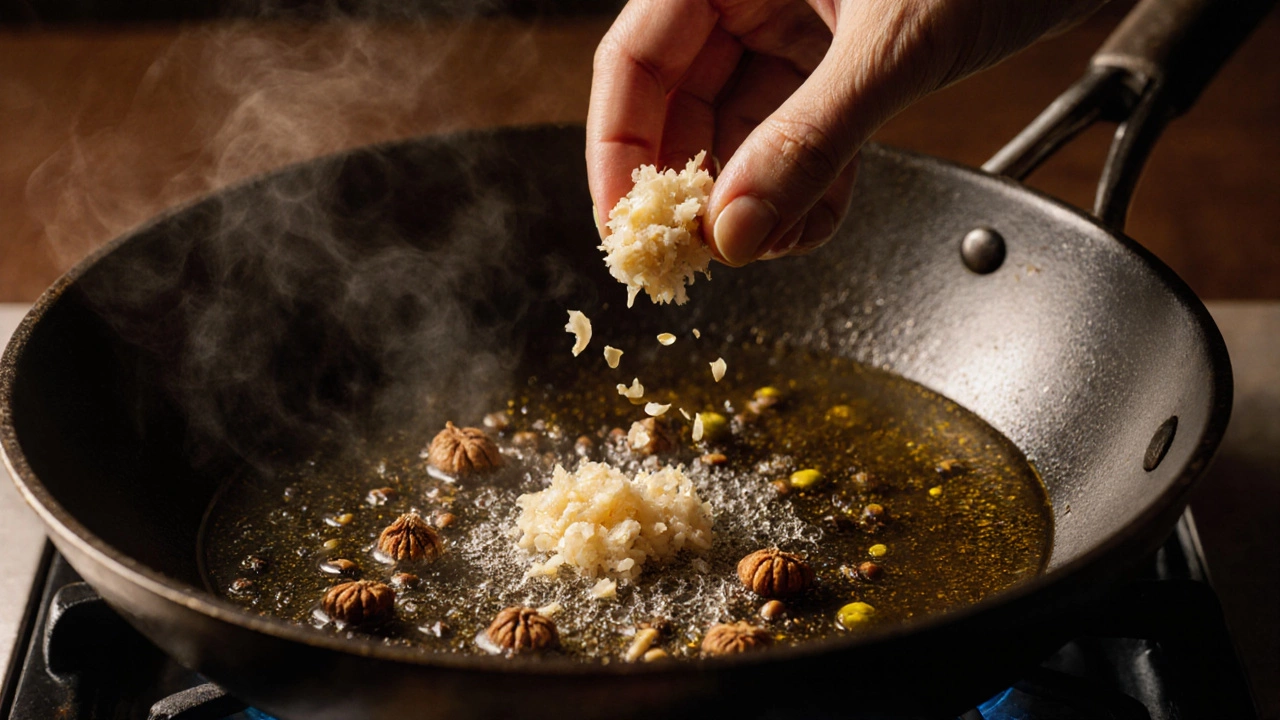
Perfect Timing: When to Add Garlic and Ginger to Curry
Learn the exact moments to add garlic and ginger in curry for maximum flavor, avoid bitterness, and boost health benefits with practical timing tips.