Healthier Indian Cooking: A Practical Guide to Nutritious Recipes
When talking about healthier Indian cooking, the practice of preparing Indian dishes with a focus on nutrition, balanced ingredients, and mindful techniques. Also known as healthy Indian cuisine, it blends tradition with modern health insights to keep flavors bold while cutting excess fat, sugar, and sodium.
One of the biggest drivers behind healthier Indian cooking is nutrition, the science of how food supplies essential vitamins, minerals, protein, and energy to the body. Good nutrition guides us to pick ingredients that are naturally rich in micronutrients, like lentils, leafy greens, and whole grains. Pairing these staples with superfoods, exceptionally nutrient‑dense foods such as moringa leaves, quinoa, or amaranth can boost the vitamin and antioxidant content of any meal without sacrificing taste.
These two entities—nutrition and superfoods—form a core semantic triple: healthier Indian cooking encompasses nutrient‑dense superfoods. Another triple follows naturally: healthier Indian cooking requires mindful ingredient choices. By selecting fresh, minimally processed items, cooks can keep the natural flavor profile while reducing hidden calories.
Key Areas to Make Your Indian Meals Healthier
First, think about the protein source. Traditional meat‑heavy dishes can be swapped with plant‑based options like paneer, tofu, or legumes. Articles on our site explain the paneer‑tofu taste battle and outline how legumes such as dal offer high protein with low saturated fat. Second, watch the cooking method. Steaming, grilling, or pressure‑cooking preserves nutrients better than deep‑frying. For instance, mastering the perfect rice soaking time for dosa batter not only improves texture but also reduces glycemic impact.
Food safety also plays a vital role in a healthier diet. Knowing whether a 7‑day‑old paneer is still safe, or how long homemade chutney lasts, prevents food‑borne issues that could undo all your nutritious efforts. Our guides on paneer shelf life and chutney storage give clear, actionable timelines, so you never have to guess.
Another important facet is the Indian vegetarian meal. Vegetarian dishes aren’t just meat‑free; they’re structured around a balanced mix of carbs, protein, and healthy fats. By understanding the nutrition facts of dal—whether it leans more toward protein or carbs—you can build plates that keep you full and energized throughout the day.
Flavor isn’t sacrificed in the quest for health. Adding lemon to biryani, for instance, brightens taste while helping the rice stay fluffy, and the acidity aids digestion. Similarly, using curd in dosa batter fuels fermentation, creating a lighter, more digestible crepe. These small tweaks illustrate how traditional techniques can align with modern wellness goals.
Finally, keep an eye on hidden calories. Items like naan might seem harmless but can become junk food if made with too much refined flour or ghee. Our deep dive into naan nutrition shows you how to tweak the recipe—using whole‑wheat flour or baking instead of frying—to keep it a wholesome part of your diet.
All these pieces—nutrient‑dense foods, safe handling, smart protein swaps, and flavor‑preserving tricks—connect back to the central idea of healthier Indian cooking. Below you’ll find a curated list of articles that walk you through each topic with real‑world tips, step‑by‑step instructions, and the science behind why they work. Dive in and start transforming your kitchen one healthy habit at a time.
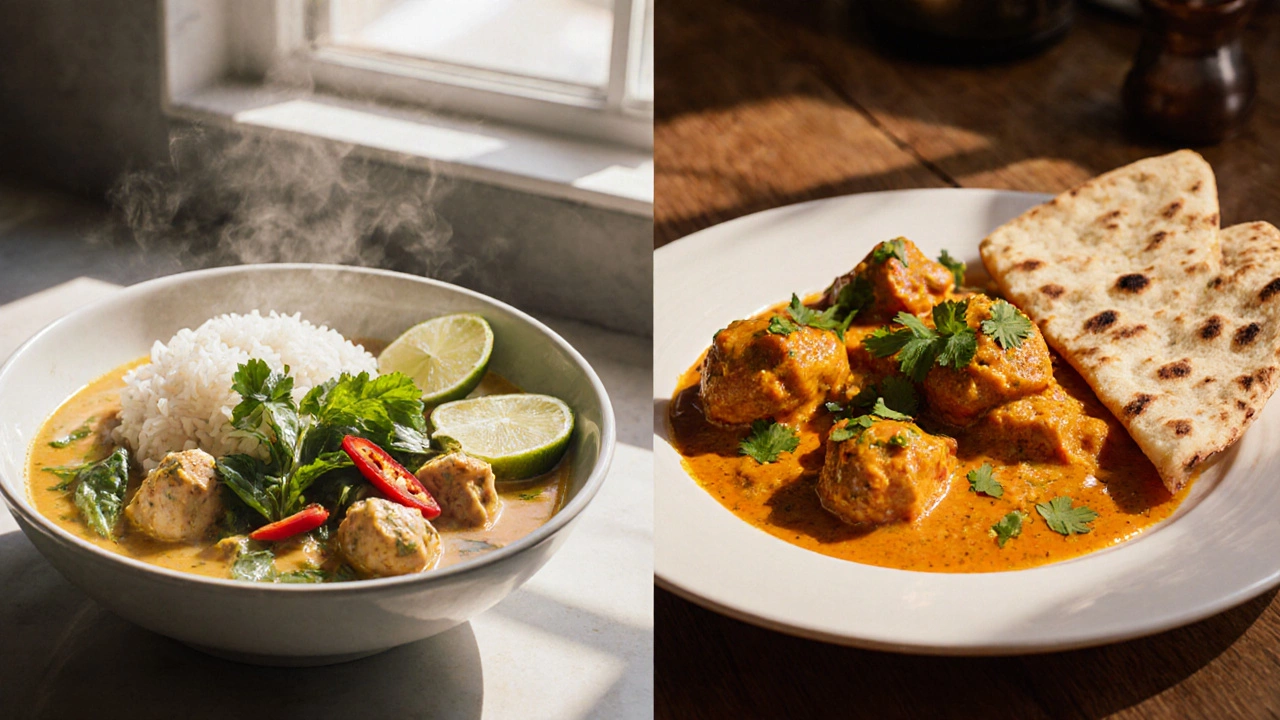
Thai vs Indian Food: Which Is Healthier?
Compare Thai and Indian cuisines on calories, fats, sugar, sodium, and nutrients. Learn which dishes are healthier and get practical tips plus easy recipes.