Indian word for sugar: Meaning, varieties, and how to use them
When you hear the Indian word for sugar the term used across India to describe sweetening agents, most often refined sugar chini, you’re actually stepping into a linguistic map that stretches from Hindi to Tamil, Bengali to Marathi. In the north, people often say “chini” while in the south “sakkarai” pops up, and the west prefers “shakkar”. All these words point to the same basic ingredient – sucrose – but they carry cultural baggage. For instance, the word “shakkar” originally came from Persian traders who introduced the crystalline sweet to the subcontinent centuries ago, and it still shows up in old family recipes. Understanding these variations matters when you read a recipe that calls for “chini” and you wonder if it’s the same as your supermarket sugar. It also helps you decode grocery lists, especially in regional markets where the name on the packet might be in the local script. Knowing which word is used where can save you a trip back home for the right ingredient, and it lets you follow cooking instructions without second‑guessing the sweetener’s form.
Common sweeteners that share the same name
Beyond plain refined sugar, Indian kitchens rely heavily on jaggery an unrefined cane sugar block, known as gur, gud, or sakkarai in different languages gur, gud. Jaggery is a staple in desserts like payasam and savory dishes such as puliogare, where its deep caramel notes balance spicy heat. Because it’s less processed, jaggery retains trace minerals like iron and calcium, which is why many health‑focused articles on our site compare its glycemic impact to that of refined sugar. Another term you’ll encounter is shakkar the Hindi word for refined sugar, often used in festive sweets and tea chini. While shakkar and chini are essentially the same product, the context in which they appear can hint at the dish’s regional origin – for example, “shakkar” is more common in Punjabi recipes, whereas “chini” pops up in Bengali sweets. Knowing the difference helps you choose the right texture: shakkar dissolves quickly in hot liquids, perfect for syrups, while jaggery melts slower, giving a richer mouthfeel to slow‑cooked treats.
Why does this matter for you today? Whether you’re baking a batch of gulab jamun, trying a low‑calorie version of lassi, or just swapping a spoonful of sugar for a healthier alternative, the name you see in the recipe tells you about the sweetener’s processing, flavor profile, and how it behaves in heat. Our collection of articles below walks you through the cultural backstory of these terms, offers practical tips for substituting jaggery for refined sugar, and even explores the health implications of each choice. You’ll see how the Indian word for sugar connects to topics like vegetarian cooking, regional food laws, and modern nutrition trends. Dive in to discover the sweet side of Indian cuisine, from ancient market stalls to today’s kitchen hacks.
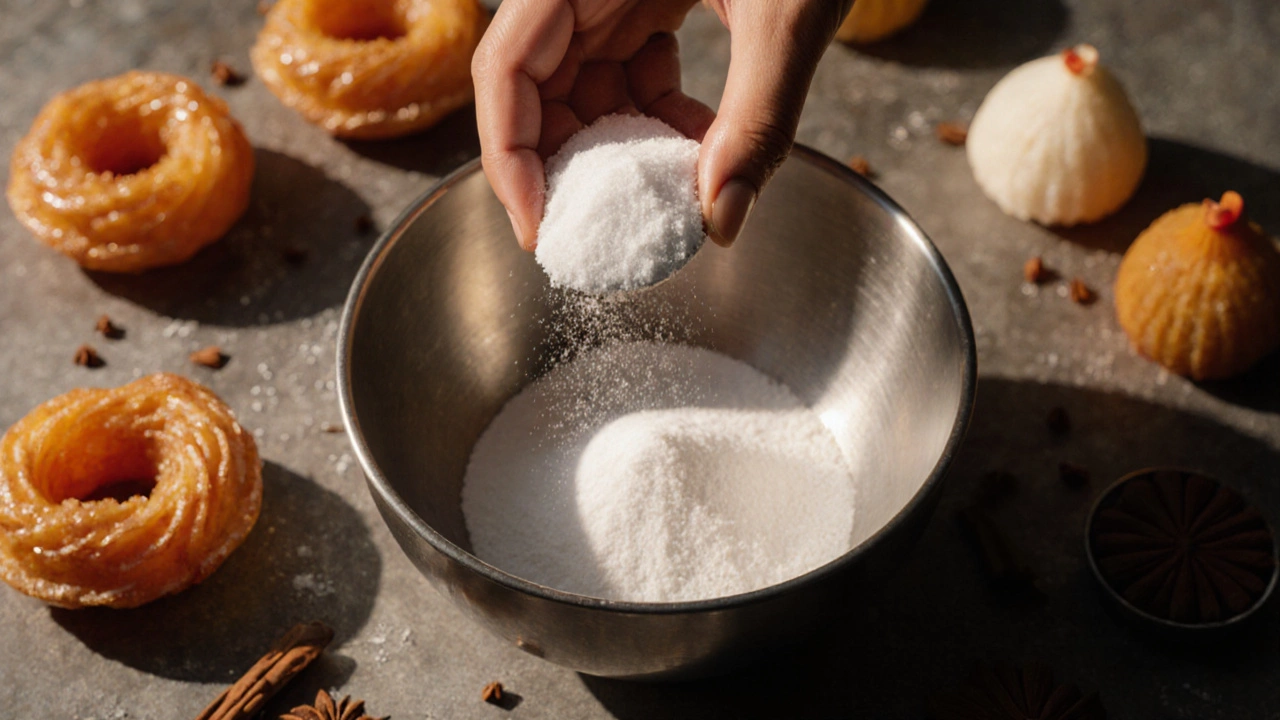
What’s the Indian Word for Sugar? Hindi, Regional Terms & Sweet Recipes
Discover the Indian word for sugar, its regional variations like shakkar and cheeni, and how these terms shape classic sweet recipes.