How to Eat Indian Chutney: A Complete Guide to Types, Pairings & Serving
 Jul, 14 2026
Indian Chutney Pairing Finder
Not sure which chutney goes with your meal? Select your main dish details below to find the best flavor match.
Why it works:
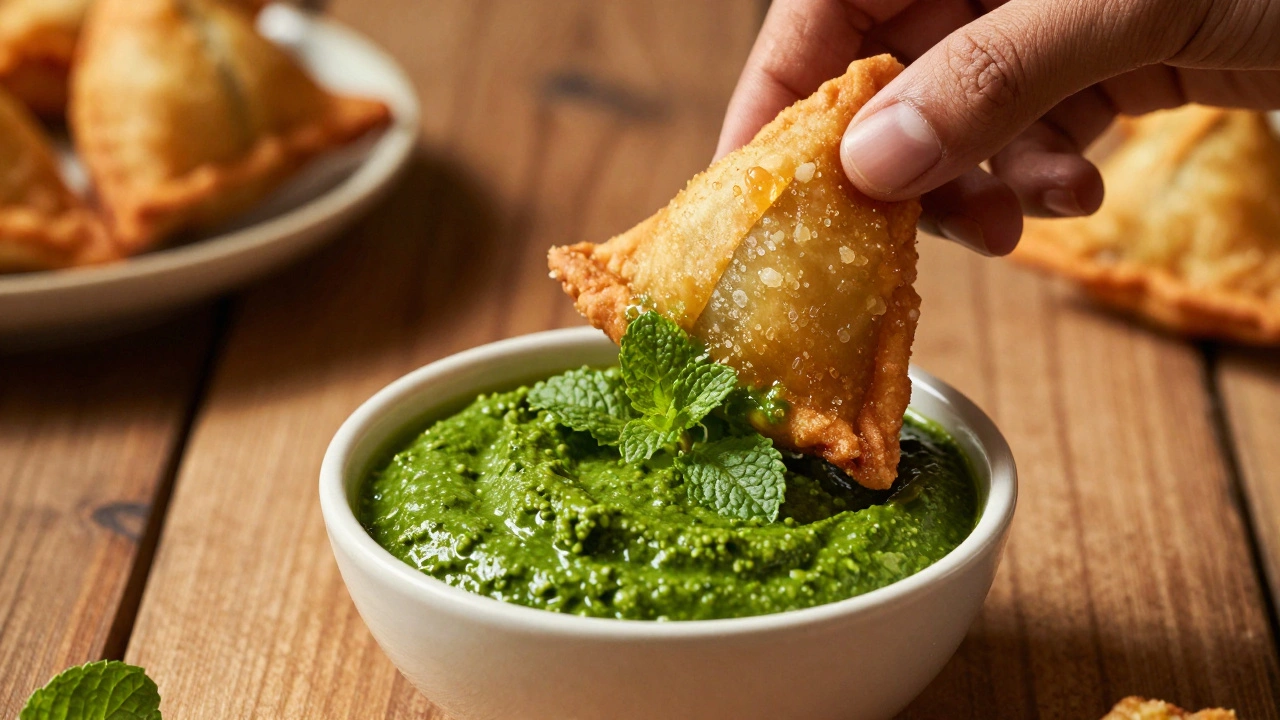
Picture this: you are sitting down for a meal of hot, crispy samosas. You dip one into a small bowl of bright green paste, and suddenly, the fried dough isn't just salty-it's tangy, spicy, and alive. That magic sauce is Indian chutney. But here is the problem most people face when they first encounter it: there are dozens of types, colors, and textures, and no clear rulebook on which one goes with what. Do you eat it like jam? Like salsa? Or like a dip?
If you have ever looked at a plate of chaat or a thali and felt confused about where the chutney fits in, you are not alone. In India, chutney is not just a side dish; it is the emotional core of many meals. It balances heat, adds freshness, and cuts through richness. Today, we will break down exactly how to eat Indian chutney, from the classic street food dips to the sweet accompaniments for savory curries.
What Exactly Is Indian Chutney?
To understand how to eat it, you first need to know what you are holding. Unlike Western chutneys, which often refer to thick, sweet jams made from fruit (like apple or mango), Indian chutney is a broad category of sauces and condiments. They can be wet or dry, raw or cooked, sweet or fiery hot.
Think of chutney as the bridge between ingredients. If your main dish is heavy and oily, chutney provides acidity and crunch. If your snack is bland, chutney provides punch. The central entity here is versatility. Whether it is a smooth puree of mint leaves or a coarse grind of roasted peanuts, the goal is always flavor enhancement.
Is Indian chutney the same as pickle?
No. While both are condiments, pickles (achar) are preserved in oil or vinegar and last for months or years. Chutneys are typically fresh, consumed within days, and act more like a sauce or dip rather than a preservation method.
The Two Main Families of Chutney
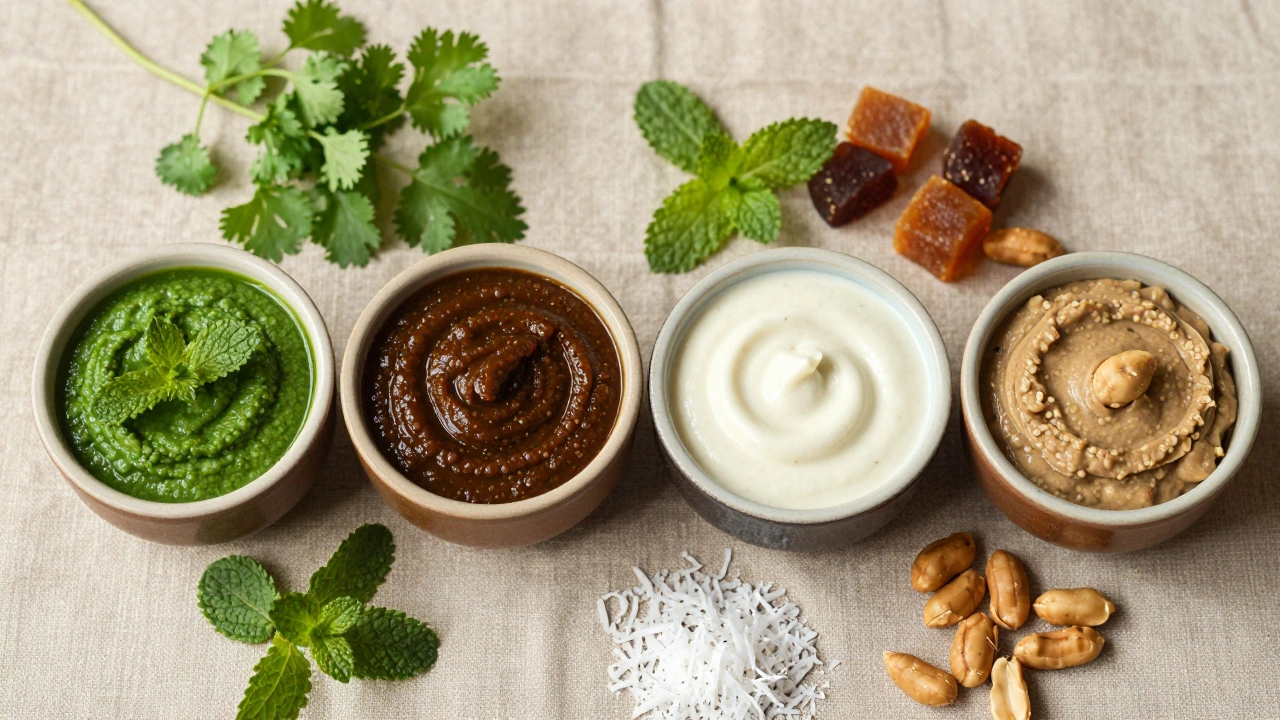
Before you take a bite, look at the color and texture. This tells you almost everything you need to know about how to use it. Broadly, Indian chutneys fall into two camps: Green Chutneys and Tamarind/Date Chutneys.
Green Chutney (Hari Chutney) is usually made from cilantro (coriander leaves), mint, green chilies, garlic, and lemon juice. Sometimes yogurt or tamarind is added for creaminess. This chutney is cooling yet spicy. It is the standard partner for fried foods. When you eat pakoras (vegetable fritters) or vada (savory donuts), you dip them in green chutney. The coolness of the mint counteracts the heat of the frying oil, while the chili gives it a kick.
Tamarind and Date Chutney (Meetha Chutney) is sweeter, thicker, and darker. Made from tamarind pulp, jaggery (unrefined cane sugar), and spices like cumin and ginger, this chutney brings sweetness to the table. You do not usually dip things directly into it because it is sticky. Instead, it is drizzled over snacks like bhel puri or sev puri. It pairs beautifully with spicy elements because the sugar neutralizes the capsaicin burn.
Classic Pairings: What Goes With What?
One of the biggest mistakes beginners make is using the wrong chutney for the dish. Here is a simple cheat sheet to help you navigate your next Indian meal.
| Dish Type | Recommended Chutney | Why It Works |
|---|---|---|
| Fried Snacks (Samosas, Pakoras) | Green Mint-Cilantro Chutney | Cuts through grease; adds freshness |
| Savory Salads (Bhel Puri, Sev Puri) | Tamarind-Jaggery Chutney | Adds sweetness to balance spicy toppings |
| Grilled Meats/Tandoori Chicken | Mint-Yogurt Chutney (Raita style) | Cools the palate from charcoal smoke and spice |
| Rice and Lentils (Dal Rice) | Coconut Chutney | Richness complements the earthiness of lentils |
| Paneer Dishes (Palak Paneer) | Tomato-Onion Chutney | Acidity cuts through the heaviness of cheese |
Notice the pattern? Fried needs fresh. Spicy needs sweet. Heavy needs acidic. Keep this rule in mind, and you will never be lost.
Regional Variations You Should Know
India is vast, and so are its chutneys. Understanding regional styles helps you appreciate the depth of flavor profiles.
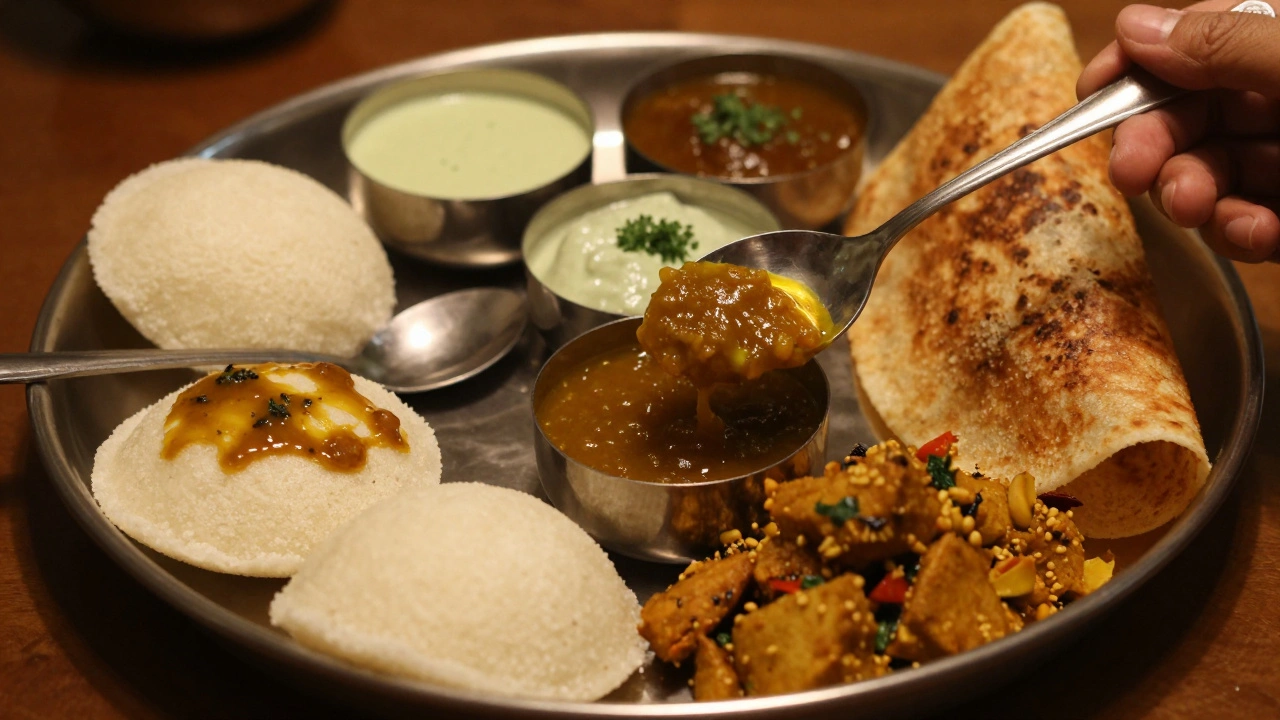
In South India, Coconut Chutney is king. Made by grinding grated coconut with tempered mustard seeds, curry leaves, and dried red chilies, it is creamy and mild. It is traditionally served with dosa (fermented crepes) and idli (steamed rice cakes). You spread it on top or dip the soft idli into it. It acts as a binding agent that makes the meal feel complete.
In West India, particularly Gujarat and Maharashtra, Peanut Chutney is common. Roasted peanuts are ground with garlic and chilies. It has a nutty, earthy flavor that stands up well to strong-tasting vegetables like eggplant or bitter gourd.
In North India, Imli (Tamarind) Chutney dominates street food culture. If you are eating pani puri (hollow fried balls filled with spiced water), the dark brown liquid inside is often a variation of this chutney. It is intensely sour and sweet, designed to explode on your tongue.
How to Serve and Store Chutney
Serving temperature matters. Most green chutneys taste best at room temperature or slightly chilled. Cold chutney numbs the flavors slightly, which can be good if it is very spicy, but bad if you want to taste the herbs. Always serve chutney in small bowls so guests can mix their own ratios. Some people like it 50% green and 50% tamarind; others prefer it all one way.
Storage is another key aspect. Fresh green chutney oxidizes quickly-the bright green turns brown within hours. To keep it vibrant, add a squeeze of lemon juice and store it in an airtight container in the refrigerator. It lasts 3-4 days. Tamarind chutney, due to its high sugar content, lasts longer-up to two weeks in the fridge. Coconut chutney is delicate and should ideally be eaten the same day it is made.
Common Mistakes to Avoid
Even experienced cooks mess up chutney sometimes. Here are three pitfalls to watch out for:
- Over-blending: Unless you are making a smooth tomato chutney, leave some texture. A completely smooth chutney lacks mouthfeel. Pulse your blender instead of running it continuously.
- Ignoring Balance: Taste as you go. If your green chutney is too spicy, add more cilantro or a pinch of sugar. If it is too flat, add lemon juice or salt. Salt enhances the flavor of herbs; don't skip it.
- Using Stale Herbs: Chutney relies heavily on fresh aromatics. Wilting mint or slimy cilantro will ruin the batch. Use crisp, bright greens.
Beyond the Plate: Creative Uses
You don't have to limit yourself to traditional pairings. Indian chutney works wonders in fusion cooking. Try spreading a thin layer of mint chutney on a sandwich before adding grilled chicken. It replaces mayo and adds a huge flavor boost. Drizzle tamarind chutney over roasted sweet potatoes for a sweet-and-sour glaze effect. Even a spoonful of peanut chutney mixed into salad dressing creates a rich, nutty vinaigrette.
The beauty of chutney is its adaptability. It is not bound by rigid rules, only by the principle of balance. Once you understand that chutney is there to contrast and complement, you can experiment freely.
Can I freeze homemade chutney?
Yes, but texture may change. Green chutney freezes well in ice cube trays for easy portioning. Thaw overnight in the fridge. Coconut chutney does not freeze well as the coconut separates and becomes watery upon thawing.
Is chutney vegan?
Most basic chutneys are vegan. However, some recipes include yogurt, butter (ghee), or jaggery (which may be processed with bone char, though rare in India). Check labels if you are strictly vegan.
Why does my green chutney turn brown?
This is oxidation. Exposure to air causes chlorophyll to break down. To prevent this, press plastic wrap directly onto the surface of the chutney in the storage container to eliminate air pockets, and add extra lemon juice.
What is the difference between chutney and relish?
Relish is typically chunkier and often includes onions or peppers, used mainly with meats or burgers. Chutney is smoother, herb-forward, and integral to Indian cuisine, serving as both a dip and a flavor enhancer for vegetarian dishes.
Can I use store-bought chutney?
Yes, especially for convenience. Look for brands that list simple ingredients without preservatives. However, fresh homemade chutney will always have superior aroma and flavor intensity.