Is Chutney Smooth or Chunky? The Real Difference and How to Get It Right
 Dec, 19 2025
Ever made a chutney and wondered why it didn’t taste right-even when you used the same ingredients as your grandma? It’s not the spices. It’s the texture. Chutney isn’t just a condiment. It’s a mood. A crunch. A burst. And whether it’s smooth or chunky changes everything.
Why Texture Matters More Than You Think
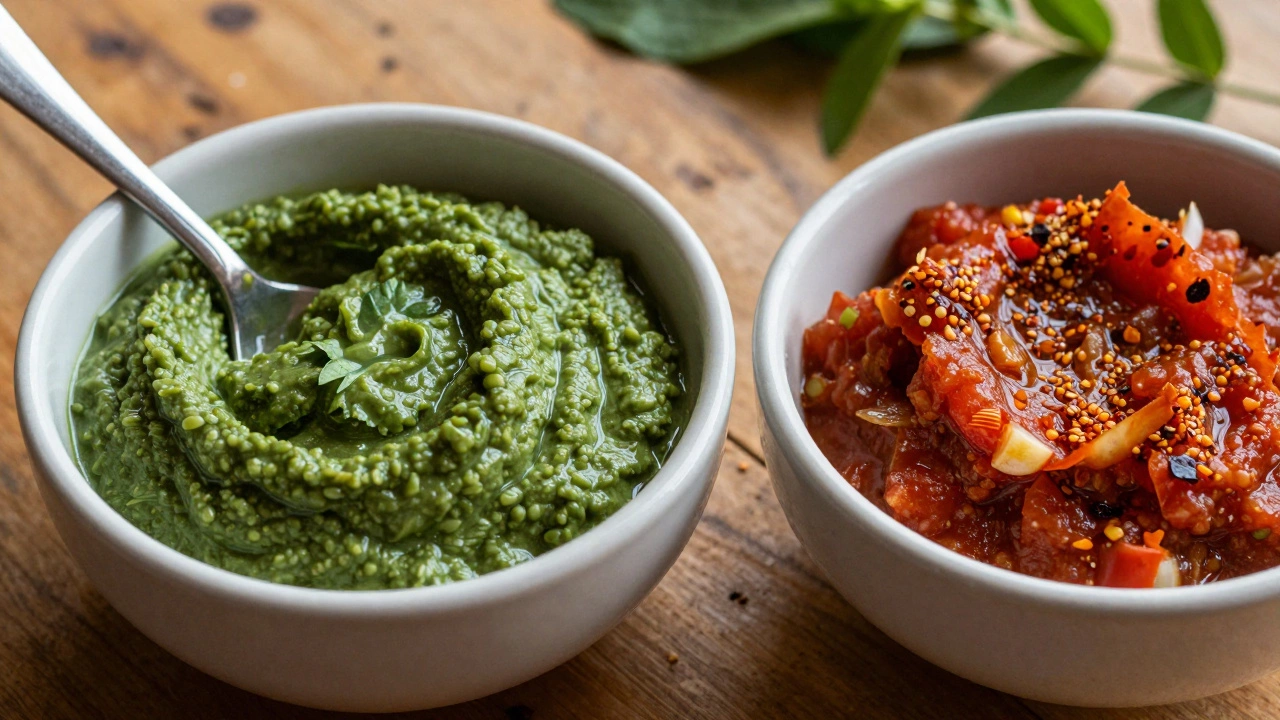
Chutney isn’t a one-size-fits-all sauce. In Indian kitchens, texture isn’t an afterthought-it’s a decision. A smooth coconut chutney clings to dosa like silk. A chunky tomato chutney gives you a little fight with every bite. Both are correct. Both are traditional. But mixing them up? That’s where things go wrong.
Think about it: if you pour a smooth mint chutney over a plate of chaat, it disappears. No texture, no contrast, no joy. But if you spoon a chunky version on top, each bite gives you a burst of fresh cilantro, a pop of green chili, a little crunch of ginger. That’s the magic. Texture isn’t just about how it looks-it’s about how it feels in your mouth and how it interacts with the food it’s served with.
When Smooth Is the Only Way
Some chutneys demand smoothness. Coconut chutney, for example. In Tamil Nadu and Kerala, it’s blended until it’s velvety, almost like a sauce. Why? Because it’s meant to be spread. On hot idlis, on steamed dosas, even on rice. If it’s chunky, it doesn’t coat. It sits. And that’s not how it’s meant to be eaten.
Same goes for mint-coriander chutney served with samosas or pakoras. That’s the one you dip into. A smooth texture lets the flavors stick to the fried snack without falling off. It’s thin enough to flow, thick enough to cling. The secret? Blend it with just enough water-usually no more than 2 tablespoons-to get that glossy, pourable consistency. Add ice cubes while blending. It keeps the color bright and stops the heat from cooking the herbs.
And then there’s tamarind chutney-the sweet-tangy one used in pani puri and vada pav. It’s always smooth. Why? Because it’s meant to be sucked through a hole, not chewed. Chunky tamarind chutney would clog the puri. No one wants that.
Chunky Chutney Has Its Place Too
Now, let’s talk about the ones that should never be smooth. Tomato chutney, for instance. In Maharashtra and Gujarat, it’s cooked slow with mustard seeds, curry leaves, and jaggery. Then, it’s left with bits of tomato skin and onion. That’s intentional. The chunks give it body. They add a rustic feel. You eat it with pav bhaji or dal rice, and each spoonful has texture-some soft, some slightly firm.
And then there’s onion chutney. In Andhra Pradesh, they roast red onions with dried red chilies and grind them just enough to keep the onion fibers intact. The result? A chutney that’s thick, spicy, and chewy. It’s not a sauce. It’s a side. You don’t spread it. You savor it.
Even green chutney can go chunky. In North India, some families make it with raw mango, green chilies, and a few pieces of ginger left unblended. That’s not a mistake. That’s tradition. The chunks cut through the richness of fried snacks. They wake up your palate.
How to Control the Texture Every Time
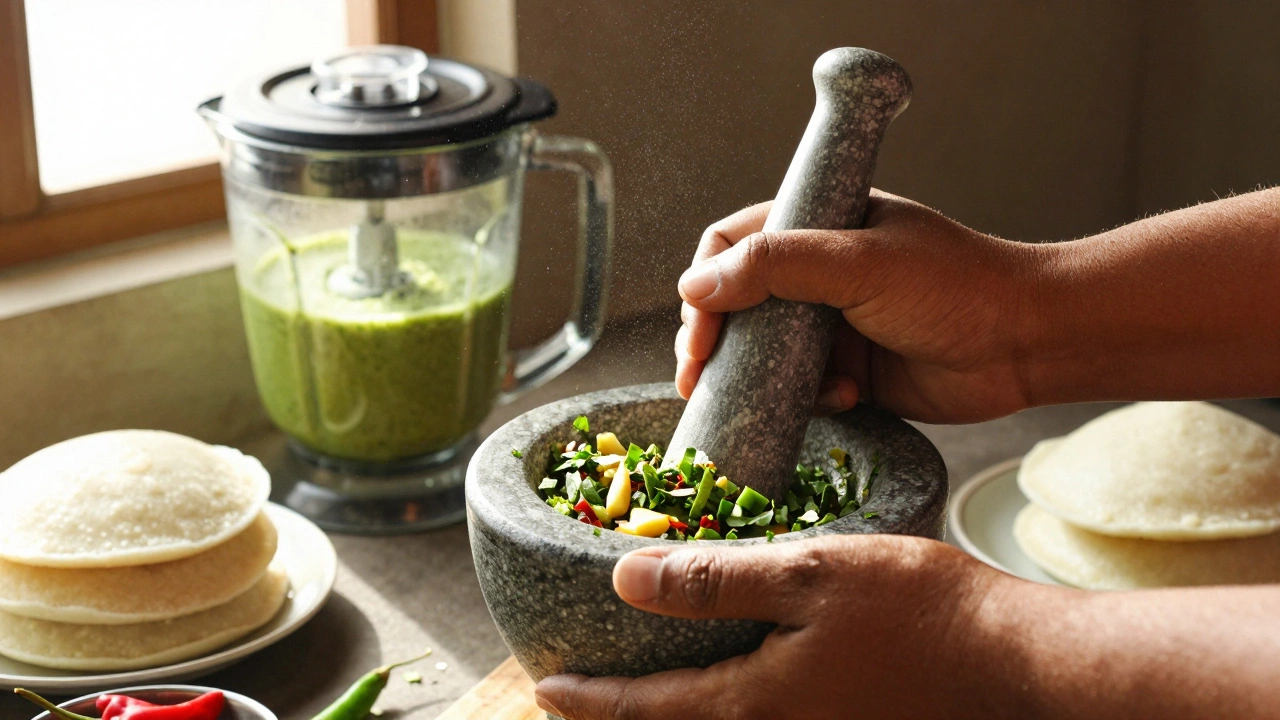
Here’s the simple rule: blend time decides texture.
- For smooth chutney: Blend for 60-90 seconds until no flecks remain. Use a high-speed blender if you have one.
- For chunky chutney: Pulse 3-5 times. Stop when you see visible bits. Don’t overdo it.
Water is your friend-but also your enemy. Too much, and it turns into soup. Too little, and it’s pasty. Start with 1 tablespoon. Add more only if needed. And always taste before adding salt. Tamarind and tomatoes bring their own tang. Coconut and yogurt bring their own body.
Temperature matters too. If you’re making mint chutney, chill the blender jar before blending. It keeps the herbs from turning brown. For tomato or onion chutney, let it cool before grinding. Hot ingredients release steam and make the mixture watery.
What Your Chutney Says About Your Cooking Style
Smooth chutney? You’re precise. You care about balance. You might be serving it with delicate snacks like vada pav or idli. Chunky chutney? You’re bold. You like texture. You’re probably pairing it with hearty meals like pav bhaji or khichdi. Neither is better. But knowing which to use? That’s what separates good cooks from great ones.
Even regional differences matter. In South India, coconut chutney is almost always smooth. In the West, tomato chutney is chunky. In the East, mustard-based chutneys are coarse and rustic. These aren’t accidents. They’re cultural codes.

Common Mistakes and How to Fix Them
Here’s what most people get wrong:
- Blending too long: You end up with a warm, dull paste. Fix it by adding a splash of cold water and a pinch of salt. Stir, then chill.
- Too much water: It becomes runny. Fix it by simmering it for 5 minutes on low heat. Let the excess evaporate.
- Not tasting before serving: Chutney changes as it sits. Salt intensifies. Spice blooms. Always taste again after 15 minutes.
- Using old ingredients: Dried red chilies lose their punch. Fresh coriander turns bitter if it’s not crisp. Use what’s fresh. Always.
Try This: The Two-Chutney Test
Next time you make a batch, split it. Make half smooth. Make half chunky. Serve them side by side with the same snack-say, samosas or pakoras. Taste them one after the other. Notice how the smooth one coats your tongue. How the chunky one dances on your palate. You’ll never look at chutney the same way again.
Chutney isn’t just a side. It’s the soul of the meal. And texture? That’s its voice.
Should chutney always be smooth?
No. Some chutneys, like coconut or mint-coriander, are meant to be smooth so they coat snacks evenly. Others, like tomato or onion chutney, are traditionally chunky to add texture and bite. The right texture depends on the dish it’s served with.
Can I make a chutney smooth after it’s already chunky?
Yes, but it’s not ideal. If you’ve already made a chunky chutney and want it smooth, blend it again with a splash of water. But be careful-it can become too thin or lose its fresh flavor from over-blending. It’s better to get the texture right the first time.
Why does my chutney turn brown after blending?
Herbs like mint and coriander oxidize when exposed to air and heat. To prevent browning, add ice cubes while blending. This keeps the temperature low and preserves the bright green color. You can also add a squeeze of lemon juice-it slows oxidation and boosts flavor.
What’s the best way to store chutney?
Store chutney in an airtight container in the fridge. Smooth chutneys last up to 5 days. Chunky ones, especially those with raw ingredients like onion or tomato, are best used within 2-3 days. For longer storage, freeze in small portions. Thaw in the fridge before using.
Is there a difference between Indian and Western chutneys?
Yes. Indian chutneys are usually made fresh daily with raw or lightly cooked ingredients like herbs, coconut, tamarind, and chilies. They’re meant to be sharp, tangy, and texturally varied. Western chutneys are often slow-cooked, sweet, and jam-like-think apple chutney with vinegar and sugar. They’re pantry staples, not daily condiments.
Final Tip: Trust Your Palate
Recipes are guides. Your taste is the final judge. If you like your coconut chutney with a little texture, make it chunky. If you prefer your tomato chutney silky, blend it longer. Indian cooking has always been about adaptation. There’s no single right way-just the way that works for you.