Is Indian Food Healthy for You? Real Facts Behind the Spices and Meals
 Dec, 23 2025
Healthy Indian Dish Checker
Check Your Indian Dish
Enter ingredients or select from common Indian dishes to see if they're healthy based on traditional cooking principles.
Why This Matters
Traditional Indian food is healthy when cooked with whole ingredients, minimal oil, and natural spices. The article explains how modern adaptations often add unhealthy elements like excess oil, sugar, and processed ingredients.
Enter ingredients or select a dish to check its healthiness.
Indian food gets a bad rap sometimes-too oily, too spicy, too heavy. But if you’ve ever eaten a simple dal-rice meal with a side of cucumber raita, you know that’s not the whole story. The truth is, traditional Indian food is one of the most balanced, nutrient-rich eating patterns in the world. It’s not about fancy restaurant curries with extra cream. It’s about the everyday meals cooked in homes across India for generations.
What Makes Indian Food Actually Healthy?
Indian cuisine isn’t one thing. It’s hundreds of regional styles, each shaped by climate, soil, and culture. But they all share common threads: legumes, whole grains, vegetables, and spices. A typical South Indian breakfast might be idli made from fermented rice and lentils, served with coconut chutney and sambar. That’s protein, fiber, probiotics, and antioxidants-all in one plate. No processed ingredients. No added sugar.
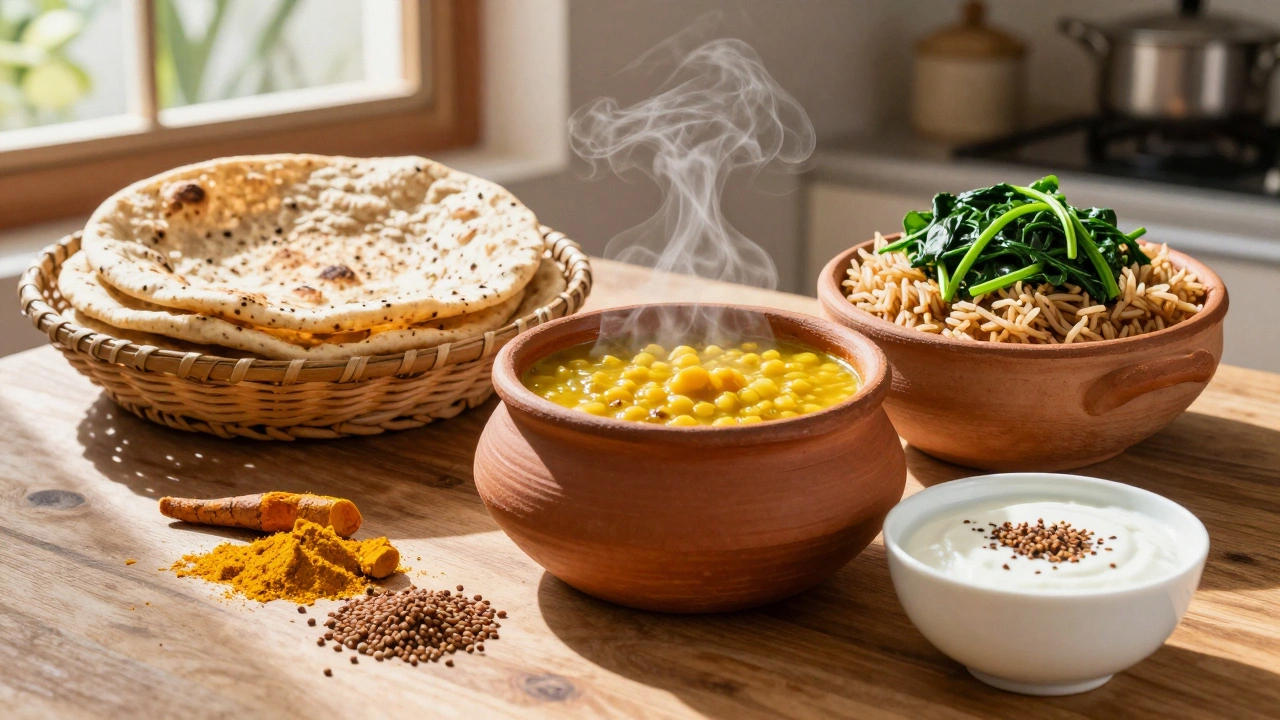
The foundation of most Indian meals is dal (lentils), which are packed with plant-based protein and iron. A cup of cooked masoor dal gives you 18 grams of protein and 15 grams of fiber. Compare that to a slice of white bread-barely 3 grams of protein and less than 1 gram of fiber. Lentils also have a low glycemic index, meaning they don’t spike your blood sugar. That’s why rural communities in India, who eat mostly home-cooked meals, have lower rates of type 2 diabetes than urban populations who rely on packaged foods.
Then there are the spices. Turmeric isn’t just for color-it’s curcumin, a powerful anti-inflammatory compound backed by over 15,000 peer-reviewed studies. Cumin aids digestion. Coriander helps lower cholesterol. Fenugreek seeds regulate blood sugar. Cardamom and cinnamon add flavor without sugar. These aren’t just seasonings. They’re medicine, used daily and intentionally.
Common Myths About Indian Food
People think Indian food is unhealthy because they’ve only seen butter chicken or paneer tikka masala from takeout menus. Those dishes are exceptions, not the rule. In most Indian homes, cooking oil is measured in teaspoons, not tablespoons. Ghee is used, yes-but it’s clarified butter, and it’s used sparingly. In fact, studies from the Indian Council of Medical Research show that rural households use less than 15 grams of fat per person per day. Urban households? Around 30 grams. The difference isn’t the cuisine-it’s the modernization of eating habits.
Another myth: all Indian food is spicy. Heat comes from green chilies or black pepper, not from oil or additives. Many dishes, like khichdi or dalia (oatmeal-like porridge), are mild enough for babies and elderly people. Spiciness is optional. Flavor isn’t.
And what about dairy? Milk, yogurt, and paneer are staples. But they’re not loaded with sugar. Traditional yogurt is unsweetened and full of live cultures. Paneer is made from milk curds, not processed cheese. In fact, fermented dairy products in India have been shown to improve gut health more effectively than many commercial probiotics.
How Traditional Indian Meals Are Structured
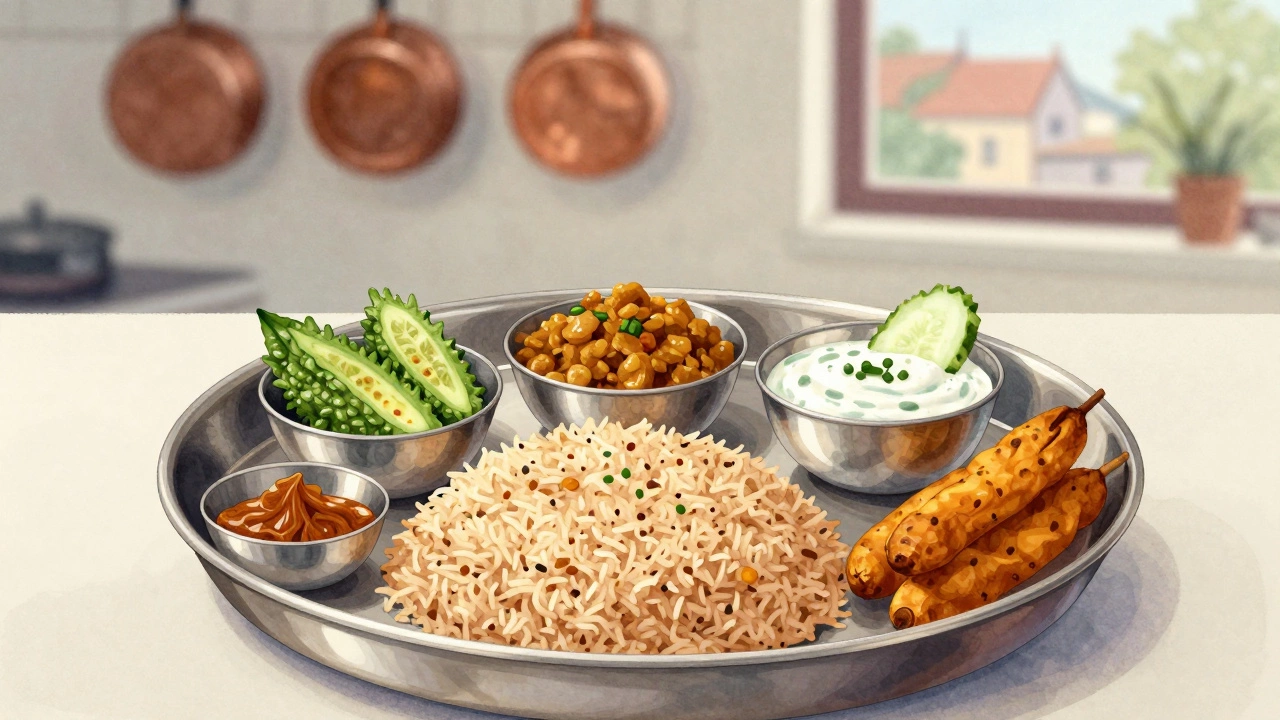
Indian meals follow a rhythm designed for digestion and balance. A typical plate includes:
- Grains: Brown rice, millet (bajra, jowar), or whole wheat roti
- Lentils or legumes: Dal, chana, rajma
- Vegetables: Seasonal, cooked with minimal oil-often stir-fried or steamed
- Yogurt or raita: For cooling and aiding digestion
- Spices: Turmeric, cumin, mustard seeds, asafoetida
- Small side: Pickle (made with vinegar or lemon, not oil-heavy) or a raw salad
This isn’t just a meal. It’s a complete nutrient package. The combination of fiber from grains and lentils, protein from dal, vitamins from veggies, and probiotics from yogurt creates a meal that keeps you full, stabilizes blood sugar, and supports gut health.
Compare that to a Western lunch of sandwich and chips. One has 500 calories with 20 grams of sugar and 8 grams of saturated fat. The other has 400 calories, 15 grams of fiber, 18 grams of protein, and zero added sugar.
What’s Changed-and Why It’s Not Healthy Anymore
The problem isn’t Indian food. It’s what’s been added to it. Fast food chains now offer “Indianized” burgers and pizza. Grocery stores sell packaged masalas with added sugar, MSG, and preservatives. Ready-to-eat curries come in cans with palm oil and artificial flavors. Even home cooks are switching to refined flour (maida) instead of whole wheat, and using pre-made spice blends that are mostly salt and color.
Between 2010 and 2025, the average Indian household’s daily sugar intake jumped from 20 grams to 45 grams. Why? Because of packaged snacks, sweetened yogurt, and sugary drinks marketed as “healthy.” That’s not traditional Indian food. That’s global junk food with a desi label.
Studies from the Lancet show that Indians who eat home-cooked meals made from whole ingredients have a 30% lower risk of heart disease than those who rely on processed or restaurant food-even if both groups eat “Indian” dishes.
How to Eat Indian Food the Healthy Way
You don’t need to give up your favorite dishes. You just need to make small, smart swaps.
- Use whole grains: Swap white rice for brown rice, red rice, or millet. Swap maida roti for whole wheat or jowar roti.
- Limit oil: Use 1-2 teaspoons per person per meal. Cook with mustard oil or coconut oil-they’re more stable at high heat than vegetable oils.
- Make your own spice blends: Toast and grind cumin, coriander, turmeric, and black pepper yourself. No additives.
- Choose lentils over meat: Dal is cheaper, healthier, and more sustainable than chicken or mutton.
- Avoid packaged snacks: Instead of samosas or chips, snack on roasted chana, makhana (fox nuts), or fruit.
- Drink water or buttermilk: Skip sugary lassis and sodas. Plain buttermilk with cumin and mint is refreshing and gut-friendly.
Try this simple meal plan for a week:
- Breakfast: Moong dal cheela with mint chutney
- Lunch: Brown rice, masoor dal, sautéed spinach, and yogurt
- Dinner: Jowar roti, bitter gourd sabzi, and cucumber salad
- Snack: Handful of roasted peanuts or an apple
No fancy ingredients. No exotic superfoods. Just real food, cooked simply.
Why This Works for Long-Term Health
Indian food, in its traditional form, isn’t a diet. It’s a lifestyle. It’s designed to keep you healthy without counting calories or eliminating food groups. The fiber keeps your gut happy. The spices reduce inflammation. The plant-based proteins support muscle and metabolism. The variety of vegetables ensures you get a wide range of micronutrients.
People in Kerala, who eat mostly rice, fish, and coconut-based dishes, have some of the lowest heart disease rates in India. People in Punjab, who eat more dairy and wheat, have higher rates of diabetes-because they’ve added sugar and refined flour. The difference isn’t geography. It’s food quality.
When you eat Indian food the way it was meant to be eaten, your body doesn’t fight it. It thrives.
What to Avoid
Here’s what to skip if you want real health benefits:
- Deep-fried snacks (pakoras, samosas, bhajjis)
- Pre-made curry pastes with added sugar or preservatives
- White rice and maida roti as your main carbs
- Sweetened yogurt and packaged lassis
- Restaurant butter chicken or paneer dishes made with cream and ghee
These aren’t “Indian food.” They’re modern adaptations designed for taste, not health.
Final Thought: It’s Not About the Cuisine. It’s About the Cooking.
Indian food isn’t healthy because it’s from India. It’s healthy because it’s made with whole ingredients, cooked fresh, and balanced by tradition. When you strip away the oil, sugar, and processing, you’re left with one of the most nourishing eating patterns on the planet.
You don’t need to go vegan. You don’t need to count macros. You just need to cook with real food-and remember that spice isn’t just flavor. It’s medicine.
Is Indian food good for weight loss?
Yes, if you eat traditional home-cooked meals. Lentils, vegetables, and whole grains are naturally low in calories and high in fiber, which helps you feel full longer. But if you’re eating fried snacks, creamy curries, or sugary drinks, you’ll gain weight-no matter how "Indian" the dish is.
Are Indian spices really good for you?
Absolutely. Turmeric has strong anti-inflammatory effects. Cumin helps digestion and lowers cholesterol. Fenugreek improves insulin sensitivity. Studies show regular use of these spices reduces markers of chronic disease. They’re not magic-they’re powerful plant compounds used daily in Indian kitchens.
Is ghee healthy in Indian cooking?
In small amounts, yes. Ghee is clarified butter, so it’s free of lactose and casein. It’s rich in fat-soluble vitamins and conjugated linoleic acid, which may help with fat metabolism. But it’s still fat-use 1-2 teaspoons per meal. Don’t pour it on everything.
Can I eat Indian food if I have diabetes?
Yes, but choose wisely. Stick to whole grains like brown rice or millet. Eat lentils and vegetables. Avoid white rice, sweets, and sugary drinks. Fenugreek seeds and bitter gourd are especially helpful for blood sugar control. Many Indian diabetics manage well on traditional meals.
What’s the healthiest Indian dish?
Khichdi made with brown rice and moong dal, cooked with turmeric and cumin, served with plain yogurt and a side of steamed greens. It’s easy to digest, packed with protein and fiber, and naturally anti-inflammatory. It’s also a staple in Ayurvedic healing diets.