Cooking Chicken Curry
When you're cooking chicken curry, a fragrant, spiced dish rooted in Indian home kitchens. Also known as chicken masala, it’s not just about tossing chicken into a pot with curry powder—it’s about layering flavors slowly, balancing heat, fat, and acidity to make something that sticks to your memory, not just your plate. Most people think curry is one thing, but in India, every region makes it differently. In the north, it’s creamy with tomatoes and cream. In the south, it’s tangy with tamarind and coconut. In the east, it’s mild with mustard and poppy seeds. The common thread? Fresh spices, not pre-made powders, and patience.
One of the biggest mistakes? Adding spices too early or too late. cumin, a warm, earthy seed needs to sizzle in hot oil to wake up its flavor. turmeric, the golden root that gives curry its color works best when cooked with fat—it’s not just for looks, it helps your body absorb its benefits. And curry leaves, a leafy aromatic used in South Indian cooking, aren’t optional—they add a citrusy, almost herbal note you can’t fake with dried herbs.
Don’t skip the final touch. cilantro, a bright, fresh herb, sprinkled on top right before serving, lifts the whole dish. A squeeze of lime does the same. These aren’t garnishes for photos—they’re essential flavor adjusters. If your curry tastes flat, it’s not the chicken—it’s the lack of this last-minute brightness.
And yes, you can make it mild. You don’t need to burn your tongue to enjoy real Indian flavor. Butter chicken, korma, and tikka masala are all chicken curries with zero heat but tons of depth. They use cashew paste, yogurt, or cream to soften the spices, not hide them. The trick? Use whole spices like cardamom, cinnamon, and cloves—they give complexity without fire.
What you won’t find in most recipes? Rinsing the chicken. Don’t. It doesn’t make it cleaner—it just makes it watery. Pat it dry, sear it well, and let it brown. That’s where the flavor starts. And skip the pre-made curry paste. Even if it says "authentic," it’s full of preservatives and sugar. Real Indian cooking uses whole spices you toast yourself.
What you’ll find in the posts below are real fixes for real problems: why your curry turns oily, how to fix a too-thick sauce, which herbs make the biggest difference, and how to make it mild enough for kids without losing taste. No fluff. No fancy terms. Just what works in Indian homes—tested, repeated, and trusted.
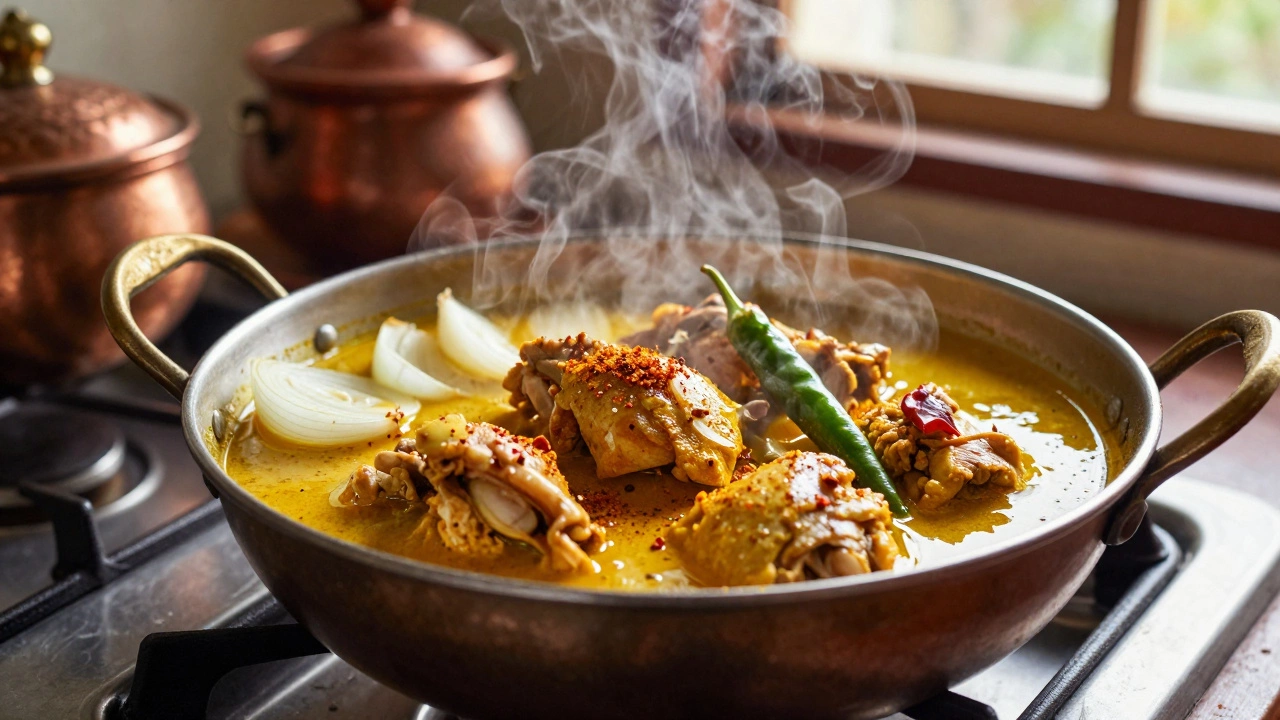
Can You Put Raw Chicken Into a Curry? Yes, Here's How to Do It Right
Yes, you can safely put raw chicken into a curry. Learn how to brown, simmer, and season it properly for tender, flavorful results every time-no pre-cooking needed.