Curry Cooking Stages: From Prep to Perfect Flame
When working with curry cooking stages, the step‑by‑step process that turns raw spices, vegetables, and proteins into a unified, aromatic dish. Also known as curry preparation phases, it guides home cooks through timing, heat control, and flavor layering. A solid foundation starts with curry ingredients, spices, herbs, and base elements like onions, ginger, garlic, and tomatoes that create the core taste profile. Once the ingredients are ready, the technique of tempering, also called tadka, where whole spices are briefly fried in hot oil to release their essential oils becomes crucial; it injects a burst of aroma that cannot be achieved by dry roasting alone. After tempering, the mixture moves into the simmering phase, a low, steady heat that allows flavors to meld, proteins to tenderize, and sauces to thicken uniformly. Finally, adding a cream base, whether it’s coconut milk, yogurt, or cashew paste, turns a standard curry into a silky, rich finish completes the journey. These five components—ingredients, tempering, simmering, and a creamy finish—form the backbone of every authentic curry.
Let’s break down how each stage interacts with the others. First, preparing the curry ingredients isn’t just chopping; it’s about balancing bitter, sweet, sour, and umami notes. Freshly ground spices like cumin and coriander release volatile compounds that are fragile—over‑cooking them during tempering can mute their brightness, while under‑cooking leaves a raw edge. That’s why tempering follows ingredient prep: the hot oil extracts flavor without destroying it, creating a fragrant oil that coats every subsequent piece. The tempered oil then meets the sautéed base, and the mixture moves to the simmering stage. Simmering serves two purposes: it softens tougher proteins (like chicken or paneer) and gives time for the spice matrix to integrate, producing depth that quick frying can’t mimic. The temperature during simmering is key; a gentle bubble keeps sauces from breaking and ensures a smooth texture. When the desired consistency is reached, the cream base is introduced. Whether you choose coconut milk for a South Indian kick or yogurt for a tangy North Indian twist, the cream base stabilizes the sauce, balances acidity, and adds a luxurious mouthfeel. Skipping any of these steps or rushing them changes the final taste, often resulting in a flat or overly sharp curry.
Understanding these curry cooking stages helps you troubleshoot common kitchen woes—like why a curry might taste raw, why it separates, or why the oil sits on top. Below you’ll find a curated collection of articles that dive deeper into each element: from the best spices to use, to mastering tempering, optimizing simmer times, and creating velvety cream bases without curdling. Armed with this roadmap, you’ll be ready to experiment, adjust, and perfect any curry you attempt, whether it’s a quick weeknight meal or a festive feast.
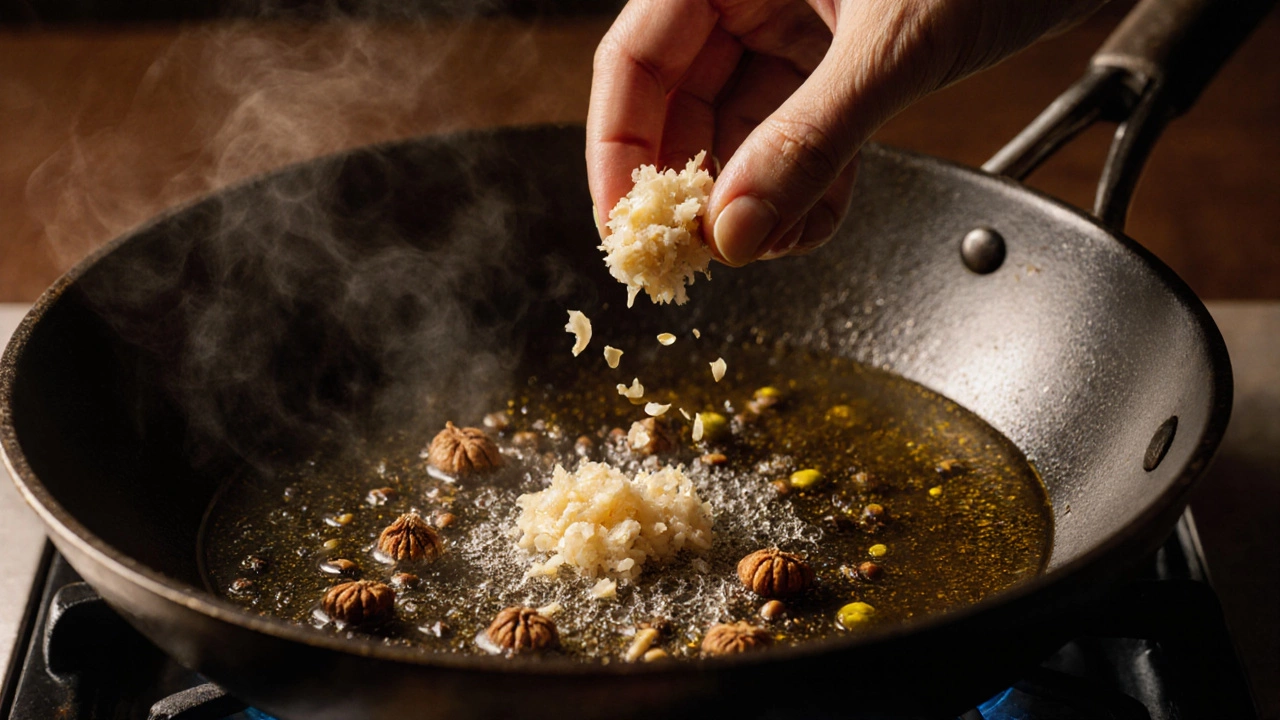
Perfect Timing: When to Add Garlic and Ginger to Curry
Learn the exact moments to add garlic and ginger in curry for maximum flavor, avoid bitterness, and boost health benefits with practical timing tips.