Festive Food: Traditional Indian Celebrations and Beloved Holiday Dishes
When it comes to festive food, the rich, spiced, and often sweet dishes prepared during Indian holidays to mark joy, gratitude, and community. Also known as celebratory meals, it’s not just about eating—it’s about tradition, memory, and sharing. Every region, religion, and family has its own version, but the core is the same: food that feels like home, even when you’re far away.
Indian traditional Indian sweets, like gulab jamun, rasgulla, and jalebi. Also known as mithai, it plays a central role in every major celebration. You won’t find a Diwali without them, and Eid without sheer khurma. These aren’t just desserts—they’re symbols of abundance and goodwill. Then there’s the savory side: crispy holiday snacks India, like roasted makhana, spiced chana, and sweet-savory sev. Also known as farsan, it’s what you nibble on while visiting relatives or watching fireworks. These snacks aren’t random—they’re chosen for their shelf life, ease of sharing, and ability to satisfy without weighing you down after a big meal.
What makes festive food different from everyday meals? It’s the time. The slow frying of jalebi batter. The careful tempering of cardamom in peda. The hours spent rolling ladoos with loved ones. These aren’t recipes you rush. They’re rituals passed down—sometimes without written instructions, just hands showing hands. And while modern life pushes for shortcuts, the real magic still lives in the kitchen where the smell of ghee and cardamom fills the air, and everyone has a story about the one who made the best barfi.
From the sweet rosewater of North Indian weddings to the coconut-laced treats of Kerala Christmas, festive food connects people across faiths and borders. Even if you don’t celebrate Diwali, you can still make the same ladoos. You don’t need permission—just a pot, some sugar, and the willingness to try. The posts below cover exactly that: the dishes people actually make at home during holidays, the tricks they swear by, and the simple swaps that keep traditions alive without burning the kitchen down.
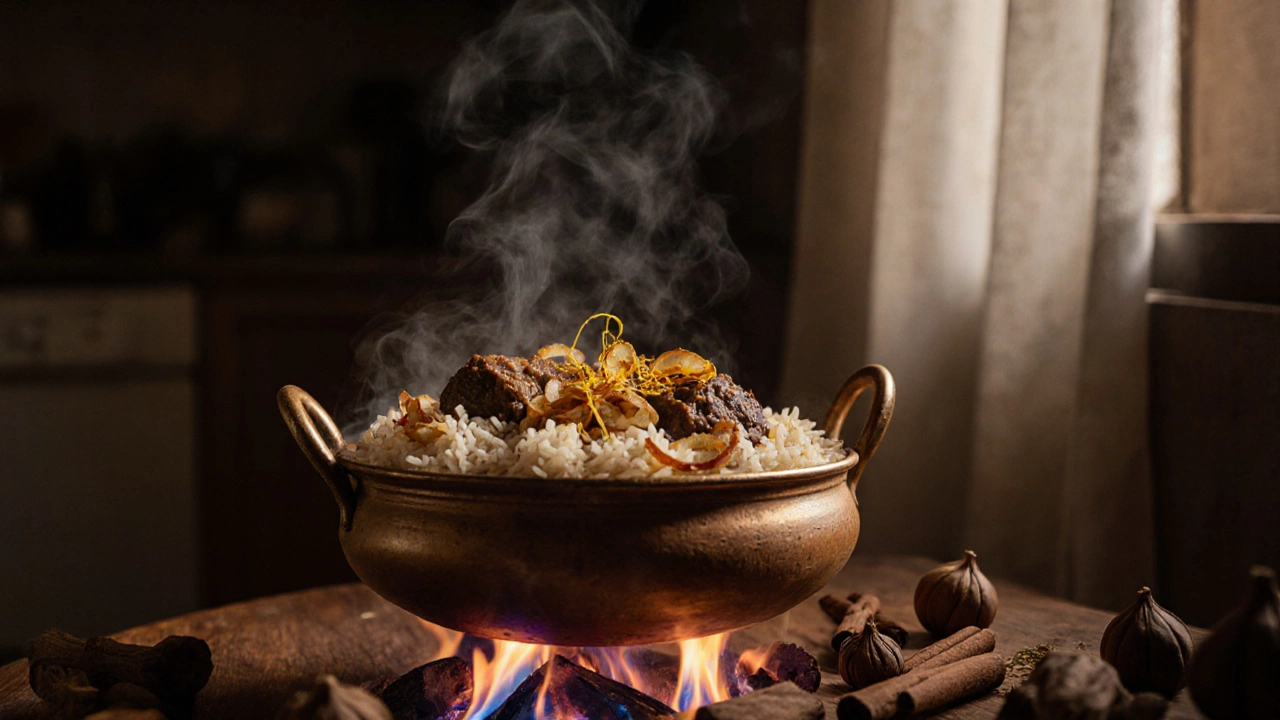
Why Do Muslims Eat Biryani? The History, Culture, and Meaning Behind the Dish
Biryani is more than a dish for Muslims-it's a symbol of tradition, community, and faith. Learn why this spiced rice meal holds deep cultural meaning during Eid, funerals, and family gatherings.