Why Do Muslims Eat Biryani? The History, Culture, and Meaning Behind the Dish
 Nov, 17 2025
Halal Biryani Calculator
Calculate halal-compliant ingredients for biryani based on serving size. Biryani is prepared following Islamic dietary laws, ensuring meat is halal-certified, no alcohol is used, and no pork or non-halal gelatin is included.
Enter your desired serving size to get a breakdown of ingredients needed for proper halal preparation.
Halal Biryani Ingredients
For servings, you'll need:
- Halal meat (lamb/goat) 0 lbs
- Basmati rice 0 cups
- Saffron (for flavor and color) 0 pinches
- Fried onions (key for authentic taste) 0 medium
- Ghee (not vegetable oil) 0 tbsp
Enter the number of servings to see your halal biryani ingredient list
Biryani is typically prepared for special occasions like Eid, weddings, or family gatherings. It's not an everyday dish due to its cost and preparation time.
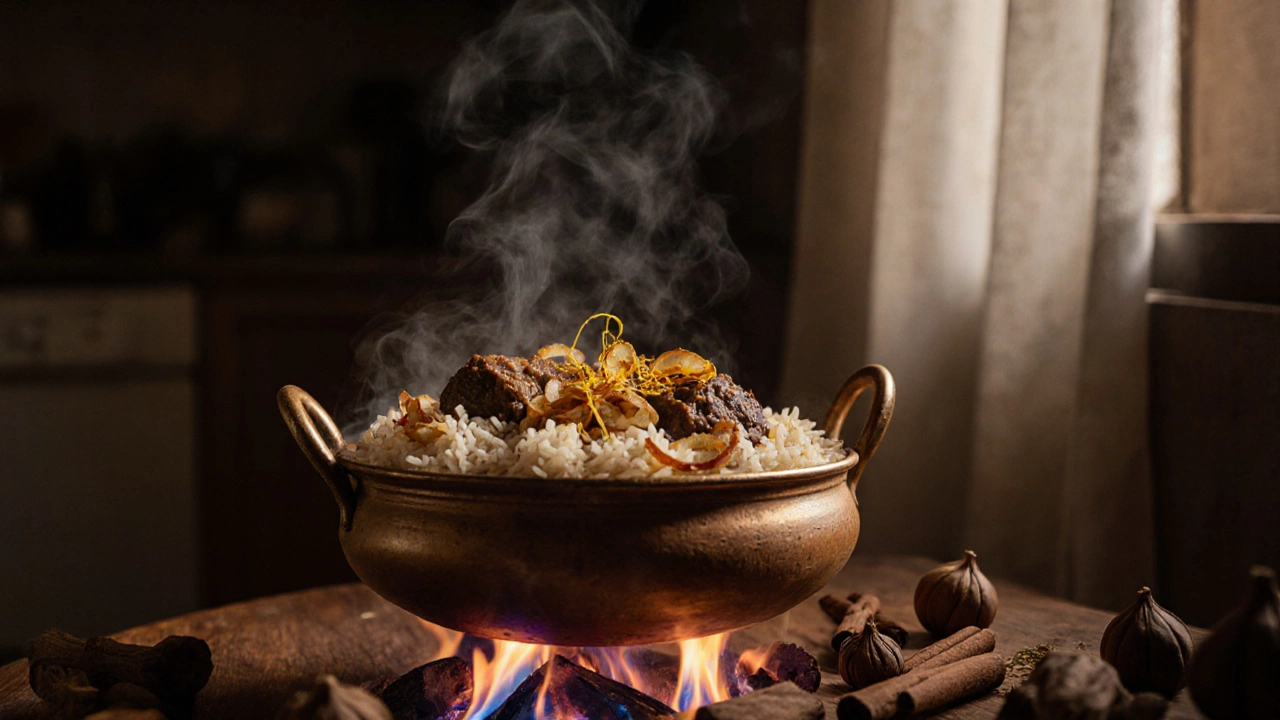
Biryani isn’t just a meal. For millions of Muslims across India, Pakistan, Bangladesh, and beyond, it’s a celebration on a plate. You’ll find it at Eid dinners, weddings, funerals, and even quiet Friday nights. But why? Why does this spiced rice dish, layered with meat, saffron, and fried onions, hold such deep meaning in Muslim households? It’s not because it’s hard to make. It’s not because it’s the only dish available. It’s because biryani carries history, identity, and community in every grain of rice.
Where Biryani Comes From
Biryani didn’t appear out of nowhere. It traveled. The word itself likely comes from the Persian word biryan, meaning "fried" or "roasted." When Mughal emperors ruled large parts of India, their chefs brought Persian cooking styles with them. They mixed Persian rice dishes with local Indian spices-cardamom, cinnamon, cloves, and star anise-and added slow-cooked meat from the subcontinent. The result? A new dish that blended cultures.
But it wasn’t just the Mughals. Muslim traders, soldiers, and scholars moved across the Indian Ocean for centuries. They carried rice, spices, and cooking techniques from Arabia, Persia, and Central Asia. In places like Hyderabad, Lucknow, and Kolkata, local Muslim communities adapted these recipes using what was available-lamb from the Deccan, basmati from the Gangetic plains, and ghee from village dairies. Biryani became a living recipe, changing with every generation.
Why Muslims, Specifically?
Not all Muslims eat biryani every day. But for many, it’s the dish they turn to for special moments. Why? Because of halal rules. Biryani is one of the few dishes where meat and rice are cooked together in a way that honors Islamic dietary laws. The meat is always slaughtered according to halal guidelines. No alcohol is used in cooking. No pork, no gelatin from non-halal sources. This makes biryani safe, sacred, and simple to prepare for large gatherings.
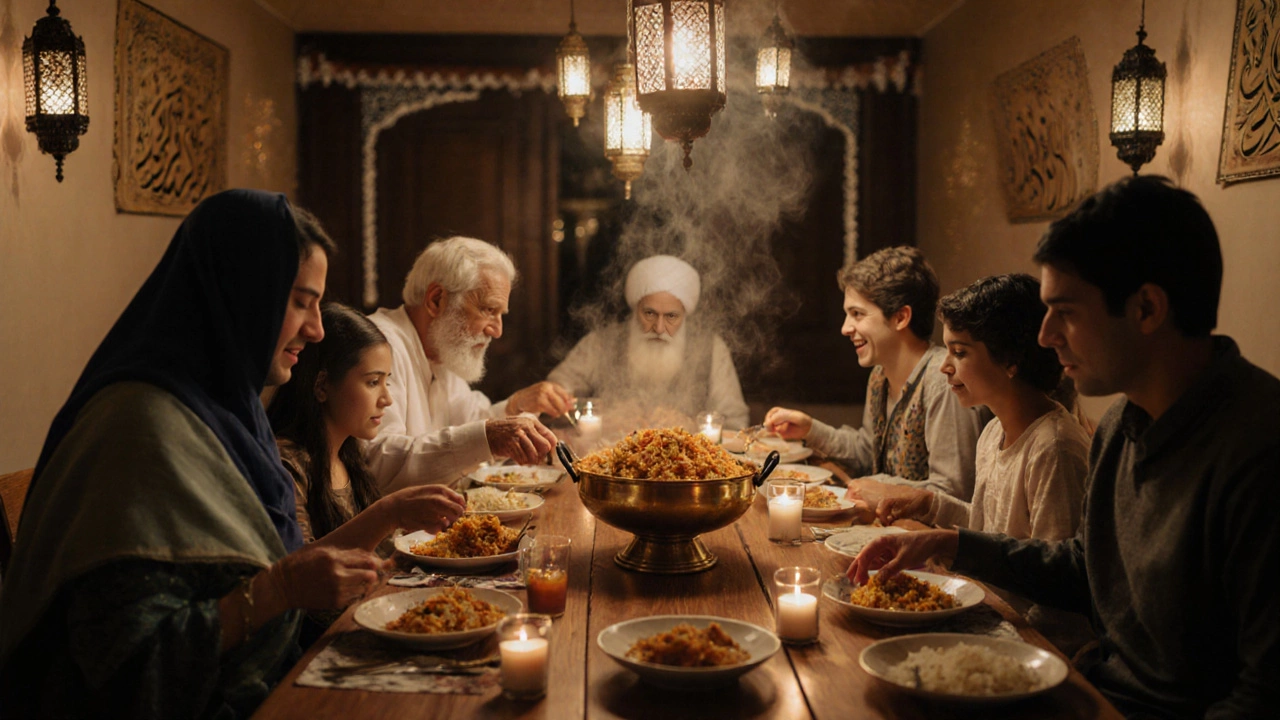
It’s also practical. One pot feeds a hundred people. You can make it ahead of time. It reheats well. For families preparing for Eid al-Fitr after Ramadan, or for a funeral meal after a loved one passes, biryani is the dish that doesn’t fail. It’s reliable. It’s filling. It’s respectful.
In many Muslim homes, biryani is the only dish served at a funeral feast. Why? Because it’s neutral. It doesn’t draw attention to itself-it doesn’t taste too sweet, too spicy, or too rich. It’s balanced. That balance matters when people are grieving. You don’t want a dish that overwhelms. You want something that brings people together without demanding emotion.
It’s Not Just Food-It’s Tradition
Every Muslim family has their own biryani. In Hyderabad, it’s made with kachchi gosht-raw meat layered with partially cooked rice and sealed with dough, then slow-cooked for hours. In Lucknow, it’s dum pukht style, with subtle spices and tender meat that falls off the bone. In Kolkata, they add boiled eggs and potatoes, a twist from British colonial times. In rural Uttar Pradesh, some use chicken instead of lamb. Each version is different. Each version is correct.
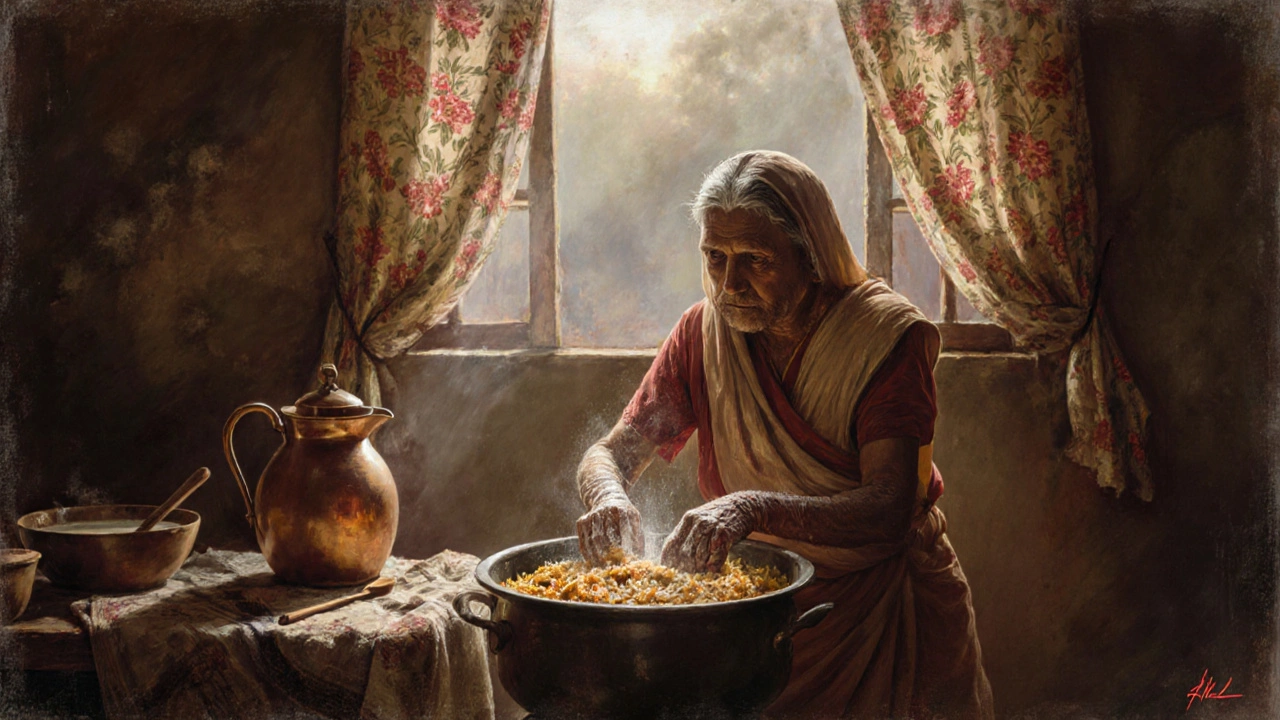
These differences aren’t just about taste. They’re about belonging. When a Muslim child grows up eating their grandmother’s biryani, they’re not just learning how to cook. They’re learning who they are. The smell of cumin and fried onions frying in ghee? That’s memory. The sound of the pot being sealed with dough? That’s ritual.
During Ramadan, many families make biryani for iftar. It’s heavy, yes-but it’s also sustaining. After a long day without food, you need energy. Biryani delivers. The rice gives carbs. The meat gives protein. The spices aid digestion. It’s nutrition wrapped in tradition.
Why It’s Still Popular Today
Young Muslims today have access to pizza, burgers, and instant noodles. So why does biryani still dominate the table? Because it’s not just food-it’s identity. When a Muslim family moves to a new country-London, Toronto, Dubai-they bring biryani with them. It’s the one dish that says, "We are here. We are Muslim. We are Indian, Pakistani, or Bangladeshi. And we haven’t forgotten."
In Mumbai, where I live, you’ll see Muslim families lining up outside biryani shops on Fridays. Not because they can’t cook at home. But because the shop’s biryani tastes like their childhood. Like their mother’s kitchen. Like their grandfather’s voice saying, "This is how we do it."
Even non-Muslims love biryani. But only Muslims treat it like a sacrament. You won’t find it served at a Hindu wedding in the same way. You won’t see it at a Christian Christmas dinner. It’s not a universal dish. It’s a cultural one. And for Muslims, it’s one of the few dishes that carries both religious and regional identity in every bite.
How It’s Made-The Real Way
Most people think biryani is just rice and meat. It’s not. It’s a layered experience. First, the rice is soaked, then parboiled with whole spices. The meat is marinated overnight with yogurt, ginger-garlic paste, turmeric, and red chili powder. Then it’s slow-cooked until tender. Onions are fried until golden brown-this is the secret. The onions become sweet, almost caramelized, and add depth no spice can match.
The layers go like this: rice, then meat, then fried onions, then saffron milk, then fresh coriander and mint. Then it’s sealed with dough or foil and cooked on low heat for an hour. That’s called dum-slow steam cooking. It’s not just a method. It’s patience. It’s love.
And here’s what no recipe tells you: the pot matters. A heavy-bottomed handi (clay pot) gives the best flavor. Metal pots work, but they don’t hold heat the same way. And the fire? It has to be low. Always low. Rushing biryani ruins it. You can’t hurry tradition.
What Makes It Different From Other Rice Dishes
There are other spiced rice dishes-pulao, khichdi, jalfrezi rice. But biryani is different. Pulao is simple. One-pot, quick, no layering. Khichdi is comfort food-lentils and rice, for sick days. Biryani is for life’s big moments.
It’s also more expensive to make. You need good basmati rice, real saffron, fresh spices, and quality meat. That’s why it’s not an everyday meal. It’s reserved. That’s why it carries weight. When you serve biryani, you’re saying, "This occasion matters. You matter."
Even in modern kitchens, people still use the old ways. They don’t use pressure cookers for the final steam. They don’t skip the frying of onions. They don’t substitute ghee with oil. Why? Because they know: shortcuts break the meaning.
It’s Not About Religion Alone
Some people think Muslims eat biryani because the Quran says so. It doesn’t. There’s no verse about biryani. But Islam teaches community. It teaches generosity. It teaches honoring guests. Biryani is the perfect expression of those values. One pot, shared by many. No one left out. No one eating alone.
It’s also a bridge. In mixed neighborhoods, Muslims serve biryani to Hindu and Christian neighbors during Eid. They get invited to Diwali parties too. Biryani becomes the common language. It doesn’t ask anyone to change their faith. It just says, "Come eat with us."
That’s why it survives. Not because it’s religious. But because it’s human.
Is biryani only eaten by Muslims?
No, biryani is enjoyed by people of all backgrounds across South Asia. But it holds special cultural and religious significance for many Muslim families, especially during festivals and rites of passage. Non-Muslims often serve it at weddings and parties too, but the rituals around its preparation and serving are most deeply rooted in Muslim traditions.
Why is biryani so expensive to make?
Biryani uses premium ingredients: long-grain basmati rice, real saffron, fresh spices, and quality meat-often lamb or goat. Fried onions, ghee, and slow cooking add time and labor. These aren’t cheap. A home-cooked biryani can cost 3-4 times more than plain rice or dal. That’s why it’s saved for special days, not eaten daily.
Can you make biryani without meat?
Yes, vegetable biryani is common, especially among vegetarian Muslims or during fasting periods. Potatoes, peas, carrots, and paneer are layered with spiced rice. The same technique applies-slow cooking, saffron, fried onions. The flavor is different, but the tradition stays the same.
Why is saffron used in biryani?
Saffron isn’t just for color. It adds a subtle floral aroma and a luxurious feel. It’s expensive, so it’s used sparingly-but it signals that this meal is special. In Muslim culture, using something precious for a gathering is a sign of respect. Saffron turns rice into something worthy of celebration.
Does biryani have health benefits?
When made traditionally, biryani offers balanced nutrition: complex carbs from rice, protein from meat, and anti-inflammatory spices like turmeric and cumin. The slow-cooking process makes meat easier to digest. But it’s high in calories and fat due to ghee and fried onions. Moderation is key. It’s not a daily health food-it’s a celebration food.