Fresh Herbs on Curry: How to Use Them for Maximum Flavor
When you sprinkle fresh herbs on curry, whole, uncooked leaves added at the end of cooking to preserve their bright taste and aroma. Also known as finishing herbs, they don’t just decorate the dish—they unlock layers of flavor that spices alone can’t reach. Most Indian cooks know this instinctively, but few stop to ask why. It’s not tradition for tradition’s sake. It’s science. Heat kills volatile oils. Add herbs too early, and you lose their punch. Add them right at the end, and you get a burst of green, citrusy, peppery life in every bite.
The most common cilantro, a pungent, leafy herb used widely across Indian curries for its fresh, slightly citrusy note is the go-to. But it’s not alone. mint, a cool, sharp herb often paired with yogurt or chutneys in North Indian dishes works wonders in creamy curries like korma or palak paneer. Then there’s curry leaves, a uniquely Indian aromatic leaf that sizzles in hot oil to release a nutty, citrusy fragrance—not for sprinkling, but for frying at the start. These aren’t interchangeable. Each has a role. Cilantro cools. Mint brightens. Curry leaves deepen. And none of them belong in the pot before the curry is done.
Why does this matter? Because flavor isn’t just about spice powders. It’s about contrast, freshness, and balance. A rich, spicy curry needs something green to cut through. That’s where fresh herbs come in. They’re not optional garnish. They’re the final ingredient that turns good into unforgettable. You’ll find this in almost every post below—from the simplest dal to the most complex biryani. Some recipes use herbs subtly. Others pile them on like a crown. But they’re always there, because Indian cooking knows: the last touch makes the whole dish.
Below, you’ll see real examples of how these herbs are used—not just in theory, but in kitchens across India. You’ll learn when to add them, which ones to skip, and how to avoid the one mistake most home cooks make. No fluff. Just what works.
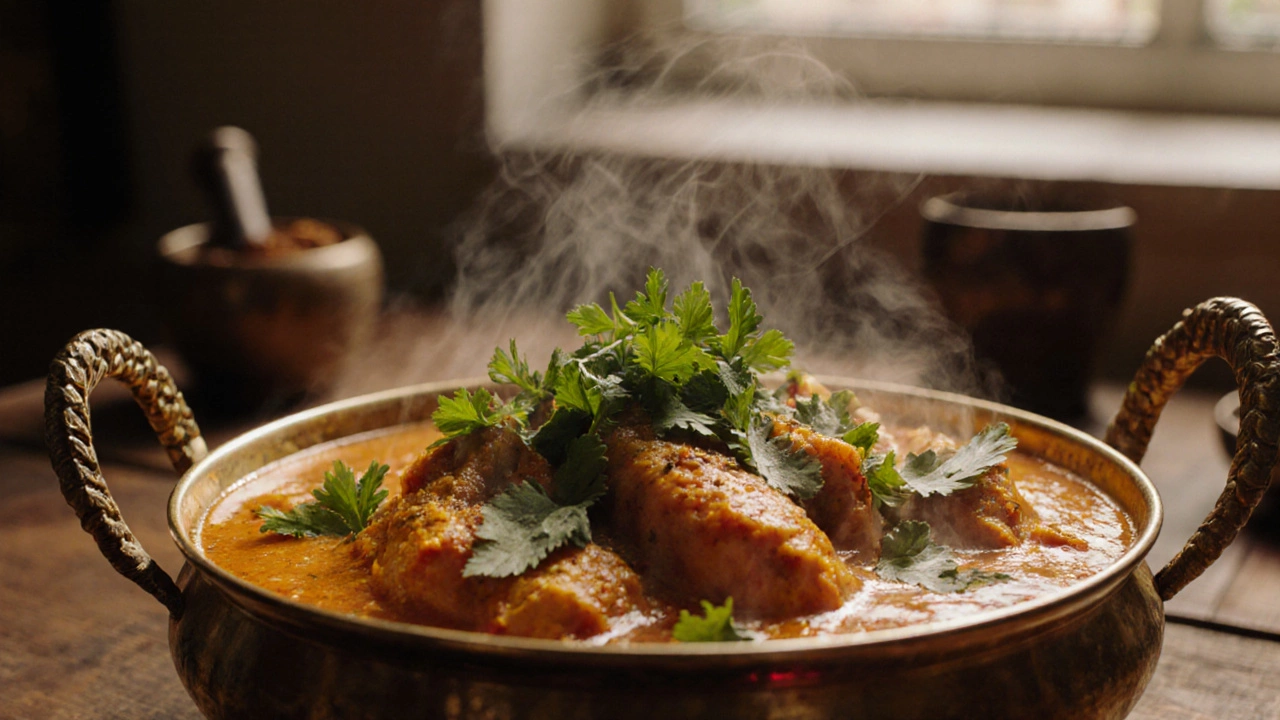
What Herbs Go on Top of Curry? Fresh Garnishes That Elevate Chicken Curry
Discover the best fresh herbs to top chicken curry-cilantro, curry leaves, mint, and more-plus how to use them right for maximum flavor. Learn what works, what doesn't, and why this final touch makes all the difference.