What Herbs Go on Top of Curry? Fresh Garnishes That Elevate Chicken Curry
 Nov, 18 2025
Chicken Curry Herb Pairing Calculator
Choose your chicken curry style to get recommended herb pairings
Your Perfect Pairing
Why This Works
Application Tips
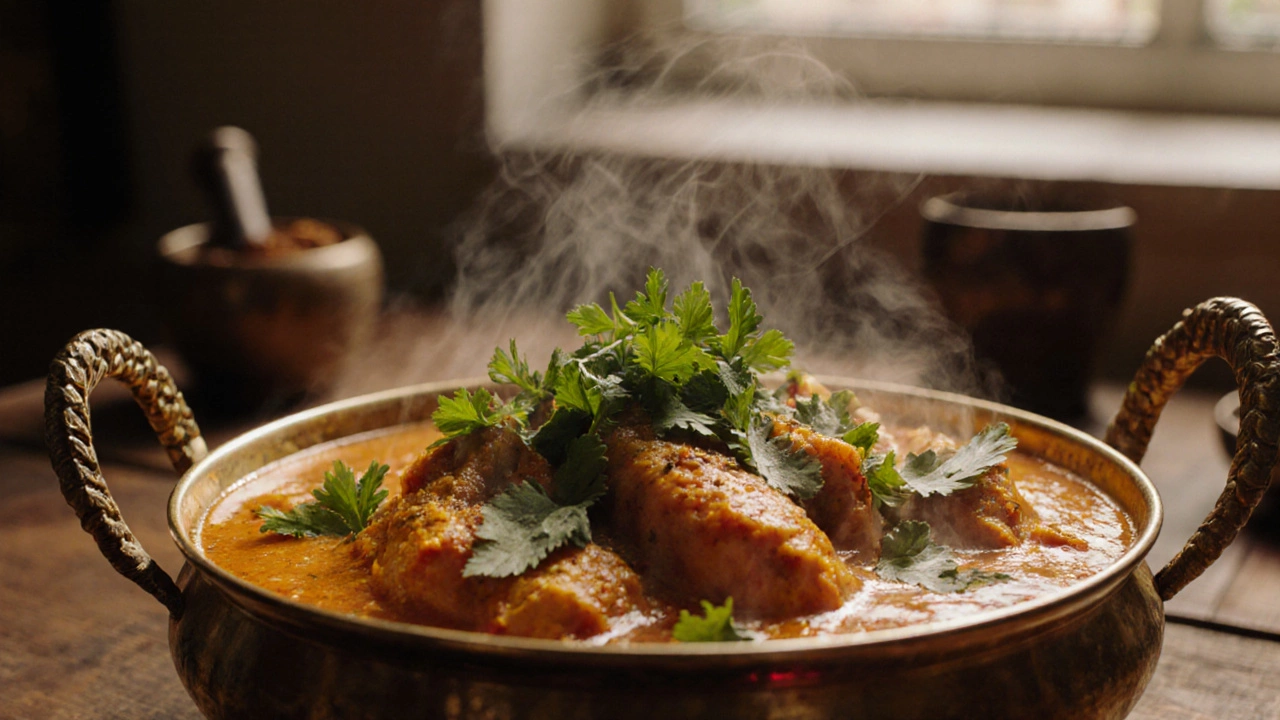
Ever made a rich, spiced chicken curry that tastes amazing-but somehow feels like something’s missing? You’re not alone. The secret isn’t always in the simmering pot. Often, the magic happens right at the end, with a handful of fresh herbs sprinkled on top. These aren’t just for looks. They bring brightness, aroma, and texture that turn a good curry into a memorable one.
Why Herbs Matter on Top of Curry
Curry is built on layers-spices toasted in oil, onions caramelized, tomatoes reduced, ginger-garlic paste fried until fragrant. But all that heat and depth can dull the senses. Fresh herbs cut through that heaviness. They add a pop of green, a burst of scent, and a crispness that wakes up your palate. It’s the difference between a warm blanket and a cool breeze on a hot day.
Think of it like this: you wouldn’t serve a steak without a sprinkle of sea salt or a squeeze of lemon. Curry is no different. The herbs on top aren’t an afterthought-they’re the final note in a well-composed dish.
Top Herbs for Chicken Curry
Not all herbs work the same way on curry. Some wilt instantly. Others hold their shape and flavor. Here are the ones that actually make a difference, based on what’s used in homes across South India, especially in Tamil Nadu and Andhra Pradesh.
- Cilantro (coriander leaves) - The undisputed king. Chopped fine, it adds a citrusy, slightly peppery note that balances the warmth of cumin, turmeric, and chili. Use it generously. A big handful is not too much. It’s what you’ll find on every plate in a Chennai household.
- Mint leaves - Thinly sliced or torn, mint brings a cool, clean contrast. It’s especially good in creamy coconut-based curries or when the dish has a hint of sweetness from onions or yogurt. A few leaves on top make the whole bowl feel fresher.
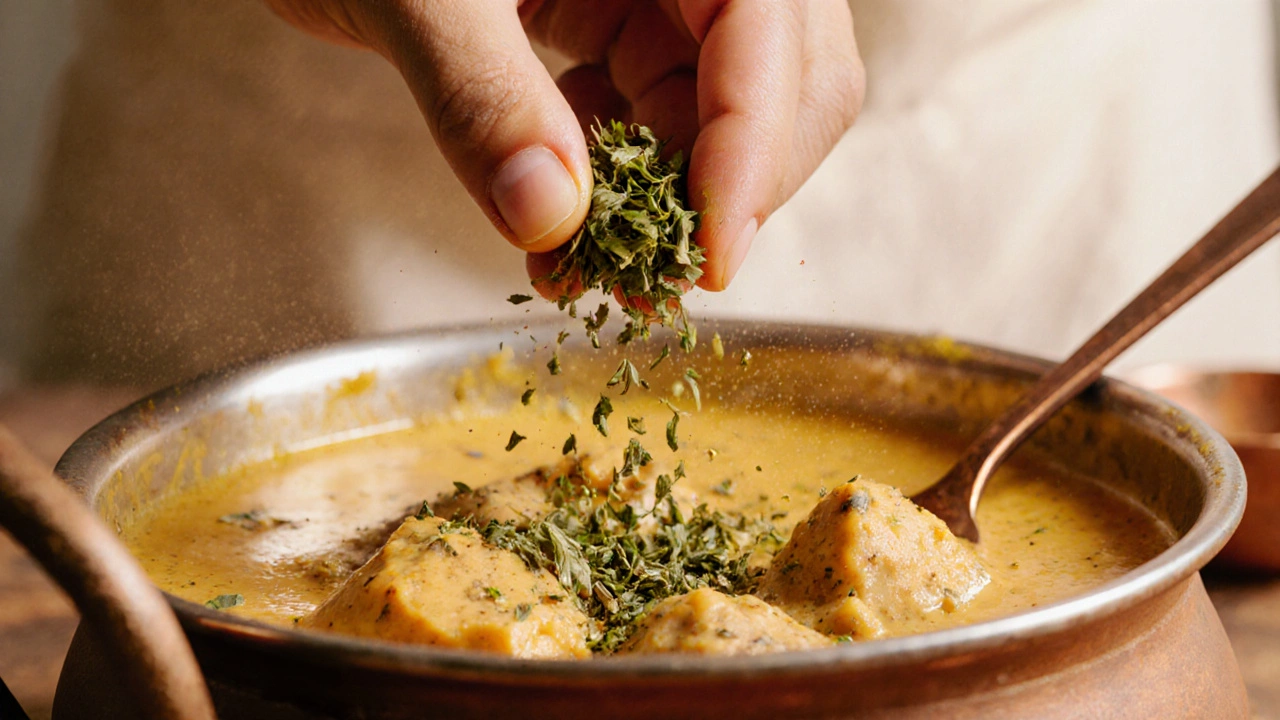
- Fenugreek leaves (kasuri methi) - Dried, not fresh. Crush them between your palms before sprinkling. They add a bitter-sweet, almost maple-like depth. Don’t confuse this with fresh fenugreek-this is the dried version used in North Indian kitchens, but it works wonders in chicken curry too.
- Basil (tulsi or sweet basil) - Not common everywhere, but in coastal Tamil Nadu, some families use a few leaves of sweet basil. It’s subtle, floral, and pairs beautifully with curry leaves and coconut milk. Use sparingly-just 2-3 leaves, torn.
- Curry leaves - These aren’t just for tempering. A few fresh ones, lightly fried in ghee for 10 seconds and then scattered on top, add a nutty, almost lemony aroma. They’re essential in South Indian curries. Skip them, and you miss a core flavor.
What Not to Use
Some herbs sound right but don’t belong on chicken curry. Avoid:
- Parsley - It’s bland here. No depth, no aroma that matches the spices.
- Oregano or thyme - These are Mediterranean. They clash with the warm, earthy profile of Indian spices.
- Dried rosemary - Too piney, too strong. It drowns out the subtle layers.
- Chives - Too mild. They vanish before you even take a bite.
Stick to what’s local, what’s traditional, and what’s been tested over generations. That’s the real guide.
How to Apply Herbs for Maximum Impact
It’s not just about which herbs you use-it’s how you use them.
- Wait until the end. Add herbs only after you’ve turned off the heat. If you add them while the curry is boiling, they lose their color, aroma, and crunch.
- Chop finely. Large leaves can be tough. Cilantro and mint should be chopped small enough to blend gently with each bite.
- Use dry herbs differently. Kasuri methi needs to be crushed in your palm first. That releases its oils. Sprinkle it right before serving.
- Heat fresh curry leaves. For extra aroma, heat 1 tsp ghee in a small pan, toss in 6-8 curry leaves for 5 seconds until they crisp slightly. Pour the hot ghee and leaves over the curry. The sizzle adds scent and texture.
- Don’t mix them all. Pick one or two. Too many herbs compete. Cilantro + curry leaves is classic. Mint + cilantro works for creamy curries. Don’t throw in five different types.
Pairing Herbs with Curry Styles
Not all chicken curries are the same. The herb choice changes based on the base.
| Curry Style | Base Ingredients | Best Herb Toppings |
|---|---|---|
| South Indian Coconut Curry | Coconut milk, tamarind, mustard seeds | Cilantro + curry leaves |
| North Indian Butter Chicken | Tomato cream, cashew paste, ghee | Cilantro + kasuri methi |
| Spicy Andhra Chicken Curry | Red chilies, tamarind, ground spices | Cilantro only |
| Coastal Kerala Curry | Coconut, roasted spices, curry leaves | Cilantro + fried curry leaves |
| Creamy Yogurt-Based Curry | Yogurt, saffron, mild spices | Mint + cilantro |
Notice a pattern? In South India, cilantro and curry leaves are non-negotiable. In the North, kasuri methi steps in to cut the richness. The key is matching the herb to the flavor profile-not just tossing on whatever’s in the fridge.
Common Mistakes People Make
Even experienced cooks mess this up.
- Using wilted herbs. If the leaves are yellowing or slimy, they’ll taste bitter. Always use crisp, fresh ones.
- Adding too early. If you stir herbs into the curry while it’s still on the stove, they turn brown and lose flavor.
- Using powdered herbs. Dried cilantro powder? Don’t. It tastes like dust. Fresh is the only way.
- Thinking it’s decorative. This isn’t a garnish for Instagram. It’s flavor. Taste the curry before and after adding herbs. You’ll hear the difference.
Pro Tip: The 5-Second Rule
Here’s a trick from home cooks in Madurai: right before serving, take a small spoonful of hot oil from the curry (don’t use the main pot-use a ladle). Drop it on the herbs you’ve just sprinkled. The heat wakes up the oils in the leaves. The scent explodes. It’s a small move, but it makes the curry smell like it just came out of a village kitchen.
What About Other Garnishes?
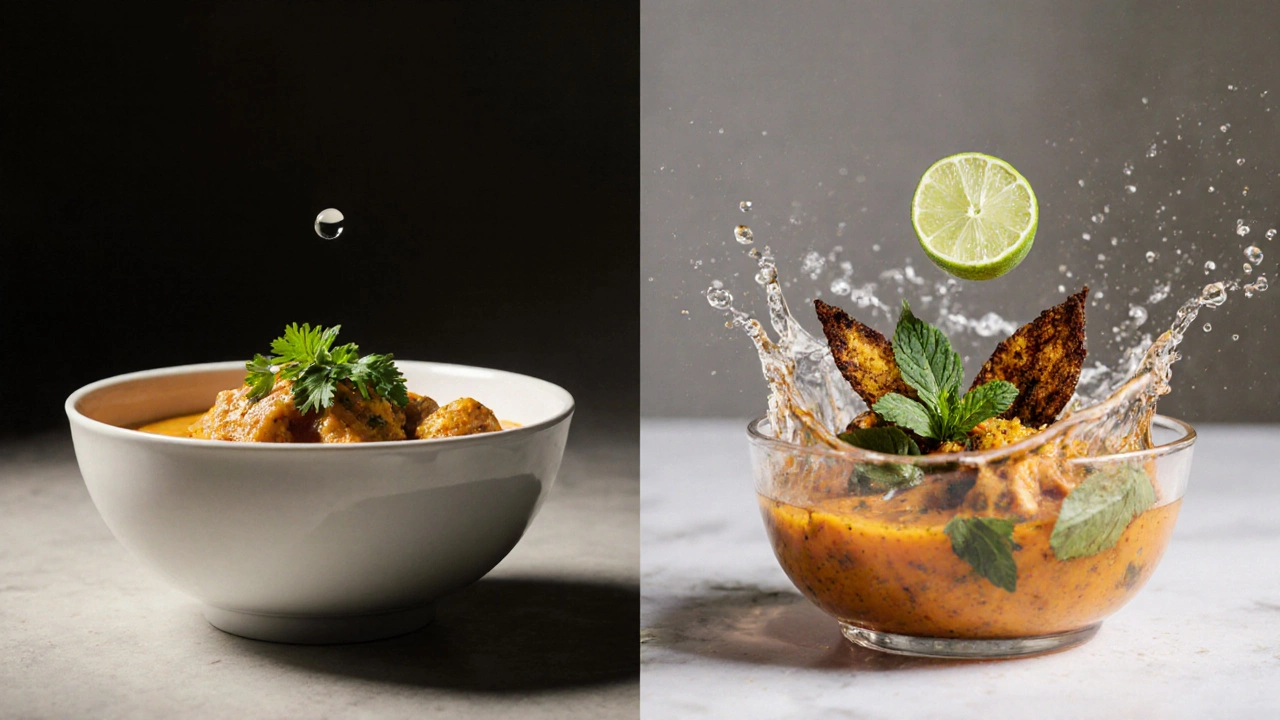
Herbs aren’t the only thing. A squeeze of lime juice right before serving brightens everything. A sprinkle of roasted cumin powder adds earthiness. A few fried cashews give crunch. But none of those replace the role of fresh herbs. They’re the final punctuation mark.
Try this: make the same curry twice. Once with herbs on top, once without. Serve them side by side. Close your eyes. Taste the one without first. Then taste the one with. You’ll know instantly why this step matters.
Frequently Asked Questions
Can I use dried herbs instead of fresh on chicken curry?
No, not for the toppings. Dried herbs lose their aroma and texture. They won’t give you the bright, fresh pop you need. The only exception is kasuri methi (dried fenugreek leaves), which is meant to be used dry and crushed before adding. But even then, it’s not a substitute for cilantro or mint.
Should I wash herbs before using them on curry?
Yes, always rinse them gently under cold water and pat dry with a clean towel. Wet herbs can make the curry watery and dilute the flavor. Don’t skip drying-they need to be crisp to hold their texture.
Can I use cilantro stems in chicken curry?
Yes, but not on top. The stems have strong flavor-more than the leaves. Chop them finely and add them while cooking, especially in the initial tempering. They release more aroma when fried in oil. Save the leaves for garnish.
Why do some curries have no herbs on top?
Some regional styles, like certain Punjabi or Bengali curries, rely on thick gravies and slow-cooked spices. They don’t need fresh herbs because the flavor is already layered and rich. But most South Indian and modern home-style curries benefit from a fresh finish. It’s about balance, not tradition alone.
How much herb should I use per serving?
For a pot serving 4 people, use about 1/2 cup of chopped cilantro and 10-12 fresh curry leaves. That’s not excessive-it’s just right. You want to see the green on top, not just a few scattered leaves. Taste as you go. If it looks bare, add more.
Final Thought
Chicken curry is comfort food. But comfort doesn’t mean flat. The best curries aren’t just spicy or creamy-they’re alive. Fresh herbs are what make them feel like they were made with care, not just ingredients. They’re the whisper of a kitchen window open to the garden, the scent of morning dew on leaves. Don’t skip them. They’re not optional. They’re the soul of the dish.