Herbs for Curry: Best Types, When to Use Them, and How They Transform Flavor
When you think of herbs for curry, fresh or dried plants used to enhance flavor in Indian cooking. Also known as curry herbs, they’re not just garnish—they’re the secret behind layered taste that makes a simple dish unforgettable. Unlike spices, which come from seeds, roots, or bark, herbs are the leafy parts of plants. In Indian kitchens, they don’t just add color—they unlock depth, balance heat, and even aid digestion. Think of cilantro, curry leaves, and mint—not as afterthoughts, but as core ingredients that change the entire character of a curry.
Not all herbs behave the same. curry leaves, a fragrant, citrusy leaf native to India, essential in South Indian and Sri Lankan curries are fried in oil at the start to release their aroma—a technique called tempering. Skip this step, and you miss half the flavor. cilantro, also called coriander leaves, a bright, citrusy herb added at the end to preserve its freshness works differently. Add it too early, and its delicate taste vanishes. Then there’s mint, a cooling herb used in chutneys and North Indian curries to cut through richness. It’s not just for garnish—it’s a flavor balancer, especially in creamy or spicy dishes.
Why do some curries taste flat even when the spices are right? Often, it’s because the herbs were ignored. Indian cooks know that spices build the base, but herbs give the dish its soul. A masala curry without fresh cilantro is like a song without a chorus. A coconut-based curry without curry leaves? It’s missing its heartbeat. Even dried herbs like dried fenugreek leaves (kasuri methi) have a place—they add a smoky, earthy note that’s hard to replicate.
You don’t need a garden to use these herbs well. Most Indian grocery stores carry fresh curry leaves in bunches, cilantro in small bundles, and mint in the produce section. Keep them wrapped in damp paper towels in the fridge—they last longer than you think. And if you’re short on time, dried versions work in a pinch, but never swap fresh for dried in equal amounts. One tablespoon of fresh cilantro equals about a teaspoon of dried. It’s not just substitution—it’s adjustment.
Herbs also play a quiet health role. Cilantro helps flush out heavy metals. Curry leaves are packed with antioxidants. Mint soothes digestion after a heavy meal. That’s why traditional Indian meals always include a side of chutney or a sprinkle of fresh herbs—not just for taste, but for balance.
What you’ll find in the posts below are real, tested ways to use these herbs in everyday curries. From when to crush curry leaves in hot oil to why some chefs save mint for the very last second, these aren’t theories—they’re kitchen-tested habits from homes across India. You’ll learn which herbs pair best with lentils, which ones make chicken curries pop, and how to avoid the one mistake that turns fresh herbs into a bitter afterthought. No fluff. Just clear, practical ways to make your curries taste like they came from a village kitchen, not a recipe app.
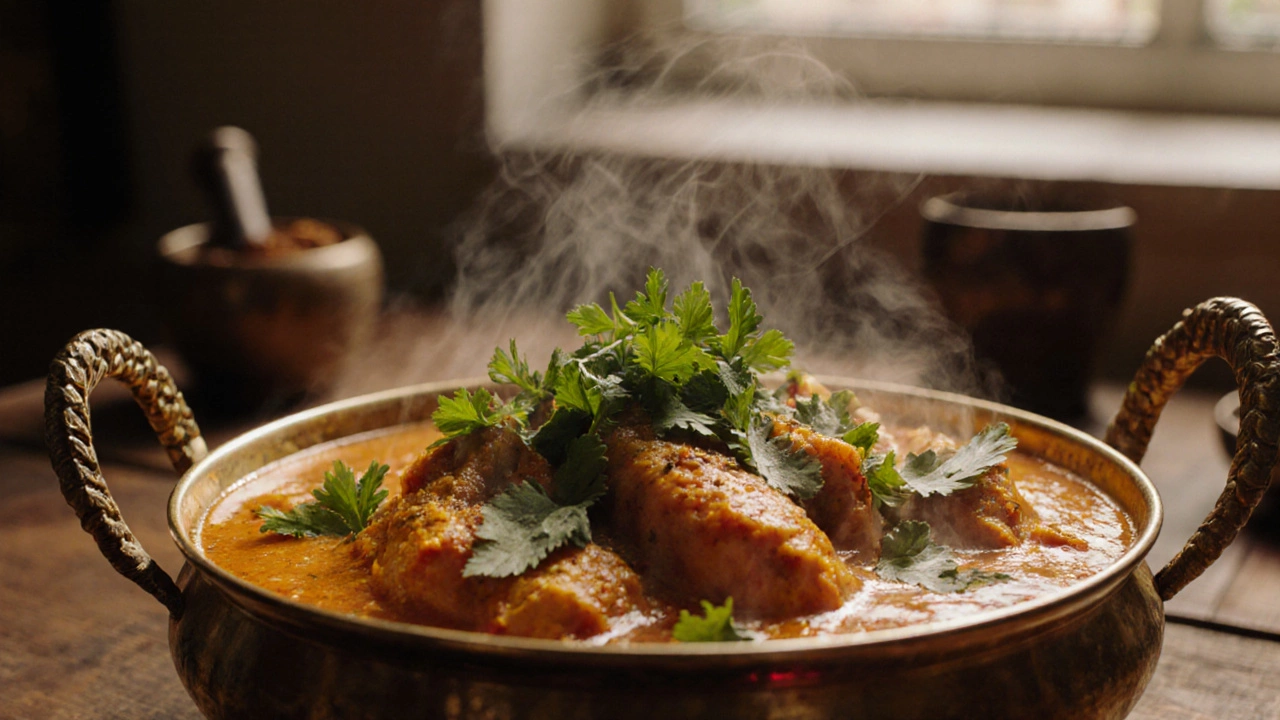
What Herbs Go on Top of Curry? Fresh Garnishes That Elevate Chicken Curry
Discover the best fresh herbs to top chicken curry-cilantro, curry leaves, mint, and more-plus how to use them right for maximum flavor. Learn what works, what doesn't, and why this final touch makes all the difference.