What Is India's Most Ordered Food? The Real Story Behind the Nation's Favorite Dish
 Dec, 5 2025
Biryani Value Calculator
How Biryani Compares to Other Dishes
See why biryani dominates delivery orders with this value calculator. Based on 2024 data showing biryani at 34% of total orders.
Results
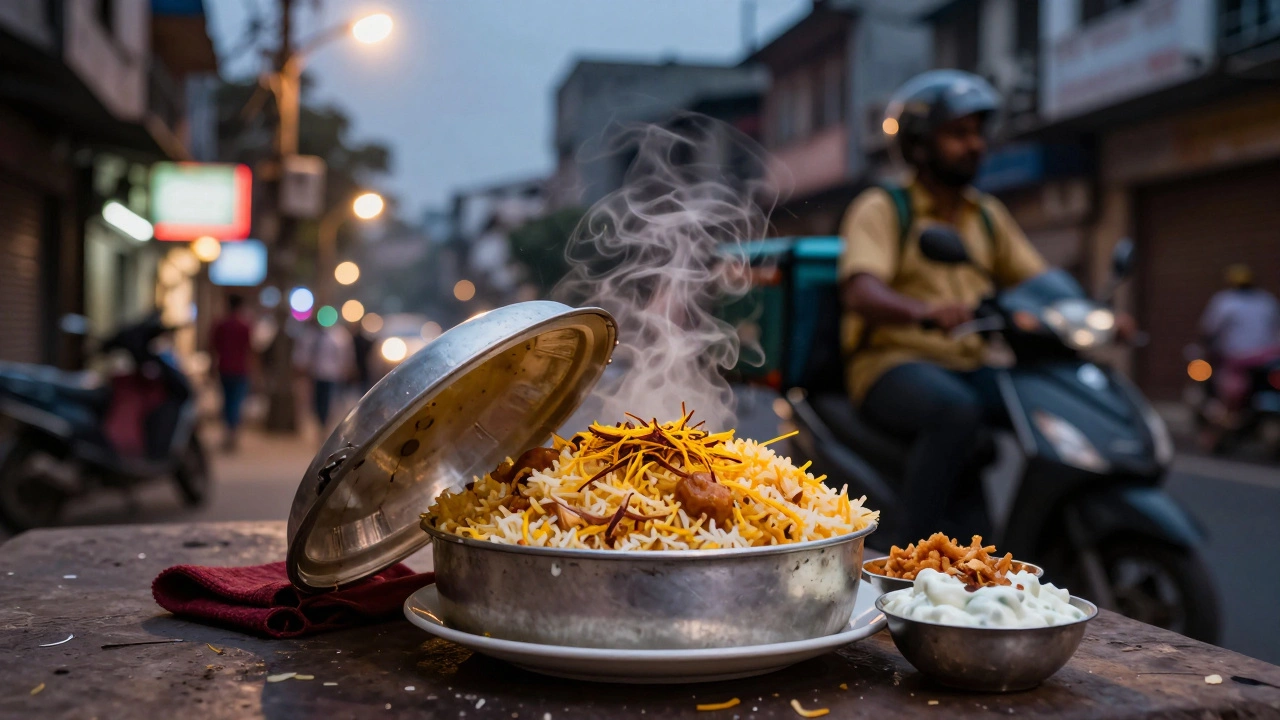
Every evening in Mumbai, Delhi, Bangalore, and small towns across India, the same thing happens. A phone buzzes. A notification pops up. Someone clicks ‘Confirm Order.’ And within 30 minutes, a steaming box of biryani arrives at their door. It’s not just a meal. It’s the most ordered food in India - by a wide margin.
Biryani Isn’t Just a Dish - It’s a National Habit
If you’ve ever scrolled through Swiggy or Zomato in India, you’ve seen it: biryani dominates the top 10 list in every city. In 2024, over 12 million biryani orders were placed daily across India, according to data from food delivery platforms. That’s more than twice the number of orders for the second most popular dish, butter chicken.
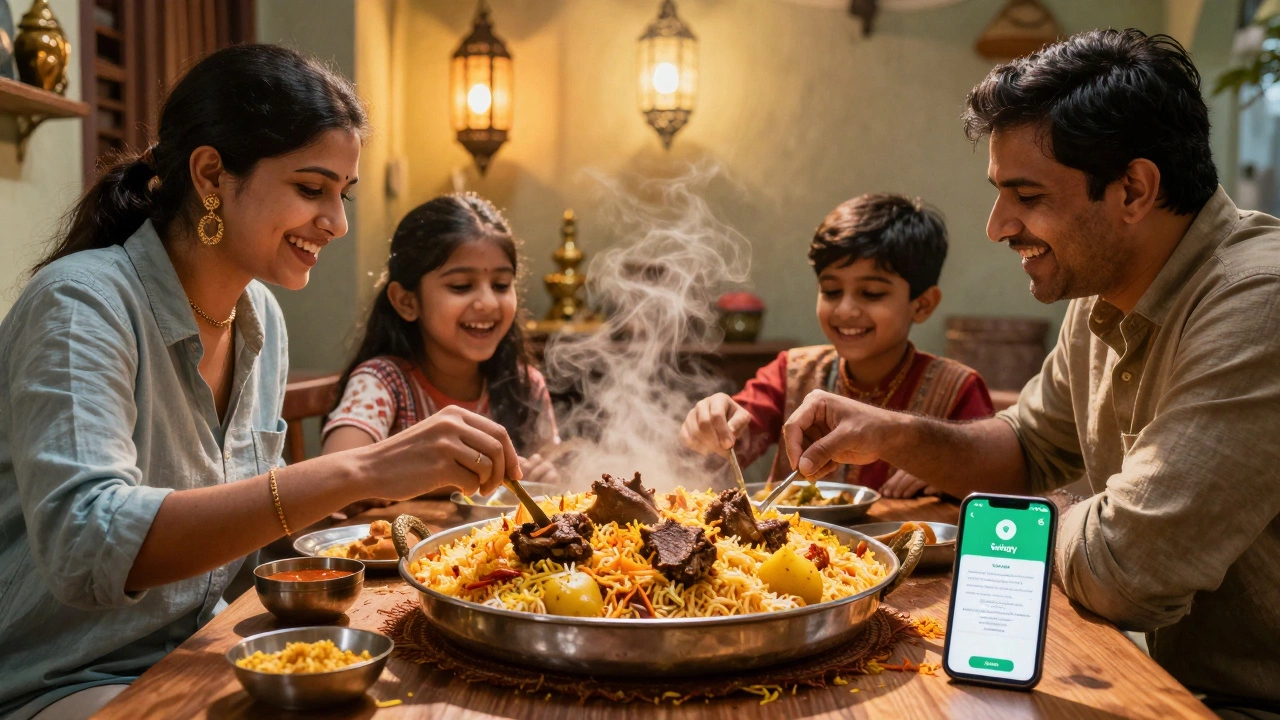
Why biryani? It’s not just about taste. It’s about versatility. A single pot of biryani can feed a family of four, serve as a party centerpiece, or be a quick lunch for someone working late. It works for birthdays, weddings, Friday nights, and rainy Mondays. You can order it with chicken, mutton, egg, vegetable, or even paneer. The base - fragrant basmati rice layered with spices, slow-cooked meat or veggies, and saffron - stays the same. The variations? Endless.
In Hyderabad, it’s the dum-style biryani with layers of marinated meat and potato. In Kolkata, it’s sweet, with boiled eggs and potatoes. In Mumbai, it’s spicy, with fried onions and a hint of rose water. No matter where you are, biryani adapts. That’s why it wins.
How Biryani Beat Out the Competition
Other dishes come close. Butter chicken? A crowd-pleaser, especially in North India. But it’s often ordered as a side. Masala dosa? Huge in the south, but rarely a full-meal delivery choice. Chole bhature? Popular for breakfast, but not something you order at 10 p.m. after work.
Biryani doesn’t need a side. It’s complete. It’s filling. It’s shareable. And it’s the only Indian dish that feels like a celebration even when you’re eating alone on your couch.
Take a look at delivery data from 2024. In Delhi, biryani made up 38% of all Indian food orders. In Chennai, it was 31%. In Pune, it was 42%. Even in cities where rice isn’t traditionally the staple - like parts of Gujarat or Rajasthan - biryani still tops the charts. Why? Because it’s been redefined as India’s universal comfort food.
The Rise of the Delivery Biryani
Before food apps, biryani was something you made at home or ordered from a local dhaba. It was expensive. It took hours. It wasn’t for everyday meals.
Then came the delivery revolution. Small kitchens started specializing in biryani - no full menus, just one star dish. They cut costs by using standardized spice blends, bulk rice, and efficient cooking methods. They didn’t need waiters. They didn’t need tables. Just a box, a seal, and a delivery rider.
These kitchens, often called “biryani specialists,” popped up in every neighborhood. Some started with one oven. Now, many operate out of commercial kitchens serving 500+ orders a day. In Mumbai alone, over 2,000 biryani-only delivery outlets exist. That’s more than the number of McDonald’s outlets in the entire country.
And the price? It’s never been lower. A full chicken biryani for two now costs as little as ₹220 in many cities. That’s less than a movie ticket. For that, you get rice, meat, raita, and sometimes even a boiled egg. It’s the most value-packed meal on any Indian food app.
What Makes Biryani So Addictive?
It’s not just the flavor. It’s the science.
Biryani uses layered cooking - rice and meat are cooked separately, then steamed together. This traps aromas. The spices - cardamom, cloves, cinnamon, bay leaves - release their oils slowly under heat. The saffron soaks into the rice, turning it golden. The fried onions caramelize into sweet, crunchy bits. Each bite has texture, temperature, and depth.
Studies in food psychology show that complex, layered flavors trigger dopamine release more strongly than simple tastes. Biryani isn’t just spicy or rich - it’s sweet, savory, crunchy, soft, warm, and aromatic all at once. That’s why you keep coming back.
And then there’s the nostalgia factor. For most Indians, biryani is tied to childhood memories - a special dinner, a festival, a visit from relatives. Even if you’ve never made it yourself, you’ve smelled it wafting from a neighbor’s kitchen. That emotional connection makes it more than food. It’s belonging.
How to Order the Best Biryani
Not all biryanis are created equal. Here’s what to look for:
- Color: Golden rice means saffron was used. Pale white rice? Probably just food coloring.
- Texture: The rice should be separate, not mushy. Each grain should hold its shape.
- Spice level: Real biryani has warmth, not fire. If it burns your tongue, it’s over-spiced to hide low-quality meat.
- Smell: Open the box. If it smells like cumin and fried onions, not oil, you’re in good hands.
- Extras: A good biryani comes with raita (yogurt sauce) and a boiled egg. If it doesn’t, ask for it.
Top-rated biryani spots in 2025? In Delhi, try Al Jawahar a legendary biryani joint in Old Delhi that’s been serving since 1968, known for its slow-cooked mutton and subtle spice blend. In Hyderabad, Paradise a chain that started in 1953 and still uses the same dum technique, with meat marinated for 12 hours. In Mumbai, Shah Ghouse a small kitchen in Dadar that delivers over 800 orders daily, using local basmati and real saffron.
Biryani vs. Other Indian Favorites
Here’s how biryani stacks up against other top Indian dishes in delivery orders (2024 data):
| Rank | Dish | Percentage of Total Orders | Average Price (₹) | Best For |
|---|---|---|---|---|
| 1 | Biryani | 34% | 220 | Full meals, groups, late-night cravings |
| 2 | Butter Chicken | 16% | 260 | Family dinners, mild flavor lovers |
| 3 | Masala Dosa | 12% | 150 | Breakfast, quick lunches |
| 4 | Chole Bhature | 9% | 180 | Weekend breakfasts |
| 5 | Pav Bhaji | 8% | 140 | Street food cravings, quick bites |
Notice something? Biryani isn’t just #1 - it’s in a league of its own. It’s the only dish in the top five that’s both a main course and a celebration. The others are sides, snacks, or breakfast items. Biryani is the whole event.
Why Biryani Will Stay on Top
India’s food delivery market is growing fast. More people live alone. More women work late. More families eat out - or in - than ever before. Biryani fits perfectly into this new reality.
It’s affordable. It’s satisfying. It’s customizable. And it’s deeply rooted in culture. No other dish carries that mix of tradition, convenience, and emotional weight.
Even as new cuisines flood the market - Korean fried chicken, sushi bowls, vegan bowls - biryani hasn’t budged. Why? Because it doesn’t need to compete. It’s not a trend. It’s a tradition that evolved.
So if you’re wondering what India’s most ordered food is, the answer isn’t complicated. It’s biryani. And it’s not going anywhere.
Is biryani really the most ordered food in India?
Yes. According to delivery platform data from 2024, biryani accounts for over 30% of all Indian food orders nationwide. It outsells butter chicken, masala dosa, and chole bhature combined. It’s the only dish that consistently ranks #1 in every major city.
What’s the difference between Hyderabadi and Lucknowi biryani?
Hyderabadi biryani uses the dum method - layers of rice and meat are sealed and cooked slowly over low heat, giving it a rich, intense flavor. Lucknowi biryani is lighter, with more emphasis on aromatic spices like saffron and kewra water. The meat is pre-cooked, so the rice stays fluffier and less spicy.
Can I order vegetarian biryani?
Absolutely. Vegetable biryani is one of the most popular options, especially in cities like Pune and Ahmedabad. It’s made with potatoes, peas, carrots, and cashews, spiced the same way as meat biryani. Many places even offer paneer or tofu versions.
Why is biryani so cheap compared to other dishes?
Because biryani kitchens focus on one dish. They buy rice and spices in bulk, use standardized recipes, and cook in large batches. There’s no need for waitstaff, ambiance, or complex plating. That efficiency cuts costs - and lets them offer more value.
Is biryani healthy?
It’s not a diet food. Biryani is high in carbs and often cooked with ghee or oil. But it’s not all bad. The spices - turmeric, cumin, cardamom - have anti-inflammatory properties. The rice provides energy, and the meat or veggies add protein. Enjoy it in moderation, and pair it with raita to balance the richness.