Ginger Timing: How Long to Let Ginger Work Its Magic
When working with ginger timing, the period you allow ginger to sit in a liquid, batter, or spice mix before cooking, which determines how much aroma, heat, and health benefits are released. Also known as ginger infusion time, it is a key factor in everything from a quick chutney to a slow‑cooked curry. Understanding this timing helps you avoid bland or overly sharp flavors, and it connects directly to marination duration, the length of time meat, vegetables, or dough spend soaking in a seasoned liquid before heat is applied. In the sections that follow, you’ll see why ginger timing matters, how it interacts with other timing concepts, and what practical steps you can take today.
Why Ginger Timing Shapes Flavor Extraction
Ginger contains essential oils like zingiberene and gingerol that dissolve slowly in water, oil, or dairy. The longer these compounds sit, the deeper the flavor extraction, the process of pulling taste and aroma molecules from ginger into the surrounding medium becomes. A short 5‑minute soak yields a bright, peppery snap, perfect for a fresh salad dressing. Extend that to 30 minutes, and the heat mellows while the sweetness rises, making it ideal for a biryani marinade. Push it beyond two hours, especially in acidic bases like lemon juice, and the ginger becomes almost buttery, adding body to sauces without overwhelming heat. This gradient shows the semantic triple: *Ginger timing influences flavor extraction*, and it also *requires knowledge of the surrounding medium’s pH and fat content*.
Another entity that plays off ginger timing is spice infusion timing, the period during which whole spices are steeped in oil or water to release their volatile oils before the main cooking step. When you combine ginger with cumin, mustard seeds, or curry leaves, their optimal infusion windows often overlap. For example, a tempering of mustard seeds in hot oil for 15 seconds releases a nutty base; adding grated ginger at that moment lets its fresh heat mingle before the oil reaches smoking point. This illustrates the triple: *Spice infusion timing works hand‑in‑hand with ginger timing*, and it *enhances the overall aroma profile of the dish*.
Practical cooking rhythms also matter. A common mistake is to add ginger at the very end of a slow simmer, assuming its flavor will still shine. In reality, the brief exposure limits extraction, leaving a raw bite. Instead, drop ginger 10‑15 minutes before the end of a 45‑minute stew, or let it sit in the yogurt‑based marinade for at least 30 minutes before grilling. These simple adjustments sync ginger timing with the *cooking time* of the main ingredient, producing a balanced heat that isn’t lost or overpowering.
What about the medium? Ginger in oil extracts faster than in water, while dairy slows the process but adds creaminess. If you’re making a paneer‑marinade, blend ginger with curd and let it rest for 45 minutes; the lactic acid gently breaks down the ginger’s fibers, yielding a mellow flavor that coats the paneer evenly. In a dry rub for tandoori chicken, let ginger powder sit with salt and spices for 20 minutes; the salt draws moisture out, creating a thin paste that clings to the meat. Each scenario shows a different *entity‑attribute‑value* set: *Ginger timing (attribute) + medium (value) = flavor outcome*.
Finally, consider the health angle. Studies show that ginger’s anti‑inflammatory compounds become more bioavailable after a brief soak in warm water (about 10 minutes). If you’re making a soothing ginger‑lemon tea, let the grated root steep for 5‑7 minutes; longer steeping can make the brew bitter. This ties ginger timing to *nutrient extraction*, another related entity that influences both taste and wellness.
All these connections—flavor extraction, spice infusion timing, cooking time, medium choice, and nutrient extraction—create a web of relationships that make ginger timing a versatile tool in any kitchen. Below you’ll find articles that drill down into each aspect, from quick marinades to long‑hour biryanis, so you can pick the exact timing that fits your recipe and taste.
Ready to see how these principles play out in real dishes? Scroll down to explore tips on soaking chicken for tenderness, adding lemon to biryani for fluffy rice, adjusting oil in roti dough for softness, and much more—all tied together by smart ginger timing.
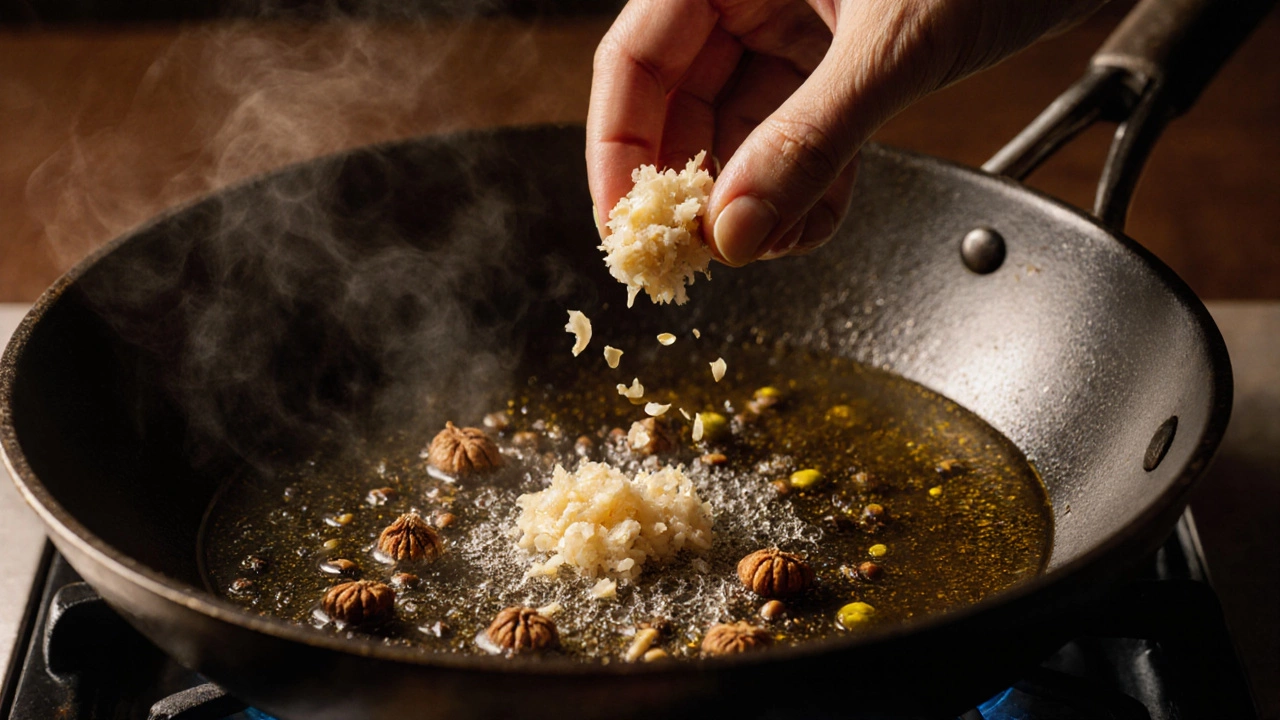
Perfect Timing: When to Add Garlic and Ginger to Curry
Learn the exact moments to add garlic and ginger in curry for maximum flavor, avoid bitterness, and boost health benefits with practical timing tips.