Milk for Curdling: Best Types, Tips, and How It Works in Indian Cooking
When you’re making milk for curdling, the process of thickening milk into solid curds using acid or heat, commonly used to make paneer and other traditional Indian dairy products. Also known as clabbering, it’s the foundation of homemade paneer, chhena, and even some regional desserts. Not all milk behaves the same—using the wrong kind can leave you with weak curds or a grainy texture. The key isn’t just adding lemon juice or vinegar—it’s understanding how the milk itself reacts.
Full-fat whole milk works best because the fat holds the curds together, giving you a firm, sliceable paneer. Skim or low-fat milk? You’ll get crumbly, dry results. Pasteurized milk is fine, but avoid ultra-pasteurized—it’s been heated too high and won’t curdle properly. Fresh milk, ideally under 48 hours old, responds best to acid. If your milk smells off or has been sitting too long, even if it’s not spoiled, it might curdle too fast or unevenly. That’s why many home cooks in India prefer milk from local dairies or boil it first to kill any stray bacteria before adding acid.
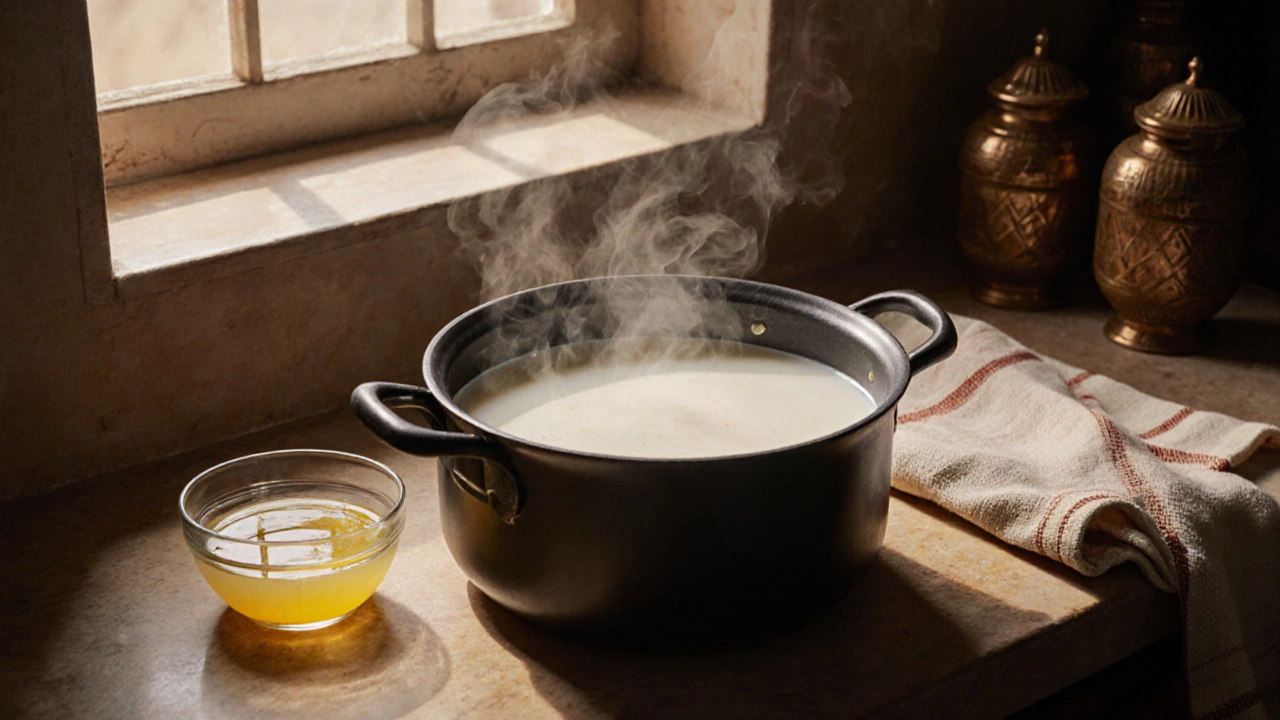
Paneer making, a traditional Indian method of separating milk solids from whey using lemon juice, vinegar, or yogurt, is the most common use of curdled milk. But it’s not just about paneer. In Bengal, curdled milk becomes chhena for rasgulla. In Gujarat, it’s used in kheer and shrikhand. The acid you choose matters too: lemon juice gives a clean tang, vinegar is stronger and faster, while yogurt adds a subtle sourness and works slowly. Each affects flavor and texture differently. Temperature is just as important. Heat the milk to just below boiling—around 85–90°C—before adding acid. Too cold, and the curds won’t form cleanly. Too hot, and you’ll scorch the milk or break down the proteins too much. Stir gently after adding acid, then let it sit for 10–15 minutes. The whey should separate clearly, like yellowish liquid around white clumps. Drain it in a muslin cloth, press lightly, and you’ve got fresh paneer.
Some people think you need special milk or fancy tools. You don’t. A pot, a strainer, and a clean cloth are all you need. The real secret? Consistency. Use the same milk brand, same acid, same heat level every time, and you’ll get the same results. If you’ve ever made paneer that fell apart or tasted bitter, it’s not your fault—it’s the milk. And now you know exactly why.
Below, you’ll find real recipes and tips from home cooks who’ve cracked the code on perfect curdling every time—whether they’re making paneer for a weeknight curry, chhena for a festival sweet, or just trying to use up leftover milk without waste. No fluff. Just what works.
Best Milk for Homemade Paneer: What Works and Why
Full-fat cow or buffalo milk is best for homemade paneer. Low-fat, skim, or ultrapasteurized milk won't work. Learn why milk quality matters and how to get perfect paneer every time.