Best Milk for Homemade Paneer: What Works and Why
 Nov, 20 2025
When you make paneer at home, the milk you choose makes all the difference. Not all milk is created equal when it comes to turning into soft, firm, sliceable cheese. If your paneer turns out crumbly, watery, or too soft, the problem isn’t your technique-it’s the milk.
Why Milk Matters More Than You Think
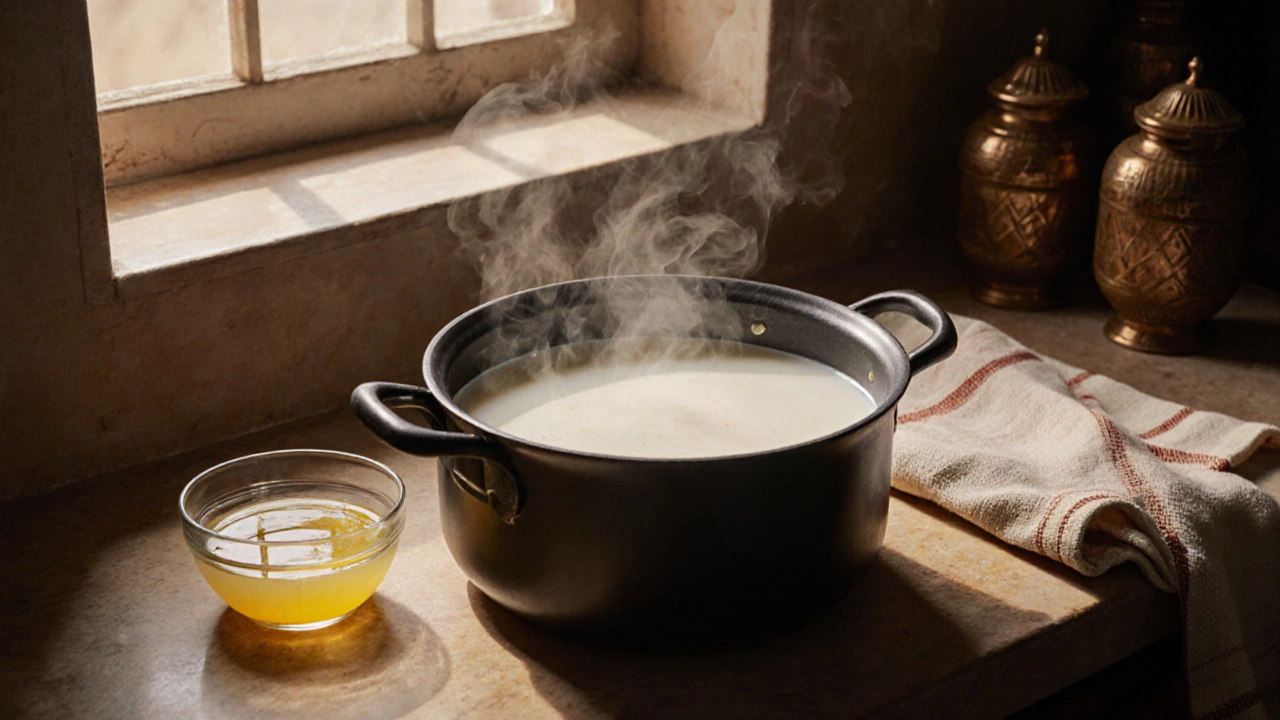
Paneer is simple: heat milk, add acid, strain. But the magic happens in the proteins. Milk contains casein, the main protein that clumps together when it meets acid. The higher the fat and protein content, the better the paneer. Low-fat or skim milk? You’ll get a rubbery, dry block that falls apart when you try to fry it. Whole milk with at least 3.5% fat? That’s where the real paneer begins.
Indian households have always used full-fat milk for paneer, not because of tradition alone, but because science backs it. A 2022 study from the National Dairy Research Institute found that milk with 4% fat and 3.2% protein produced paneer with 28% higher yield and 40% better texture than milk with 2% fat. That’s not a small difference-it’s the difference between a soft, melt-in-your-mouth paneer and a chalky brick.
What Kind of Milk Should You Use?
You have a few options, but only one really works for the best paneer.
- Full-fat cow’s milk - The gold standard. It’s widely available, affordable, and gives you a creamy, slightly sweet paneer that holds its shape. Look for milk labeled “whole” or “full-fat.” Avoid ultrapasteurized milk-it’s been heated too high and won’t curdle properly.
- Full-fat buffalo milk - Higher in fat (6-8%) and protein than cow’s milk. This makes it the richest option. Paneer made from buffalo milk is denser, firmer, and has a deeper flavor. It’s the choice for restaurants in North India. But it’s harder to find outside urban markets and costs more.
- Pasteurized milk (not ultrapasteurized) - Pasteurized milk is fine. Ultrapasteurized? Avoid it. It’s heated to over 135°C to extend shelf life, which damages the proteins. You’ll end up with weak curds that won’t bind. Check the label: if it says “ultrapasteurized” or “UHT,” put it back.
- Raw milk - If you have access to fresh, clean raw milk from a trusted source, it’s excellent. The natural enzymes help with curdling. But if you’re unsure about safety, stick with pasteurized.
- Plant-based milk (almond, soy, oat) - Don’t bother. They don’t contain casein. You might get a tofu-like block, but it won’t taste or behave like paneer. Skip it.
How Much Milk Do You Need?
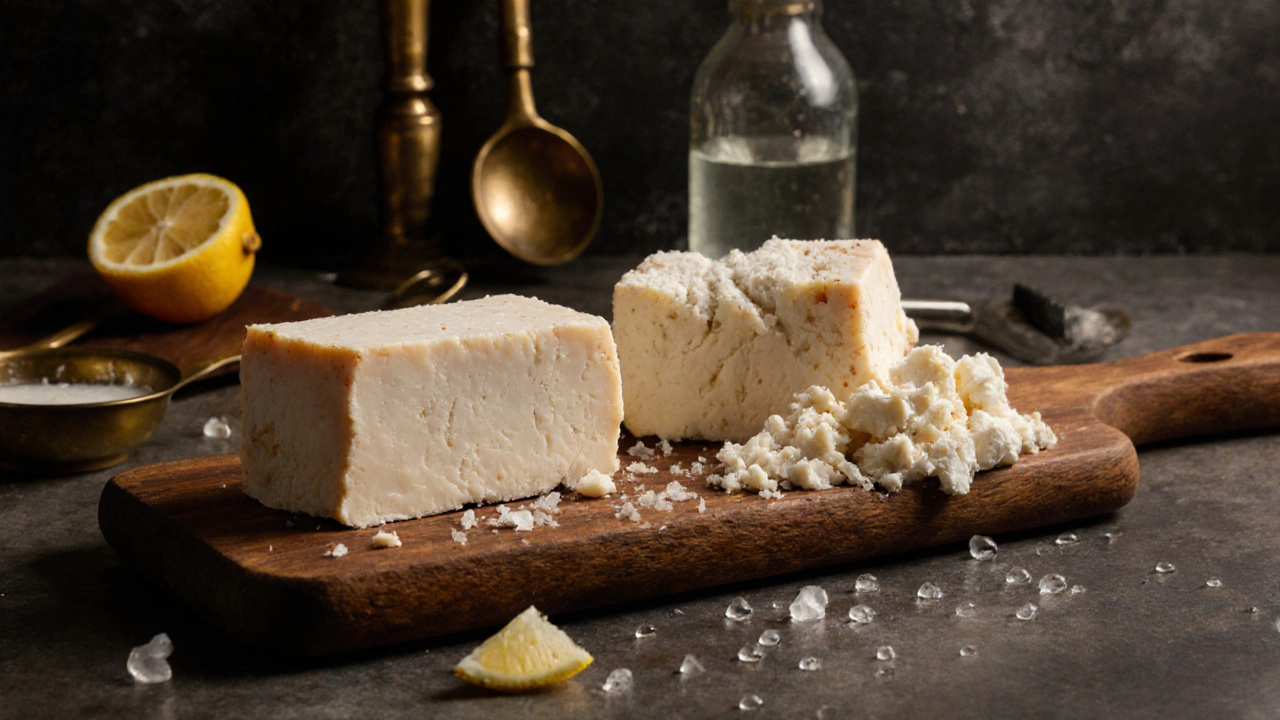
One liter of full-fat milk gives you about 200-225 grams of paneer. That’s roughly the size of a small brick. If you want 300 grams, use 1.5 liters. Don’t try to cut corners. Using less milk or lower-fat milk won’t save you money-it’ll waste your time and ruin the dish.
Here’s a simple rule: 1 liter milk = 1 cup paneer. It’s not exact, but it’s close enough for home cooking.
Why Not Low-Fat or Skim Milk?
Low-fat milk has less fat and less protein. That means less curd formation. When you add lemon juice or vinegar, the curds will be small, weak, and full of water. You’ll end up pressing for 30 minutes and still get a soggy mess. And even if you manage to squeeze out the water, the paneer will be dry, crumbly, and taste bland.
Some people think low-fat milk makes “healthier” paneer. But you lose the flavor, texture, and cooking performance. In paneer bhurji, paneer tikka, or palak paneer, the fat carries flavor and helps the cheese brown beautifully. Without it, you’re just eating cardboard.
Does Brand Matter?
Yes, but not the way you think. Big brands like Amul, Mother Dairy, or Nandini are fine-they’re standardized and consistent. But the real winner is freshness. Milk that’s been sitting on the shelf for 3-4 days? Skip it. Use milk that’s been chilled and sold within 24 hours.
In Chennai, many households buy milk from local dairies or home-delivered sources. That’s ideal. The milk hasn’t been processed multiple times, and it’s still alive with natural enzymes. If you’re buying from a supermarket, check the packaging date. Buy the freshest batch.
What About Milk Powder?
Can you reconstitute milk powder to make paneer? Technically, yes. But it’s not recommended. Milk powder has been spray-dried, which alters protein structure. The resulting paneer is often grainy and lacks the smoothness of fresh milk. If you’re in a pinch and have no fresh milk, try it-but don’t expect restaurant-quality results.
Pro Tips for Perfect Paneer Every Time
- Use whole milk, not low-fat. Always.
- Heat the milk slowly. Bring it to a gentle boil over medium heat. Don’t rush it. Scorching the bottom ruins the texture.
- Add acid (lemon juice, vinegar, or yogurt) off the heat. Turn off the stove, then stir in the acid slowly. This gives you clean, large curds.
- Let the curds rest for 5 minutes after adding acid. This lets them fully form.
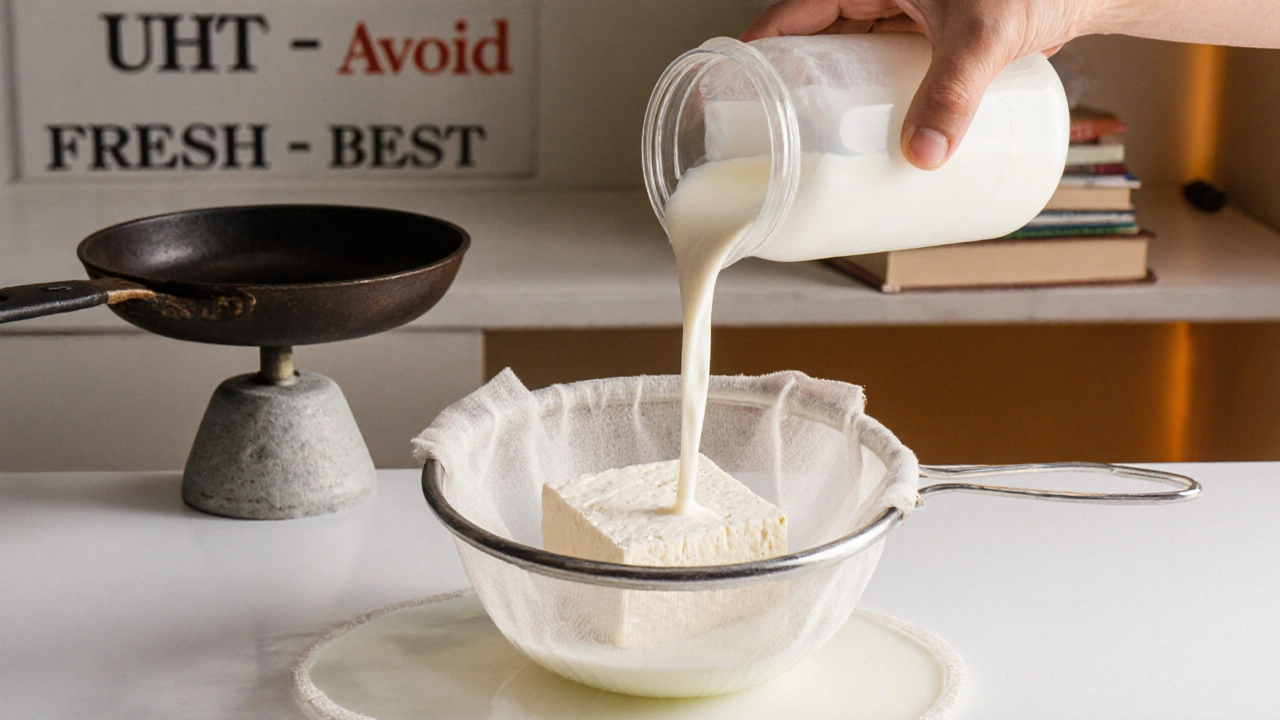
- Strain through a clean muslin cloth, not a sieve. The cloth catches the fine curds and lets you squeeze out water evenly.
- Press with a heavy weight-like a cast-iron pan or a stack of books-for 30-45 minutes. Don’t skip this. It’s what gives paneer its firmness.
- Soak the finished paneer in cold water for 10 minutes. This keeps it soft and prevents it from turning rubbery when cooked.
What Happens If You Use the Wrong Milk?
If you used skim milk, you’ll see:
- Small, scattered curds that don’t stick together
- Too much whey left behind, even after pressing
- Paneer that crumbles when you cut it
- It absorbs too much oil when frying and turns greasy
If you used ultrapasteurized milk:
- Curds barely form, even after adding acid
- Whey stays milky, not clear
- Paneer tastes slightly cooked or metallic
These aren’t mistakes you can fix with more pressing. They’re results of the wrong milk. Start over with full-fat, fresh, pasteurized milk.
Final Answer: What’s the Best Milk for Paneer?
Full-fat cow’s milk is the best choice for most home cooks. It’s balanced, affordable, and reliable. If you can find fresh buffalo milk, use it-it makes the richest paneer you’ll ever taste. Avoid low-fat, skim, ultrapasteurized, and plant-based milks. They don’t work.
Remember: paneer isn’t about cutting calories. It’s about texture, flavor, and performance in your favorite dishes. Use the right milk, and your paneer will be perfect every time-soft, sliceable, and ready to soak up spices in butter chicken or sizzle in a tandoori marinade.
Can I use toned milk for paneer?
No. Toned milk is diluted and has lower fat and protein than whole milk. It won’t form strong curds. Your paneer will be watery, crumbly, and lack flavor. Stick to full-fat milk.
Is buffalo milk better than cow milk for paneer?
Yes, buffalo milk makes denser, richer paneer because it has more fat and protein. But it’s harder to find and more expensive. For everyday cooking, full-fat cow’s milk works perfectly. Use buffalo milk if you want restaurant-style paneer for special dishes.
Why does my paneer turn out rubbery?
Rubbery paneer usually means you pressed it too long or used low-fat milk. Over-pressing squeezes out too much moisture. Using skim or toned milk gives weak curds that become tough when pressed. Always use full-fat milk and press for no more than 45 minutes.
Can I use milk from a dairy farm?
Yes, if it’s fresh and clean. Milk from local farms is often better than supermarket milk because it’s less processed. Just make sure it’s pasteurized if you’re not boiling it yourself. Raw milk is fine if you’re confident in its safety.
Does the brand of milk matter?
Not the brand, but the freshness and fat content. Amul, Mother Dairy, or local brands all work if they’re full-fat and not ultrapasteurized. Check the label for “whole milk” and the production date. Fresher is always better.