Rice Soaking Time – How Long Should You Soak Rice?
When working with rice soaking time, the period you let rice sit in water before cooking. Also known as pre‑soak, it directly affects texture, cooking speed, and nutrient retention. Related practices include dal soaking, soaking lentils to improve digestion and cut cooking time, the preparation of biryani rice, long‑grain basmati that needs fluffiness for layered biryani, and choosing the right rice varieties, such as basmati, jasmine, or short‑grain, each with its own soak requirements.
So why bother? Rice soaking time shortens the boil by up to 30%, lets the grains absorb water evenly, and reduces phytic acid that can lock away minerals. For basmati, a 30‑minute soak yields separate, aromatic grains – perfect for biryani or pilaf. Short‑grain rice, used in kheer or idli batter, benefits from a longer 2‑hour dip to achieve a soft, sticky texture. Quick‑soak methods (boiling water, then resting for 10 minutes) work in a pinch, but overnight soaking gives the best flavor development for festive dishes.
Practical Tips for Different Needs
Start by rinsing the rice until the water runs clear – this removes excess starch and prevents clumping. Then match the soak duration to your rice variety: basmati 20‑30 minutes, jasmine 15‑20, short‑grain 1‑2 hours. If you’re planning a biryani, add a splash of lemon juice or a pinch of baking soda during the soak; the acid or alkaline shift helps keep the grains fluffy and prevents breakage. When you’re also soaking dal for a lentil curry, you can combine the two processes – just keep the containers separate to avoid flavor crossover.
Understanding the link between soak time, water temperature, and cooking method empowers you to tweak recipes on the fly. Need a faster dinner? Use hot water for a 5‑minute quick soak, then increase the simmer time slightly. Want the ultimate texture for a special occasion? Stick to a cold‑water soak and let the grains rest overnight in the fridge. Both approaches still respect the core principle: the longer the grains hydrate, the less time they spend boiling.
Below you’ll find a curated set of articles that dig deeper into each of these angles – from why you should rinse yogurt marinades, to the science behind adding lemon to biryani, and even how soaking dal changes its nutrition. Browse the collection to pick up specific timings, troubleshooting tips, and flavor‑boosting tricks that will level up every rice‑based dish in your kitchen.
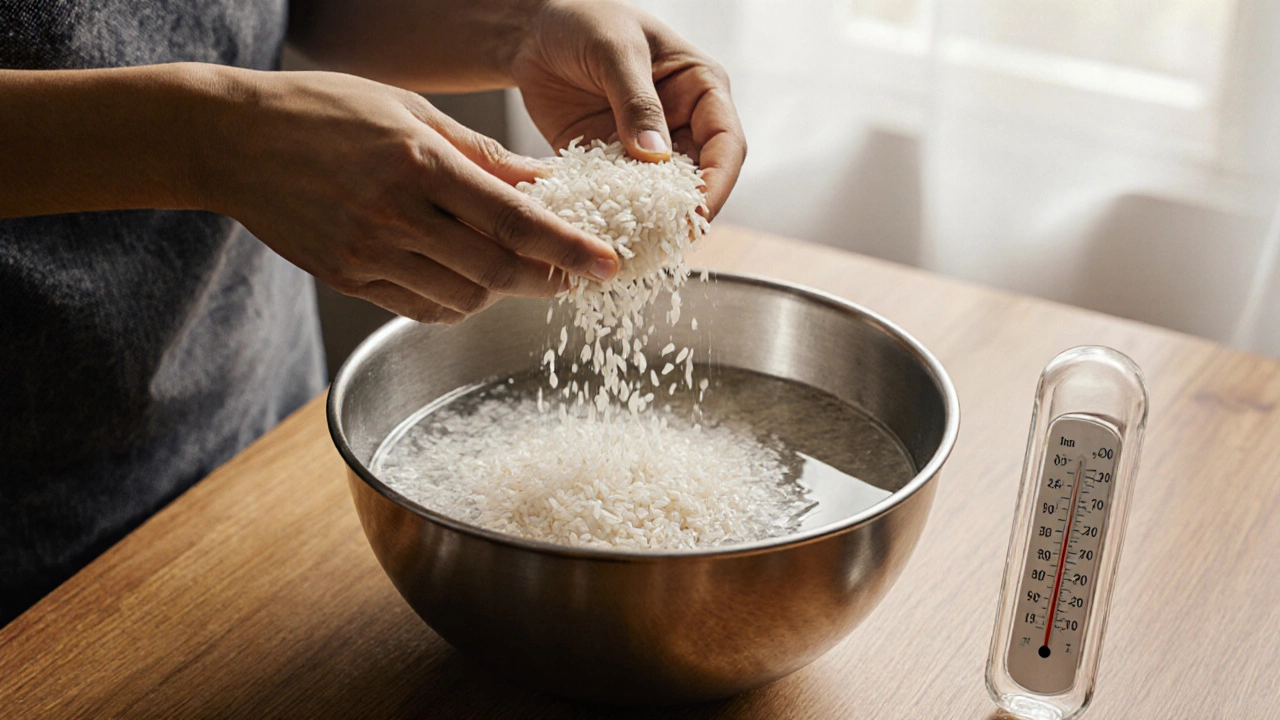
Ideal Rice Soaking Time for Perfect Dosa Batter
Learn the perfect rice soaking time for dosa batter, why it matters, and step‑by‑step tips to ensure fluffy, crisp dosas every time.