Roti Cooking Heat: Perfect Temperature for Soft, Fluffy Roti Every Time
When you're making roti, a traditional Indian flatbread made from whole wheat flour and water. Also known as chapati, it's one of the most basic yet most misunderstood dishes in Indian kitchens. The secret isn't in the flour or the kneading—it's in the roti cooking heat. Too low, and your roti turns tough and dry. Too high, and it burns before it puffs. Get it just right, and it balloons like a cloud—soft, pillowy, and full of flavor.
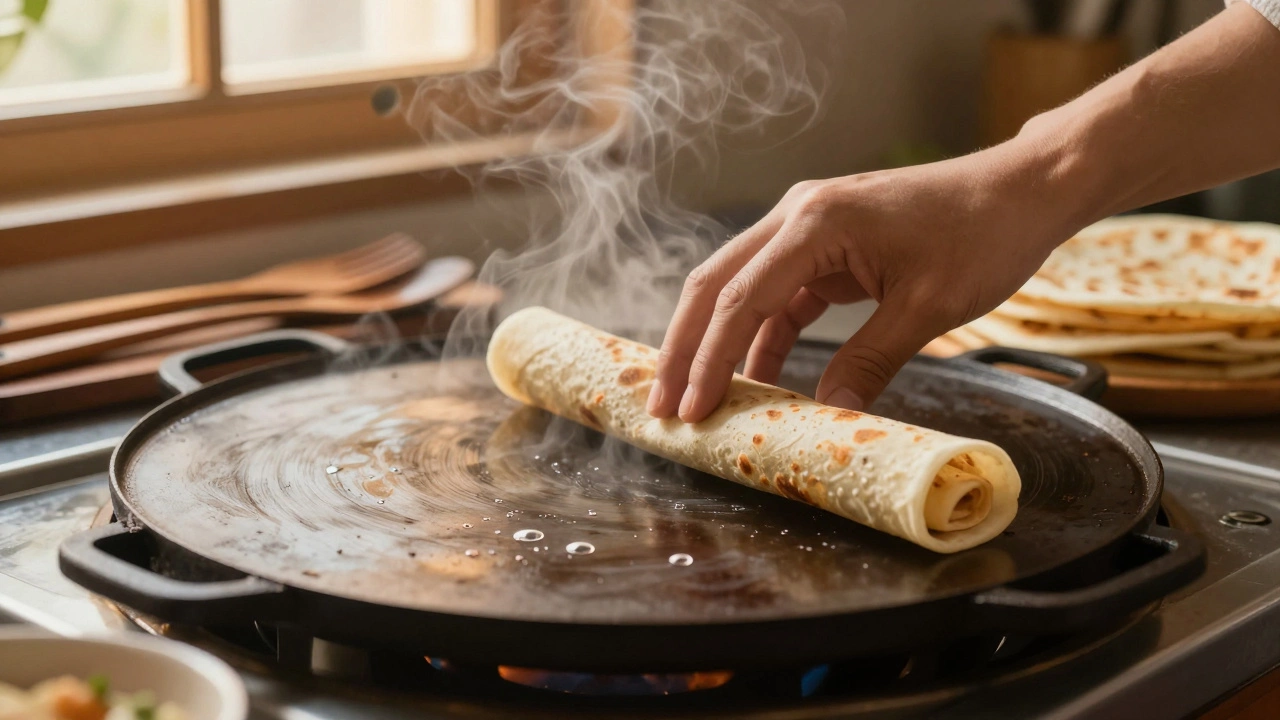
Most people cook roti on a tawa, a flat, heavy griddle used across India for making breads and pancakes. But not all tawas are the same. Cast iron holds heat longer and gives better puff than thin aluminum. The ideal heat is medium-high—you should see a faint wisp of smoke when you sprinkle a few drops of water on it. If the water sizzles and vanishes in under a second, you're good. If it dances around like mercury, it's too hot. If it just sits there, wait a minute longer.
Many think roti needs oil or ghee to puff, but that's not true. The puff comes from steam trapped inside the dough when it hits the right heat. Rolling it thin helps, yes—but heat is what makes it happen. You don’t need to press it down. Don’t flip it too early. Let the first side develop light brown spots before flipping. Then, after the second side sets, hold it directly over the flame for a few seconds. That’s when the magic happens: it swells up like a balloon. That’s the roti you want.
The same heat rules apply whether you're cooking on gas, electric, or induction. Induction stoves can be tricky—they heat fast but cool fast too. Keep the setting around 7 out of 10, and preheat the tawa for at least five minutes. If you're using a gas flame, keep the flame low and steady. A roaring flame will char the bottom before the inside cooks.
And here’s something most recipes skip: let your dough rest. Not just for 10 minutes. Try 30 to 60. It relaxes the gluten, making the roti easier to roll and more likely to puff. Cold dough? It won’t puff. Room temperature dough? It will.
You’ll find posts below that talk about how to make roti without oil, why some rotis stay flat, and how to fix a dry dough. They all circle back to one thing: heat. Not spices. Not fancy tools. Just the right temperature at the right time. This isn’t magic. It’s physics. And once you get it, you’ll never buy store-bought roti again.
Should Roti Be Cooked on High Heat? The Right Way to Get Soft, Puffy Rotis Every Time
Cooking roti on high heat burns the outside before the inside puffs. Learn the right temperature, timing, and techniques to make soft, fluffy rotis every time with simple, proven tips.