Should Roti Be Cooked on High Heat? The Right Way to Get Soft, Puffy Rotis Every Time
 Dec, 1 2025
Roti Heat Checker
Check Your Tawa Heat
Follow the water drop test to determine if your tawa is at the ideal temperature for cooking soft, fluffy rotis.
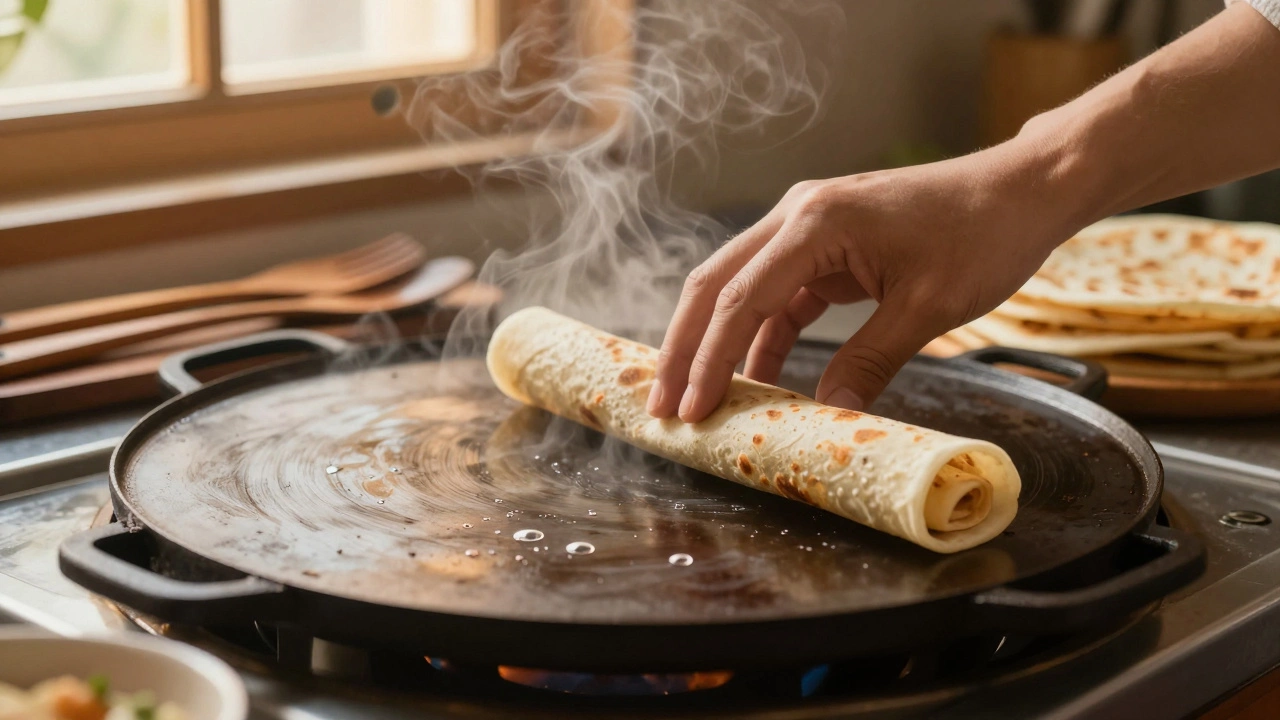
How to test: Sprinkle a few drops of water on your tawa. If they dance and evaporate in 2-3 seconds, you're at ideal medium heat.
Ever flipped a roti only to see it burn on one side and stay raw on the other? You’re not alone. Most people think high heat is the secret to fluffy rotis. But that’s where things go wrong. Cooking roti on high heat doesn’t make it puff up faster-it makes it char before the inside has time to cook. The truth? You need medium heat, not high. And here’s why.
Why High Heat Ruins Roti
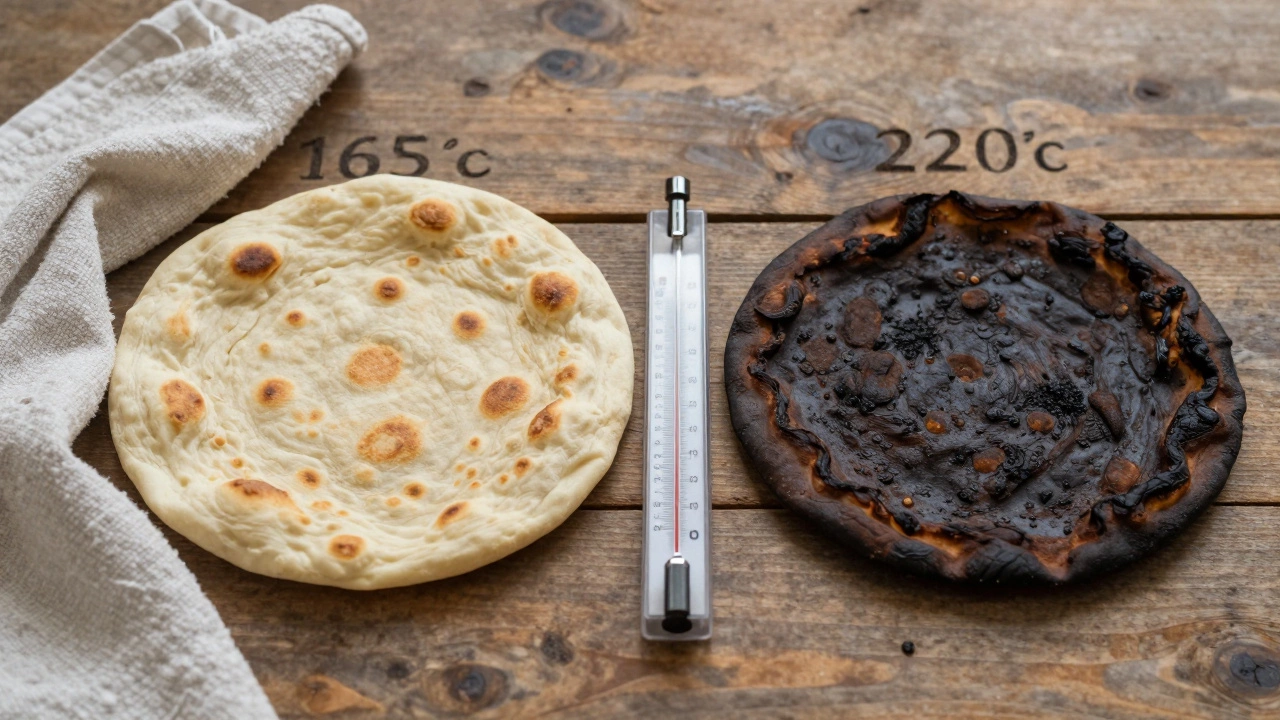
High heat sounds like a good idea. You want that puff, right? So you crank up the flame, slap the roti on the tawa, and wait for the magic. But instead of a soft, airy roti, you get a crispy, blackened disc with a doughy center. Why? Because heat moves fast, but steam moves slower.
Roti puffs because moisture inside the dough turns to steam and pushes the layers apart. That takes time. If the surface hits 200°C too quickly, the outer layer dries out and hardens before the steam can build up. The result? No puff. Just a burnt shell hiding undercooked dough.
Try this: heat your tawa until a drop of water sizzles and evaporates in 2-3 seconds. That’s medium heat. Not blazing. Not smoking. Just right.
The Science Behind the Puff
Roti isn’t bread. It doesn’t need yeast or long fermentation. Its puff comes from trapped steam and layered dough. When you roll roti, you create thin sheets of dough with tiny air pockets. When heat hits, water turns to steam, and those pockets expand. But only if the heat is even and slow enough.
Studies on Indian flatbreads show that optimal puffing happens between 160°C and 190°C. Above 200°C, the Maillard reaction (browning) dominates, and steam can’t form properly. That’s why professional tandoor chefs don’t use direct flame on roti-they control the heat carefully.
Even in home kitchens, the same rule applies. A tawa that’s too hot doesn’t cook the roti-it sears it.
How to Get the Perfect Heat
Here’s how to find your sweet spot:
- Place your tawa on the stove and turn the flame to medium.
- Wait 5-7 minutes. Don’t rush this.
- Test the heat: sprinkle a few drops of water. If they dance and vanish in 3 seconds, you’re good.
- Place the rolled roti gently on the tawa.
- Wait 30-45 seconds. You’ll see small bubbles form.
- Flip it. Cook the other side for another 30 seconds.
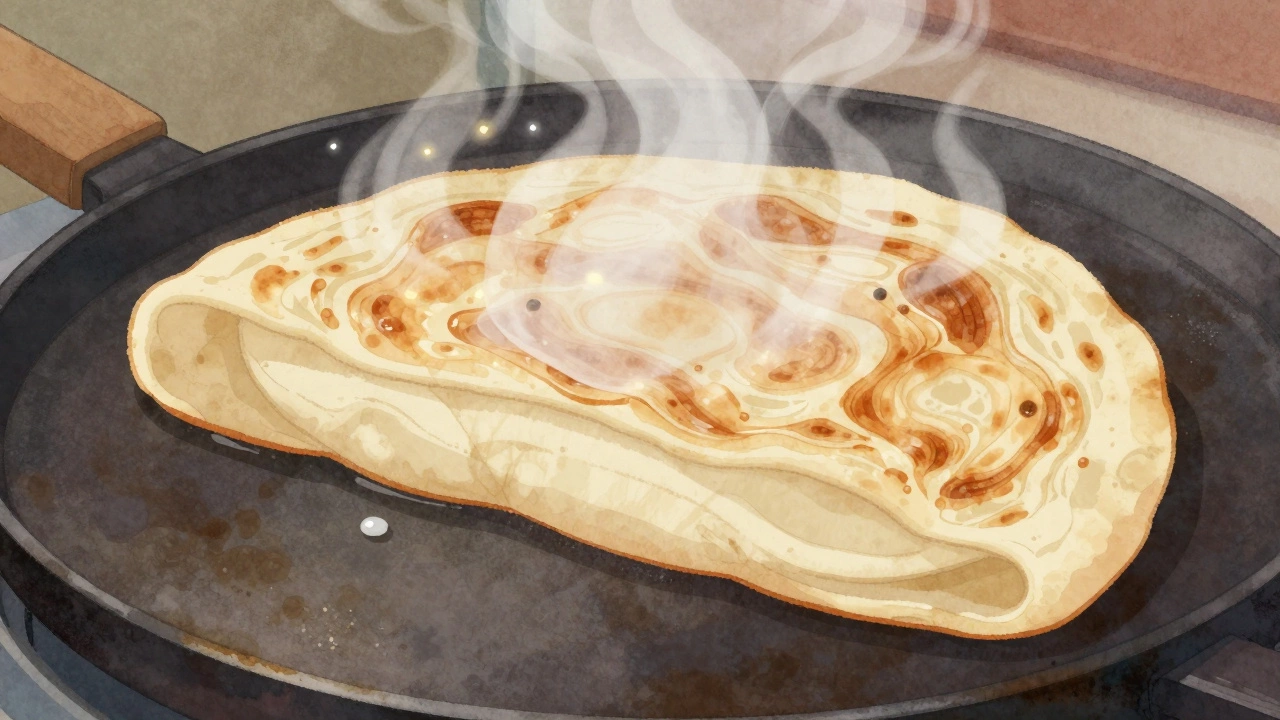
- Use tongs to press gently on the roti. If it puffs up like a balloon, you nailed it.
If it doesn’t puff? Your tawa’s too hot. Turn the flame down and wait another 2 minutes.
Common Mistakes That Keep Roti From Puffing
Even with the right heat, people mess up in other ways:
- Rolling too thin - If your roti is paper-thin, steam escapes too fast. Aim for 5-6 mm thick.
- Using cold dough - Dough should be at room temperature. Cold dough doesn’t trap steam well.
- Flipping too early - Wait until bubbles appear. If you flip too soon, the bottom won’t set.
- Pressing with the spatula - Don’t smash the roti. Let the steam do the work.
- Not covering the cooked roti - Stack them and cover with a cloth. This keeps them soft.
One simple trick I use in my kitchen in Bangalore: after cooking, wrap the roti in a clean kitchen towel. The trapped steam softens the crust and keeps it pliable for hours.
What About Direct Flame?
Some people swear by holding roti over an open flame to puff it up. That’s fine-if you’re aiming for charred, smoky flavor, like in a tandoor. But for everyday roti? It’s risky.
Direct flame heats unevenly. One side burns while the other stays doughy. It also wastes fuel and creates smoke in your kitchen. Stick to the tawa. It’s safer, cleaner, and gives you consistent results.
If you want that smoky taste, lightly toast the cooked roti on the tawa for 5 seconds after puffing. That’s enough.
Temperature Guide for Roti
| Stage | Temperature Range | Time | Result |
|---|---|---|---|
| Tawa Preheat | 160-180°C | 5-7 minutes | Even heat distribution |
| First Side Cook | 160-170°C | 30-45 seconds | Bubbles form, no browning |
| Second Side Cook | 160-170°C | 30 seconds | Puff appears, light golden spots |
| Final Toast (optional) | 180°C | 5 seconds | Light char, smoky aroma |
Why This Matters Beyond Taste
Roti isn’t just food. It’s fuel. And how you cook it affects digestion. A charred roti has more acrylamide-a compound formed when starches are overcooked at high heat. The World Health Organization lists acrylamide as a potential health concern.
Soft, evenly cooked roti is easier to digest. It breaks down slower in your stomach, giving you steady energy. Burnt roti? It’s harder to digest and can cause bloating.
Plus, you waste less dough. When rotis burn, you throw them out. When they puff perfectly, you use every single one.
What to Do If Your Roti Still Won’t Puff
If you’ve tried everything and your roti still won’t puff, check these:
- Dough hydration - Your dough should feel soft, like your earlobe. If it’s stiff, add a teaspoon of water and knead again.
- Resting time - Let the dough rest for at least 30 minutes. This lets gluten relax and water absorb evenly.
- Flour type - Use atta (whole wheat flour), not all-purpose. Atta has more fiber and holds moisture better.
- Tawa material - Cast iron or thick aluminum works best. Thin tawas heat unevenly.
One last tip: if your kitchen is dry, mist the rolled roti lightly with water before cooking. It helps steam build up.
Final Answer: No, Don’t Cook Roti on High Heat
High heat doesn’t make roti puff. It makes it burn. The secret to soft, fluffy roti isn’t fire-it’s patience. Medium heat, proper dough, and a little time give you perfect rotis every time. No guesswork. No smoke. No waste.
Next time you make roti, turn the flame down. Wait. Watch. Let the steam do its job. You’ll see the difference.
Can I use a non-stick pan to cook roti?
Yes, but it’s not ideal. Non-stick pans don’t hold heat as well as cast iron or thick aluminum. Rotis may not puff evenly, and the surface can get sticky if the pan isn’t hot enough. If you use one, preheat it fully and keep the flame low to medium.
Why does my roti crack when I roll it?
Cracking means the dough is too dry or hasn’t rested long enough. Add a teaspoon of water, knead for another minute, and let it rest for 15 more minutes. Cover the dough with a damp cloth while rolling to prevent drying.
Should I oil the tawa before cooking roti?
No. Oiling the tawa makes roti greasy and prevents puffing. The dough should stick slightly at first-that’s normal. Once it starts to bubble, it will release on its own. Wipe the tawa clean between rotis if needed.
Can I make roti without a tawa?
Yes, you can use a heavy skillet or even a griddle. The key is even heat distribution. Avoid thin, lightweight pans-they heat unevenly. A cast iron pan works just as well as a traditional tawa.
How do I store roti so it stays soft?
Stack freshly cooked rotis and wrap them in a clean kitchen towel. Put them in a covered container or insulated basket. They’ll stay soft for up to 6 hours. For longer storage, freeze them in a zip-lock bag with parchment paper between each roti.