Chapati Heat Level: Understanding Spice in Indian Flatbreads
When people ask about chapati heat level, a traditional Indian unleavened flatbread made from whole wheat flour and water. Also known as roti, it's one of the most common staples across India, eaten daily in homes from Punjab to Tamil Nadu. But here’s the thing—chapati itself has no heat. It doesn’t contain chilies, pepper, or spicy spices. It’s meant to be a neutral base, a soft, warm canvas that carries the flavor of whatever’s on top—whether it’s a creamy butter chicken curry or a spicy lentil dal.
The real question isn’t how spicy chapati is, but how it works with curry heat, the level of spiciness in Indian sauces and stews. Most Indian meals balance heat through the side dishes, not the bread. A plain chapati helps cool your mouth after a fiery vindaloo. If you want spice, you add it with chutney, pickles, or green chilies on the side. That’s why you’ll rarely find chapati recipes calling for red chili powder—it would defeat its purpose. Indian flatbread, a category that includes chapati, roti, paratha, and naan, is designed for balance, not burn.
Some people assume all Indian food is hot by default, but that’s a myth. In many households, especially with kids or older relatives, chapati is made completely without any spice. Even in regions known for bold flavors like Andhra or Nagaland, chapati remains mild. The heat comes from the curry, the chutney, or the pickle—not the bread. You can even make chapati with ghee or oil for richness, but still keep it zero heat. It’s a tool for control. Want to eat something mild? Use plain chapati. Want to go full spice? Add a chopped green chili or a spoon of mango pickle on the side.
What’s interesting is how chapati’s neutrality makes it adaptable. It’s the only Indian bread that works equally well with sweet, savory, spicy, or tangy dishes. You can eat it with dal, yogurt, jam, or even scrambled eggs. That’s why it’s the most trusted side in Indian kitchens. If you’re new to Indian food and worried about spice, start with chapati. It won’t surprise you. It’s the quiet hero of the meal.
Below, you’ll find real posts from home cooks who’ve figured out how to manage spice levels in their meals—without changing the chapati. Whether you’re cooking for kids, dealing with sensitive stomachs, or just trying to understand why your curry feels too hot, these articles show you how to adjust the heat where it matters—on the plate, not the bread.
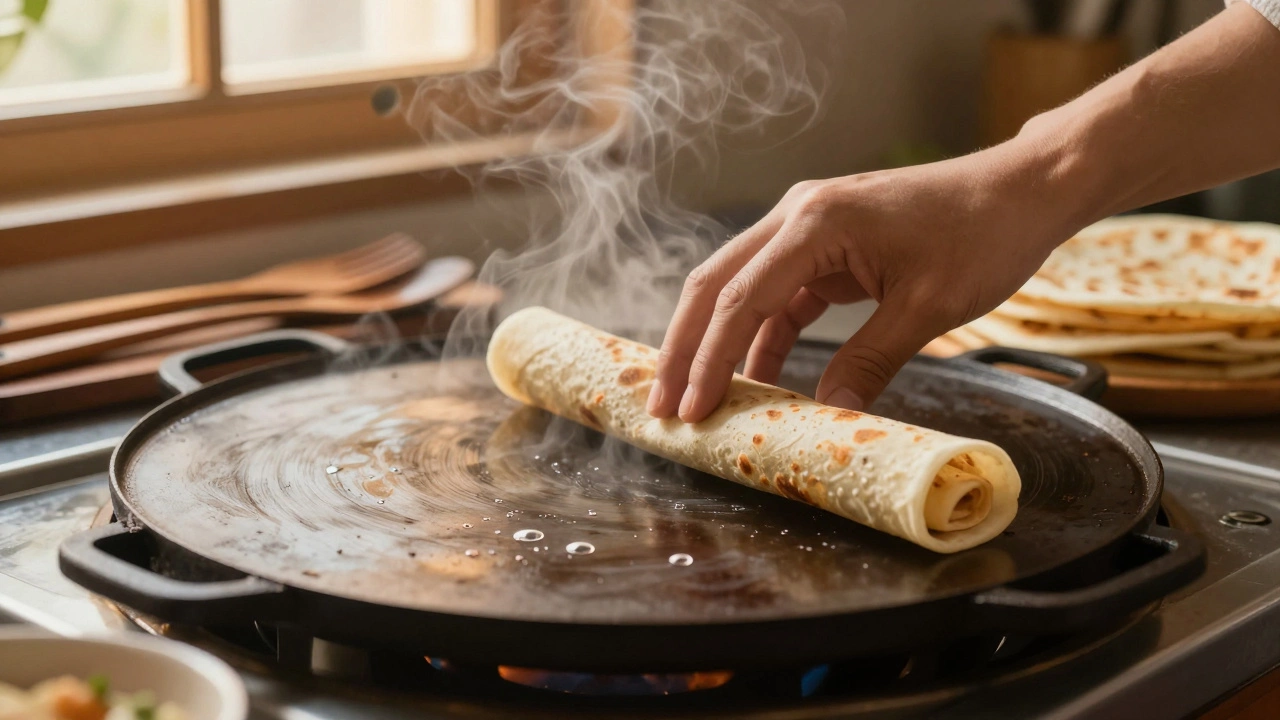
Should Roti Be Cooked on High Heat? The Right Way to Get Soft, Puffy Rotis Every Time
Cooking roti on high heat burns the outside before the inside puffs. Learn the right temperature, timing, and techniques to make soft, fluffy rotis every time with simple, proven tips.