Which Is the No. 1 Vegetarian Country in the World?
 Jan, 9 2026
Vegetarian Population Calculator
Estimate the number of vegetarians in any country using global vegetarian population data from the article. India has 38% vegetarians (over 500 million people), the highest in the world.
Vegetarian Population Estimate
Results will appear here after calculation
When you think of vegetarian food, one country stands out-not just because it has lots of vegetarians, but because its entire food culture is built around it. That country is India. Not because it’s the largest in population, but because over 38% of its 1.4 billion people eat no meat, fish, or eggs. That’s more than 500 million vegetarians, more than the entire population of the United States. And it’s not a trend-it’s a way of life shaped by religion, tradition, and centuries of culinary evolution.
Why India Leads the World in Vegetarianism
India isn’t just a country with a lot of vegetarians-it’s the only country where vegetarianism is woven into the daily rhythm of life. In most places, being vegetarian is a personal choice, often tied to health or ethics. In India, it’s often a spiritual practice. Hinduism, Jainism, and Buddhism all promote non-violence toward living beings, and that belief translates directly to the plate. Many families, even in cities like Mumbai or Delhi, don’t cook meat in their homes. Some households won’t even keep onions or garlic because certain sects avoid them for religious reasons.
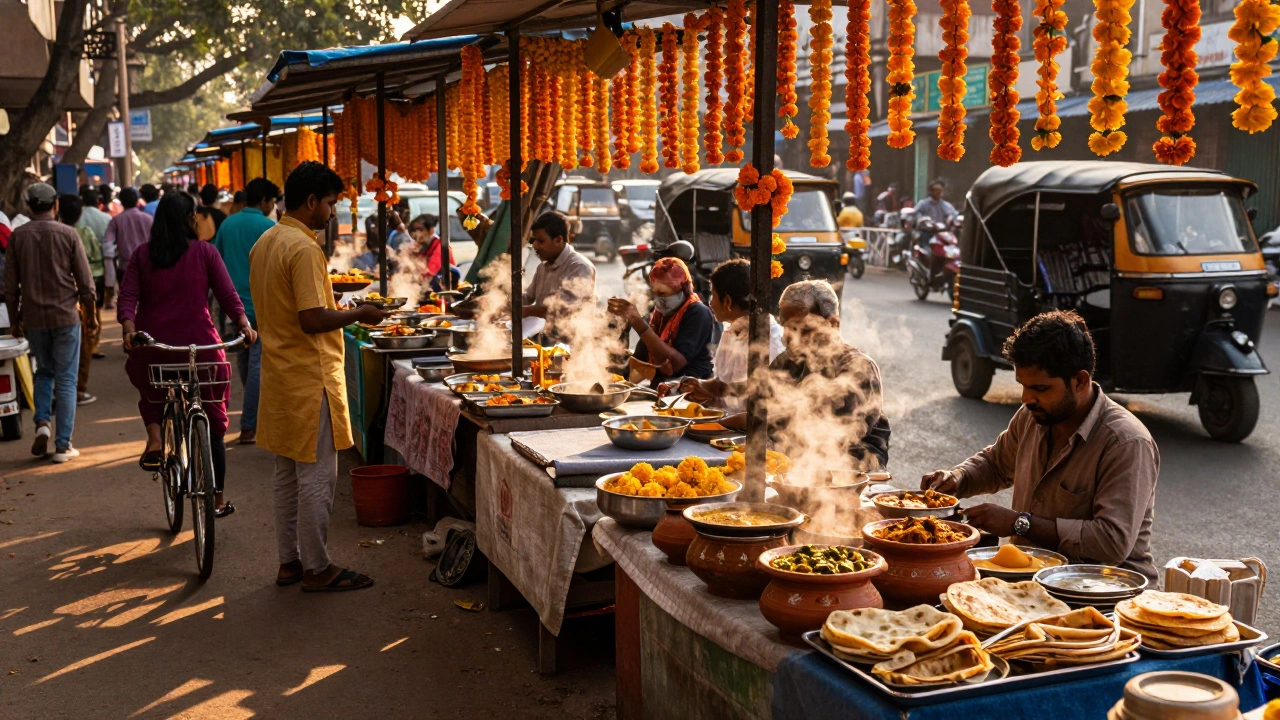
The numbers back it up. A 2023 survey by the Pew Research Center found that India has the highest percentage of vegetarians in the world-38%. The next closest is Israel at around 13%, and the U.S. at 5%. Even countries known for plant-based diets like Italy or Germany don’t come close. In India, you can walk into any small town and find a restaurant that serves only vegetarian food. These places are called shakahari restaurants, and they’re everywhere-from street stalls to five-star hotels.
What Makes Indian Vegetarian Food Unique
Indian vegetarian food isn’t just salads and tofu. It’s a rich, complex system of flavors built on spices, legumes, grains, and dairy. Unlike Western vegetarian meals that often try to replace meat, Indian cuisine never needed to. It had its own protein-rich foundation: lentils (dal), chickpeas (chana), soy, paneer, and yogurt. A typical Indian vegetarian meal includes dal, rice or roti, a vegetable curry, yogurt, and pickles. It’s balanced, filling, and deeply flavorful.
Take chana masala-spiced chickpeas cooked with tomatoes, ginger, and a blend of cumin, coriander, and amchoor (dried mango powder). It’s not a side dish. It’s a main course. Or palak paneer, where soft cottage cheese floats in a creamy spinach gravy. No meat is missed. In fact, many people who’ve tried it say the flavor is richer than meat-based dishes.
And then there’s the variety. In the north, you’ll find buttery naan and creamy kormas. In the south, rice-based meals with coconut chutney and sambar. In Gujarat, meals are sweet-sour and include dishes like dhokla and thepla. In Maharashtra, you’ll eat upma for breakfast and pav bhaji for lunch. Every region has its own vegetarian signature-and none of it relies on meat substitutes.
Vegetarianism Isn’t Just About Food-It’s About Ritual
In India, vegetarianism isn’t just what you eat. It’s when you eat, how you prepare it, and who you share it with. Many families observe fasting days-like Ekadashi or Navratri-where they eat only specific grains, fruits, and dairy. On these days, potatoes, peanuts, and singhara (water chestnut flour) become staples. You won’t find rice or wheat, but you’ll find delicious alternatives like sabudana khichdi (tapioca pearls cooked with peanuts and cumin).
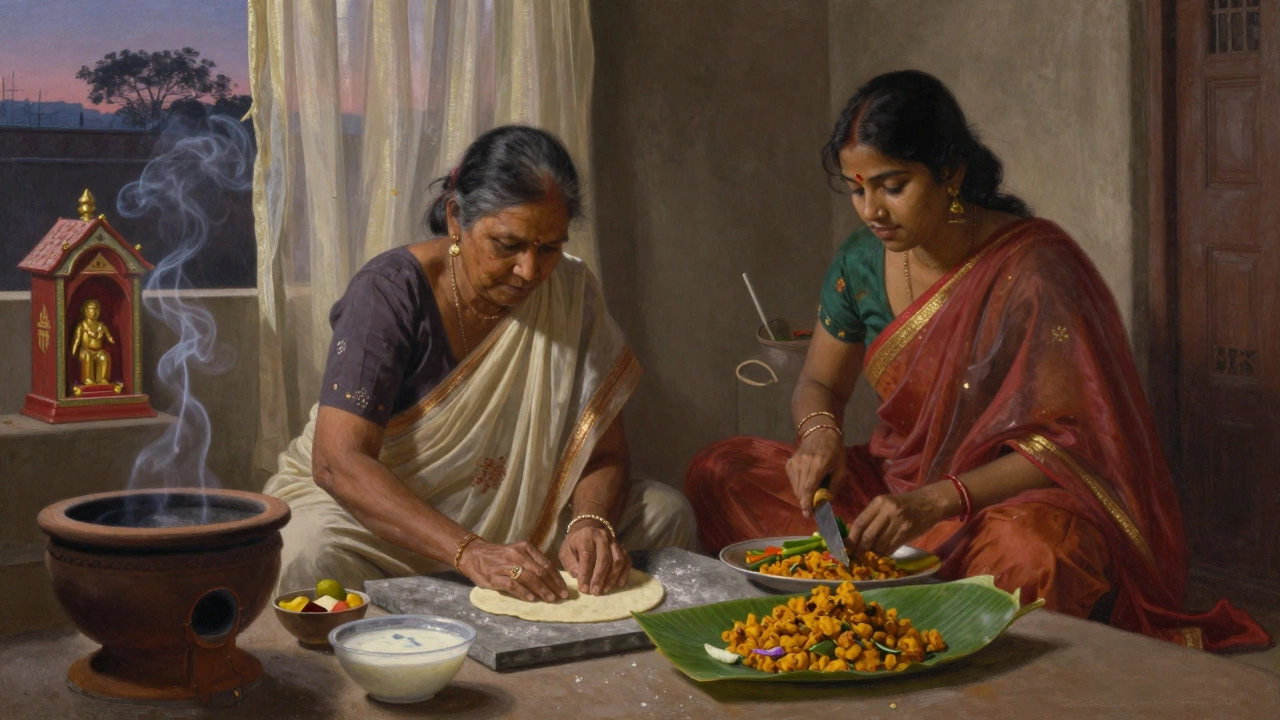
Even the way food is cooked matters. In many households, the kitchen is considered sacred. Some families won’t cook meat in the same pots used for vegetarian meals. Others won’t allow meat into the house at all. This isn’t about being strict-it’s about maintaining purity in daily life. For many, eating vegetarian is a form of discipline, not restriction.
Global Comparisons: Why Other Countries Don’t Compare
People often point to places like Israel, Germany, or California as vegetarian hotspots. And yes, they have growing plant-based movements. But those are driven by trends-vegan burgers, oat milk lattes, lab-grown meat alternatives. In India, the vegetarian diet didn’t need innovation. It already had everything it needed: lentils that cooked into creamy dal, fermented idlis that gave probiotics, ghee that added richness without dairy allergies.
Also, in India, vegetarianism cuts across class and region. A street vendor in Varanasi and a CEO in Bangalore both eat the same kind of dal-rice combo. In other countries, plant-based eating is often a luxury. In India, it’s the default. You don’t need to pay extra for a vegetarian meal-you just order anything. And it’ll be vegetarian unless you specifically ask for meat.
The Real Test: Can You Travel India as a Vegetarian?
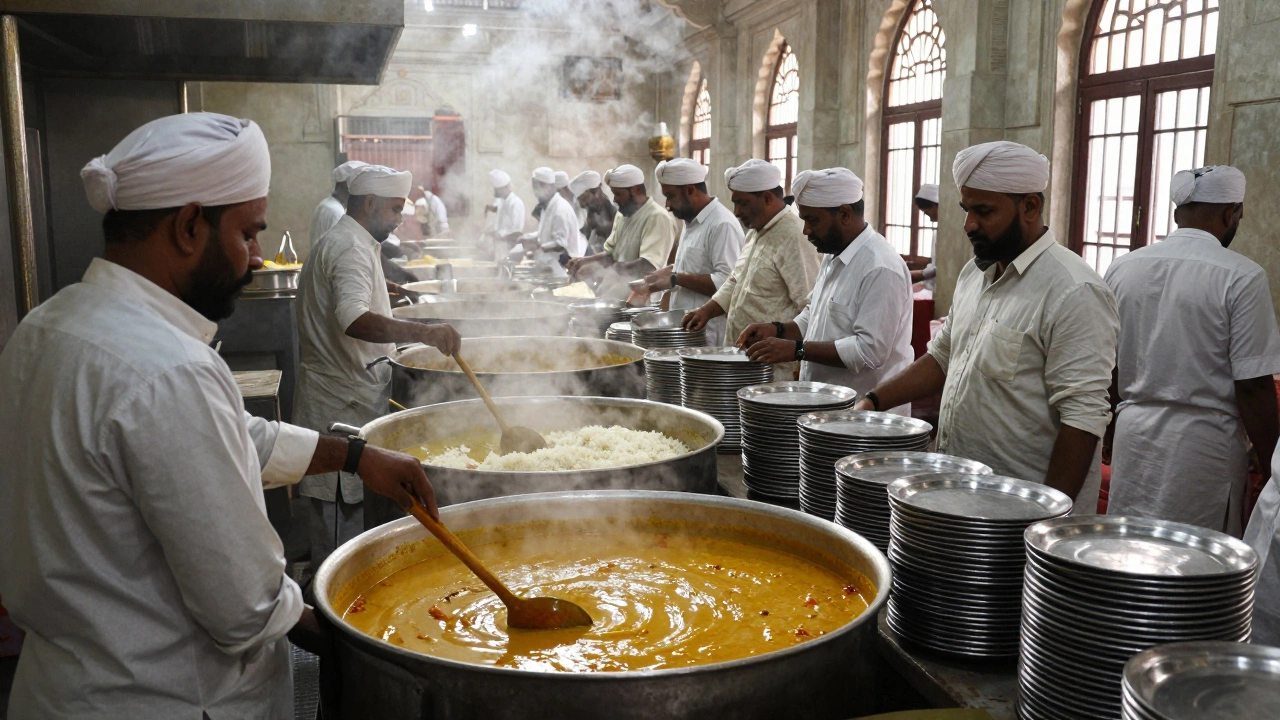
Try this: book a train ticket from Delhi to Chennai. You’ll pass through 12 states. In every single one, you’ll find vegetarian food at train stations, roadside dhabas, and temple kitchens. At the Amritsar Golden Temple, over 100,000 people are fed vegetarian meals every single day. No meat. No eggs. Just roti, dal, rice, and vegetables. That’s not a marketing stunt. That’s daily reality.
Even in remote villages, you won’t struggle to eat. In Rajasthan, you’ll get ker sangri (a desert bean and berry curry). In Odisha, dalma (lentils with pumpkin and vegetables). In Tamil Nadu, sambar with steamed rice. No one bats an eye. No one asks if you’re vegan or gluten-free. You just eat. And you eat well.
What the World Can Learn From India
India’s vegetarianism isn’t about avoiding meat because it’s trendy. It’s about building a food system that works without it. And it’s sustainable. Indian vegetarian meals use less water, less land, and produce far fewer emissions than meat-heavy diets. A 2024 study from the Indian Institute of Science showed that if every Indian stuck to their traditional vegetarian diet, the country’s food-related carbon footprint would drop by 40%.
Western plant-based diets often rely on imported superfoods-quinoa from Bolivia, almonds from California. Indian vegetarian food uses local ingredients: millets from Maharashtra, lentils from Madhya Pradesh, coconut from Kerala. It’s not about buying expensive alternatives. It’s about knowing what grows well where-and cooking it simply.
Final Thought: It’s Not About Ranking-It’s About Reality
So is India the No. 1 vegetarian country? Not because of a poll or a headline. But because for over 5,000 years, its people have fed themselves without meat-and done it with more flavor, variety, and cultural depth than anywhere else on earth. You won’t find another country where a child learns to cook dal before they learn to write their name. Where a wedding feast can feed 500 people without a single piece of meat. Where the word vegetarian doesn’t need explaining.
If you want to taste the world’s most authentic vegetarian food, you don’t need to travel to a trendy vegan café. You just need to sit down at a dhaba in Punjab, a temple kitchen in Tamil Nadu, or a home kitchen in Mumbai-and eat what’s been cooked for generations.
Is India the only vegetarian country in the world?
No, but it’s the only one where vegetarianism is the cultural norm for a majority of the population. Countries like Ethiopia, Israel, and Taiwan have growing vegetarian communities, but none come close to India’s scale or depth of integration into daily life.
Do all Indians eat vegetarian food?
No. About 62% of Indians eat meat or fish, especially in coastal regions and among certain communities. But even non-vegetarian households often have vegetarian days, and vegetarian meals are widely available everywhere.
What are the most popular Indian vegetarian dishes?
Some of the most common include dal tadka, chana masala, palak paneer, aloo gobi, masala dosa, idli with sambar, rajma, and bhindi fry. Each region has its own specialties, from Gujarati dhokla to Bengali shukto.
Is Indian vegetarian food healthy?
Traditional Indian vegetarian meals are nutritionally balanced. They include protein from lentils and dairy, fiber from whole grains and vegetables, and healthy fats from ghee or coconut oil. The use of turmeric, cumin, and coriander also adds anti-inflammatory benefits. However, modern diets high in fried snacks and refined flour can be unhealthy, regardless of being vegetarian.
Can you find vegan options in India?
Yes, and easily. Many traditional Indian dishes are naturally vegan-like dal, chana masala, vegetable curries, and rice-based meals. The only common non-vegan ingredients are ghee (clarified butter) and paneer (cottage cheese). Ask for "no ghee" or "no paneer," and most kitchens will adjust without issue.