Indian Flatbread Cooking: Learn Naan, Roti, and More the Right Way
When you think of Indian flatbread cooking, the art of making soft, chewy, or crispy breads from simple flour, water, and heat. Also known as Indian roti-making, it’s one of the most everyday skills in Indian kitchens—yet most people get it wrong because they skip the basics. It’s not just about rolling dough. It’s about temperature, timing, and texture. A perfect roti, a thin, whole wheat flatbread cooked on a hot griddle should puff up like a balloon. A good naan, a leavened bread baked in a tandoor or skillet with butter or ghee should be slightly charred at the edges and soft inside. And paratha, a layered, flaky flatbread often stuffed with potatoes, spinach, or paneer needs just the right amount of oil and pressure to get those crisp layers without turning greasy.
What most recipes don’t tell you is that the flour matters more than the technique. Whole wheat atta isn’t just healthier—it holds moisture better, gives better puff, and lasts longer. Store-bought all-purpose flour? It won’t work the same. And water temperature? Cold water makes dough tough. Lukewarm water? It helps the gluten relax. Even the pan you use changes everything. A cast iron tawa gives even heat. A nonstick pan? It won’t char the bread the way it should. You can’t fake the smell of bread cooking over an open flame, but you can get close with a gas stove and a little patience.
There’s a reason why Indian flatbread cooking is tied to family meals. It’s not fancy. It’s not complicated. But it’s precise. If your roti doesn’t puff, it’s not because you’re bad at rolling—it’s because your pan wasn’t hot enough. If your naan is dense, you didn’t let the dough rise long enough. If your paratha falls apart, you used too much oil. These aren’t mysteries. They’re small, fixable mistakes. And once you get them right, you’ll never go back to store-bought.
Below, you’ll find real advice from people who cook these breads every day. You’ll learn why some dals need soaking but naan doesn’t, how milk quality affects paneer, and why rinsing lentils matters more than you think. You’ll see how to make healthy versions of naan without refined flour, and how to use herbs and spices to elevate your breads—not just your curries. This isn’t about perfection. It’s about understanding the why behind each step so you can cook with confidence, not just follow instructions.
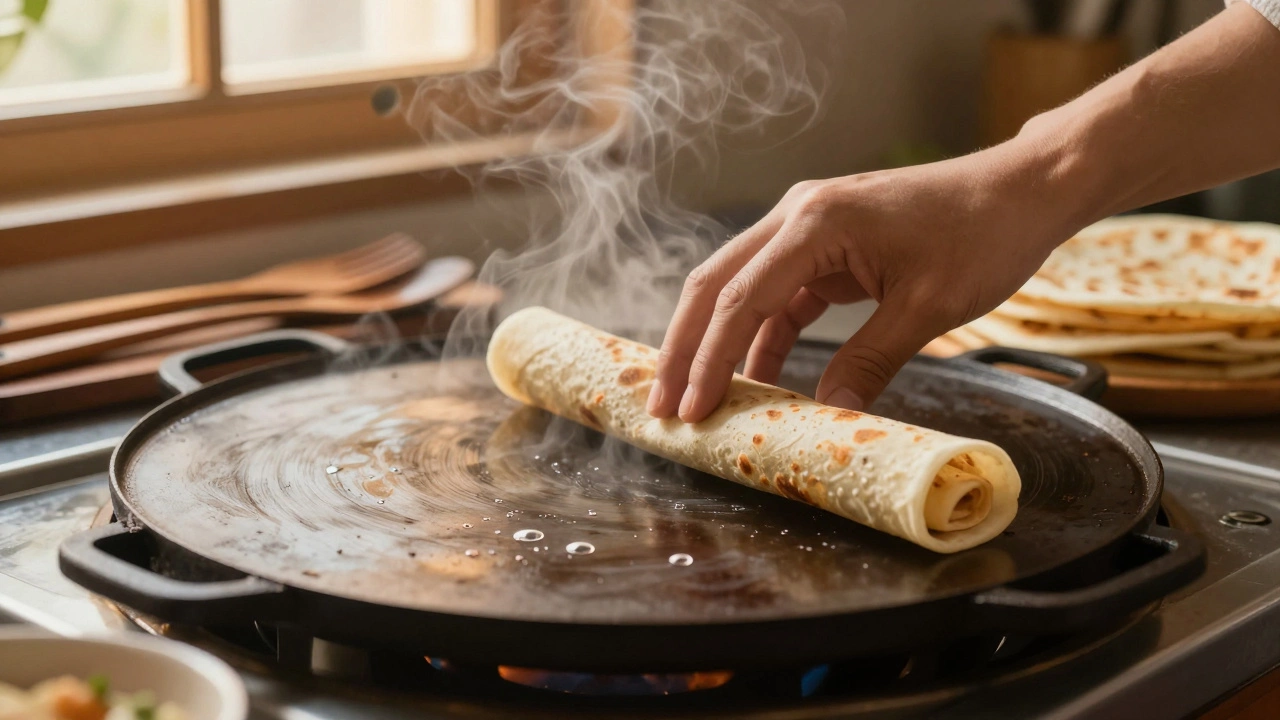
Should Roti Be Cooked on High Heat? The Right Way to Get Soft, Puffy Rotis Every Time
Cooking roti on high heat burns the outside before the inside puffs. Learn the right temperature, timing, and techniques to make soft, fluffy rotis every time with simple, proven tips.