Perfect Roti Tips: How to Make Soft, Fluffy Roti Every Time
When you get roti, a traditional Indian flatbread made from whole wheat flour, water, and salt. Also known as chapati, it’s the backbone of meals across India—from breakfast dal to dinner curry. But most people struggle with roti that’s too hard, too thin, or sticks to the pan. The problem isn’t the recipe—it’s the technique. You don’t need fancy tools or hours of practice. Just a few simple, proven steps make all the difference.
One big mistake? Using cold water. Warm water, just above body temperature, activates the gluten in whole wheat flour and gives you a dough that’s easy to roll and stays soft for hours. Another? Skipping the rest. Letting the dough sit for at least 30 minutes isn’t optional—it’s what lets the flour fully hydrate and relaxes the gluten. If you roll it right after mixing, you’ll get tough roti every time. And don’t overwork it. Knead just until smooth, then leave it alone. Over-kneading makes roti chewy, not fluffy.
Heat matters more than you think. A cast iron tawa or griddle needs to be hot—not smoking, but hot enough that a drop of water dances on the surface. Press the roti gently with a dry cloth when it starts puffing. That’s not magic—it’s steam building inside, separating the layers. If it doesn’t puff, your pan isn’t hot enough, or the dough is too dry. And never cook roti on low heat. Slow cooking dries it out. Fast, even heat gives you that perfect char and soft center.
Flour choice makes a huge difference too. Not all atta is the same. Look for whole wheat atta with a fine grind—coarse flour makes roti gritty. Some brands mix in a little rice flour or semolina for texture, but pure whole wheat gives you the best nutrition and flavor. Store-bought roti often has preservatives or oil added to extend shelf life. Homemade roti without oil stays soft longer because the moisture stays locked in, not pushed out by fat.
And here’s something no one tells you: keep your roti covered. Right after cooking, stack them in a clean cloth or a sealed container. The trapped steam keeps them pliable. If you leave them out, they’ll dry and crack by the time you serve them. That’s why restaurants serve roti warm and covered—it’s not just presentation, it’s science.
You’ll find plenty of posts below that dig into the details: why some people add a pinch of salt or oil to the dough, how to fix dough that’s too sticky or too dry, and what to do if your roti won’t puff. Some even compare roti to naan, paratha, or phulka—each has its own rules, but roti is the simplest and most essential. Whether you’re cooking for kids, trying to eat healthier, or just want bread that actually tastes like home, these tips will change how you make roti forever.
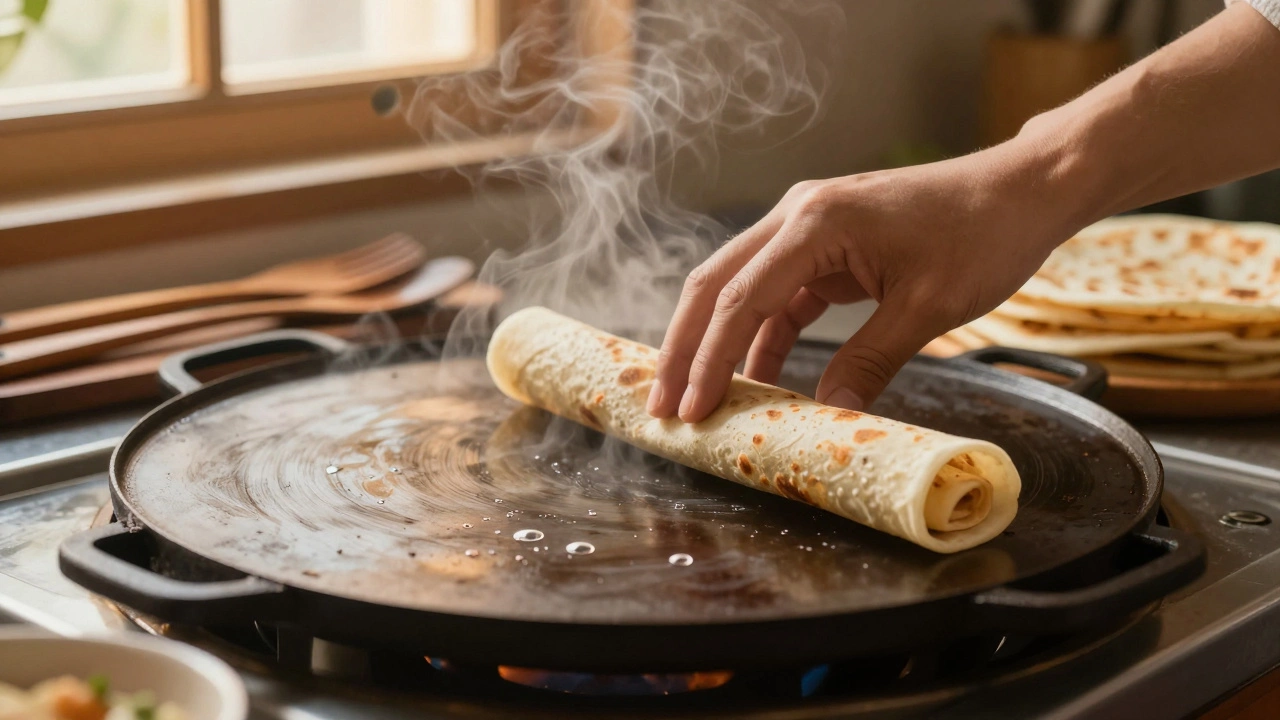
Should Roti Be Cooked on High Heat? The Right Way to Get Soft, Puffy Rotis Every Time
Cooking roti on high heat burns the outside before the inside puffs. Learn the right temperature, timing, and techniques to make soft, fluffy rotis every time with simple, proven tips.