Sugar Hindi: Meaning, Uses, and Health Effects
When talking about sugar, the sweet crystalline substance known as शक्कर in Hindi, used to add sweetness to foods and drinks, most people think of plain white granules. In Indian kitchens, sugar does more than sweeten – it balances spice, preserves fruit, and helps dough rise. Knowing what sugar Hindi really means helps you choose the right type for each recipe and understand its impact on your body.
One of the biggest places you’ll see sugar is in Indian desserts, traditional sweet dishes like jalebi, gulab jamun, and kheer that rely heavily on sugar for flavor. These treats often combine sugar with dairy, nuts, and aromatic spices, creating a rich, satisfying finish to a meal. Whether you’re making a quick sweet syrup or a slow‑cooked halwa, the amount and timing of sugar can change texture dramatically.
Because refined sugar can spike blood sugar, many home cooks turn to alternative sweeteners, substitutes such as jaggery, stevia, and honey used to reduce refined sugar intake. Jaggery (गुड़) adds a deep, caramel note, while stevia gives sweetness without calories. Knowing which substitute works best for a given dish lets you keep flavors authentic while cutting down on empty calories.
How sugar behaves in your body is often explained with the glycemic index, a measure of how quickly a food raises blood glucose levels. Pure sucrose has a moderate GI, but when combined with fats or fiber—common in Indian sweets—the rise is slower. This explains why a piece of gulab jamun feels less “spiky” than a spoonful of plain sugar.
Health-wise, excessive sugar intake is linked to weight gain, dental issues, and long‑term metabolic problems. In India, cultural celebrations often revolve around sugary foods, so moderation is key. Swapping half the sugar in a recipe for jaggery or reducing the syrup concentration can keep the dish enjoyable without overloading your system.
Practical cooking tips: dissolve sugar in a little water before adding it to hot oil to avoid grainy textures; add sugar at the end of a curry to balance acidity; and always taste as you go, because a pinch can make a big difference. Below you’ll find articles that dig deeper into each of these topics— from legal meat restrictions that affect sweet meat dishes, to the science behind why lemon curdles milk, and even how sugar consumption varies across ethnic groups. Explore the collection to sharpen your sweet‑making skills and make informed choices in the kitchen.
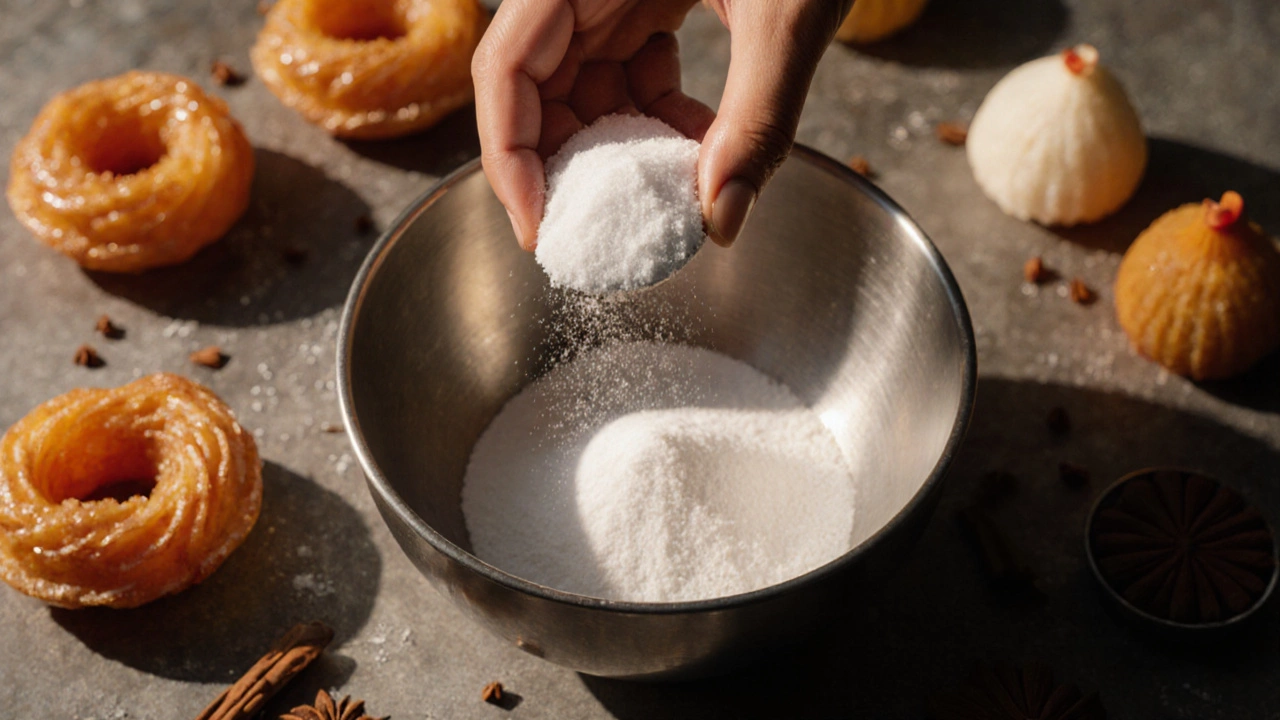
What’s the Indian Word for Sugar? Hindi, Regional Terms & Sweet Recipes
Discover the Indian word for sugar, its regional variations like shakkar and cheeni, and how these terms shape classic sweet recipes.