What Is a Healthy Snack to Have? Best Indian Snacks for Everyday Nutrition
 Oct, 29 2025
Healthy Snack Checker
Check Your Snack's Healthiness
Enter any Indian snack to see if it's truly healthy based on protein, fiber, and healthy fats content.
When you’re hungry between meals, what do you reach for? A bag of chips? A sweet biscuit? Or something that actually keeps you full, energized, and away from the mid-afternoon crash? In India, where snacks are part of daily life-from morning chai to evening street food-finding a truly healthy option isn’t about giving up flavor. It’s about choosing smart.
Why Most Indian Snacks Aren’t Healthy (Even the Ones You Think Are)
Many people assume that because something is homemade or vegetarian, it’s automatically healthy. But deep-fried samosas, sugar-coated jalebis, and even masala peanuts loaded with salt and hydrogenated oil are common in Indian households. A single serving of bhajiya can have over 200 calories, mostly from refined flour and reused oil. Even roasted chana, if bought pre-packaged, often contains added sugar, artificial colors, and excessive sodium.
The real problem? These snacks spike blood sugar, leave you hungry again in an hour, and contribute to bloating, fatigue, and weight gain over time. A 2023 study from the Indian Council of Medical Research found that over 60% of urban Indians snack daily, but fewer than 15% choose options with fiber, protein, or healthy fats-key nutrients that keep hunger in check.
What Makes a Snack Truly Healthy?
A healthy snack isn’t just low in calories. It’s balanced. Look for these three things:
- Protein - Keeps you full longer and stabilizes blood sugar. Think lentils, paneer, nuts, or yogurt.
- Fiber - Slows digestion and supports gut health. Found in whole grains, vegetables, legumes, and fruits.
- Healthy fats - Provides lasting energy. Sources: nuts, seeds, ghee (in moderation), avocado.
Also avoid: refined sugar, refined flour (maida), hydrogenated oils, and artificial additives. You don’t need to count calories, but you should feel satisfied for 2-3 hours after eating.
Top 7 Healthy Indian Snacks You Can Eat Daily
Here are real, practical, easy-to-make options that fit into an Indian kitchen and lifestyle.
1. Roasted Chana with Lemon and Cumin
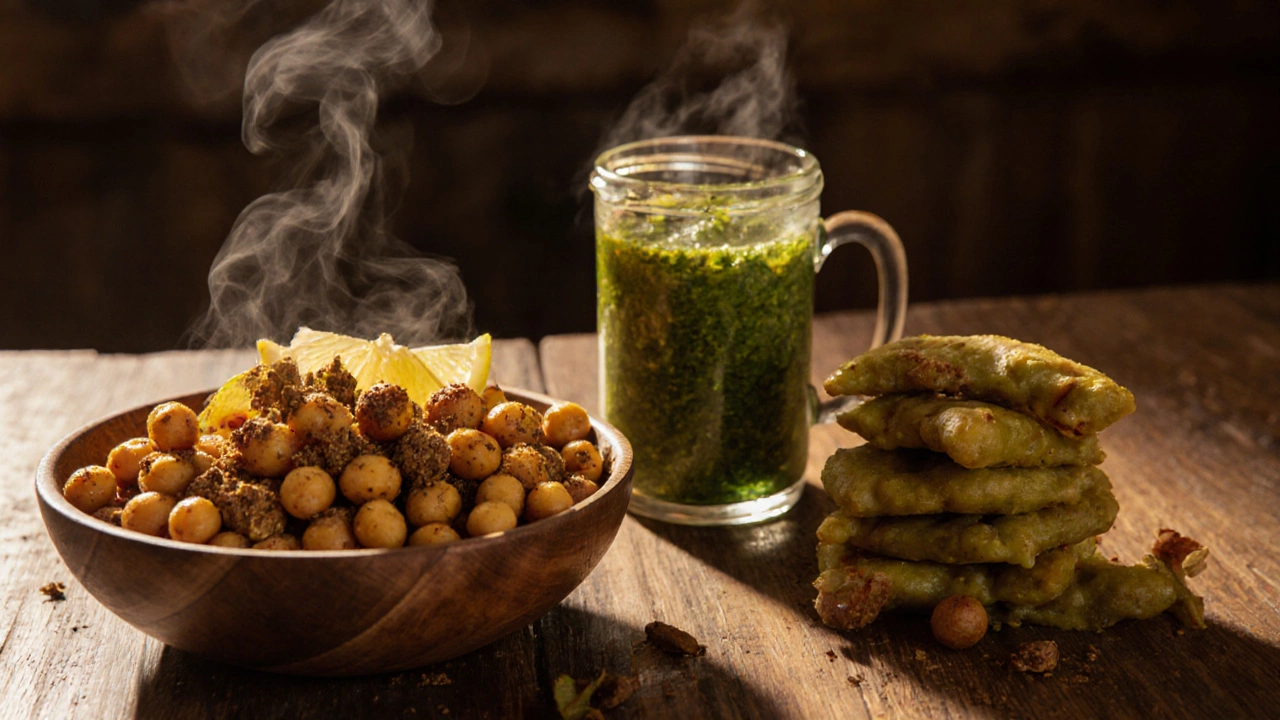
Not the sugary or oily kind you buy in packets. Make your own: rinse and dry chickpeas, roast them in a pan with a teaspoon of mustard oil or ghee, then toss with roasted cumin powder, black salt, and a squeeze of lemon. One cup gives you 14g of protein and 10g of fiber. It’s crunchy, satisfying, and keeps you full for hours. Store in an airtight jar for up to a week.
2. Moong Dal Chilla with Mint Chutney
These are like savory pancakes made from soaked and ground moong dal. Mix the batter with grated carrot, chopped spinach, and a pinch of turmeric. Cook on a non-stick pan with minimal oil. Serve with fresh mint-coriander chutney. One chilla has about 12g of plant-based protein and zero refined flour. Great for breakfast or an afternoon snack.
3. Sprouted Moong Salad
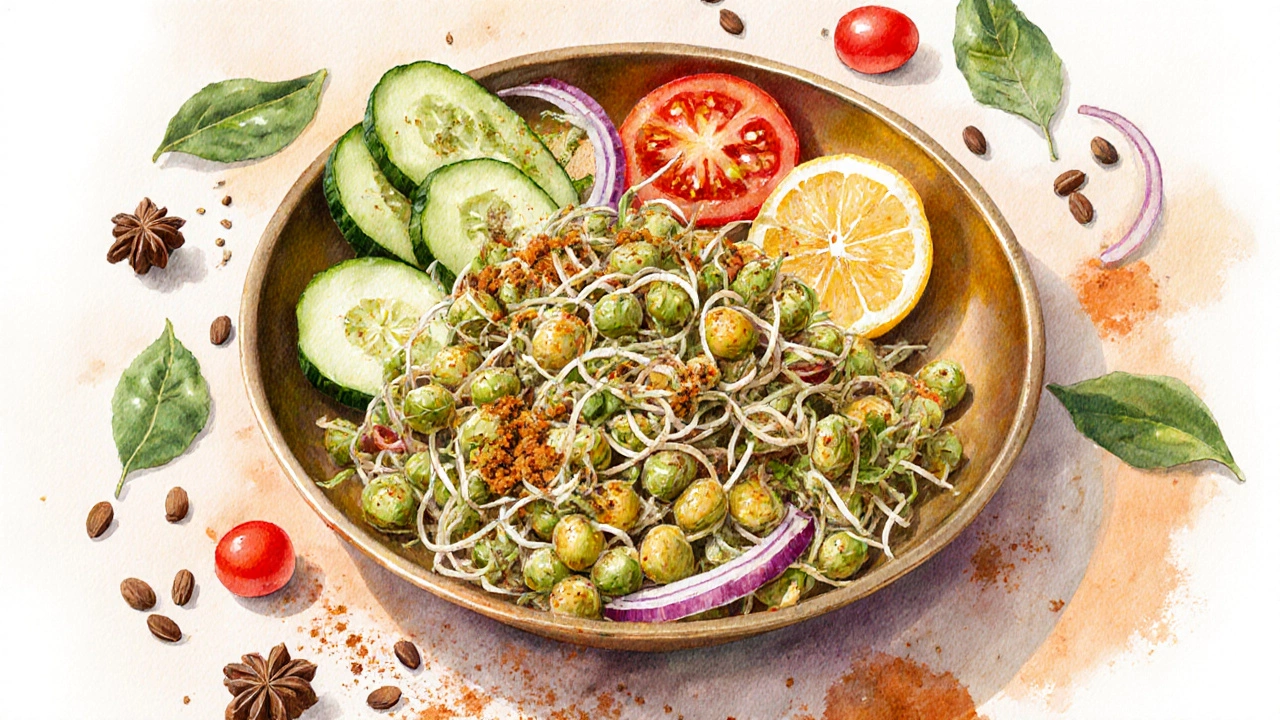
Soak moong beans overnight, rinse, and leave them in a dark, damp cloth for 8-12 hours until tiny sprouts appear. Toss with chopped cucumber, tomato, red onion, lemon juice, chaat masala, and a dash of roasted cumin. No cooking needed. This snack is packed with enzymes, fiber, and vitamin C. It’s refreshing, light, and digests easily-even after a heavy lunch.
4. Roasted Makhana (Fox Nuts)
Forget popcorn. Makhana is the original Indian crunchy snack. Dry roast them in a pan with a pinch of black salt and pepper. Or lightly coat with ghee and roast until they puff up. One serving (30g) has 5g of protein, 3g of fiber, and is naturally low in sodium. Unlike popcorn, it’s gluten-free and doesn’t trigger bloating. Popular in Ayurveda for its cooling properties.
5. Curd with Flaxseed and Fruit
Use unsweetened, homemade curd (not flavored yogurt). Add a tablespoon of ground flaxseed (rich in omega-3s) and a handful of chopped apple or pear. The probiotics in curd support digestion, flaxseed reduces inflammation, and fruit adds natural sweetness without sugar spikes. This combo is perfect after a workout or as a light evening snack.
6. Baked Sweet Potato Wedges with Chaat Masala
Swap fries for sweet potatoes. Cut them into wedges, toss with a teaspoon of olive oil, sprinkle with chaat masala and a little turmeric, then bake at 200°C for 25 minutes. Sweet potatoes have more fiber and beta-carotene than regular potatoes. Chaat masala adds flavor without salt overload. A single serving gives you 4g of fiber and only 120 calories.
7. Peanut Butter Banana Roll-Ups
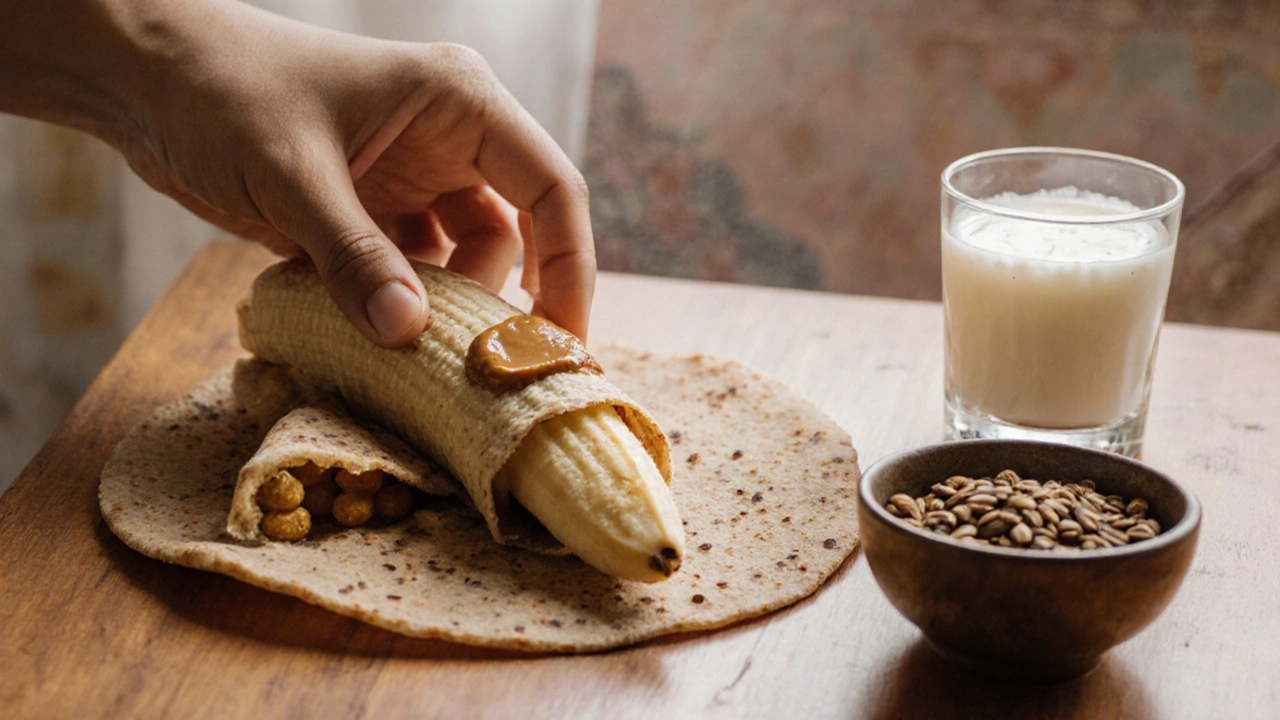
Use whole wheat roti or a low-carb tortilla. Spread 1 tablespoon of natural peanut butter (no added sugar or oil), place a banana on top, and roll it up. Slice into bite-sized pieces. This snack gives you healthy fats, potassium, and slow-digesting carbs. It’s the perfect energy booster before an evening walk or yoga session.
Snacks to Avoid (Even If They’re Called “Healthy”)
Some snacks are marketed as healthy but aren’t. Watch out for:
- Flavored makhana packets - Often contain MSG, artificial colors, and excess salt.
- Protein bars from Indian brands - Many are just sugar-coated biscuits with a sprinkle of protein powder.
- Trail mix with dried cranberries - Dried fruit is concentrated sugar. One cup can have 50g of sugar.
- “Whole grain” biscuits - If the first ingredient is refined flour, it’s not whole grain.
Always check the ingredient list. If you can’t pronounce it, or if sugar is listed before any whole food, skip it.
How to Make Healthy Snacking Easy
Preparation is everything. Here’s how to make healthy snacking automatic:
- On Sundays, roast a big batch of chana and makhana. Store in glass jars.
- Keep a bowl of washed fruit (apples, guavas, oranges) on the counter.
- Make a big bowl of sprouted moong salad every 2 days.
- Keep a tub of plain curd and ground flaxseed in the fridge.
- When you’re rushed, grab a banana and a handful of almonds.
You don’t need fancy equipment. A pan, a bowl, and 10 minutes are enough.
What Works for Me (Real-Life Example)
In Bangalore, I used to grab samosas with my evening chai. Then I started feeling sluggish after 4 p.m. I switched to roasted chana and a cup of green tea. Within two weeks, my energy stayed steady. My cravings for sweets dropped. I lost 2.5 kg in a month-not by dieting, but by changing what I ate between meals.
It’s not about perfection. It’s about consistency. One healthy snack a day adds up.
Final Tip: Listen to Your Body
Ask yourself: Do I feel light and energized after eating this? Or do I feel bloated, sleepy, or hungry again in 30 minutes? If the answer is the latter, it’s not a healthy snack-even if it’s labeled “organic” or “natural.”
Healthy snacking isn’t a trend. It’s a daily habit that supports your metabolism, digestion, and mood. Start small. Pick one snack from this list. Try it for a week. Then add another. Your body will thank you.
What is the healthiest Indian snack for weight loss?
The healthiest Indian snack for weight loss is sprouted moong salad. It’s low in calories, high in fiber and plant-based protein, and digests easily. Roasted chana and makhana are also excellent choices-they’re filling, don’t spike blood sugar, and contain no refined ingredients.
Can I eat Indian snacks if I have diabetes?
Yes, but choose wisely. Avoid anything with maida, sugar, or deep-frying. Go for roasted chana, sprouted moong, moong dal chilla, and curd with flaxseed. These have a low glycemic index and help stabilize blood sugar. Always pair carbs with protein or fat to slow digestion.
Are roasted peanuts a healthy snack in India?
Plain roasted peanuts, without added salt or sugar, are a good source of healthy fats and protein. But most packaged peanuts in India are fried in reused oil and loaded with salt. If you eat them, buy raw peanuts and roast them at home with a little turmeric or black salt.
What’s a good healthy snack for kids in India?
Banana with a spoon of peanut butter, roasted makhana, or small pieces of apple with a sprinkle of chaat masala work well. Avoid fruit juices, packaged cookies, and flavored yogurt. Whole foods with natural sweetness are best.
How can I make healthy snacks taste good without sugar?
Use spices like cinnamon, cardamom, black salt, and chaat masala. Add citrus like lemon or orange zest. Roast nuts and seeds to bring out their natural sweetness. A touch of jaggery in moderation is okay, but avoid refined sugar entirely. Flavor comes from texture and spice, not sugar.
What to Try Next
Once you’ve mastered these snacks, explore fermented foods like idli or dhokla made with whole grain batter. Or try making your own nut butter from cashews or almonds. Healthy eating isn’t about restrictions-it’s about discovering flavors that nourish you.