What Is Street Food Called in India? Common Names and Regional Varieties
 Jan, 30 2026
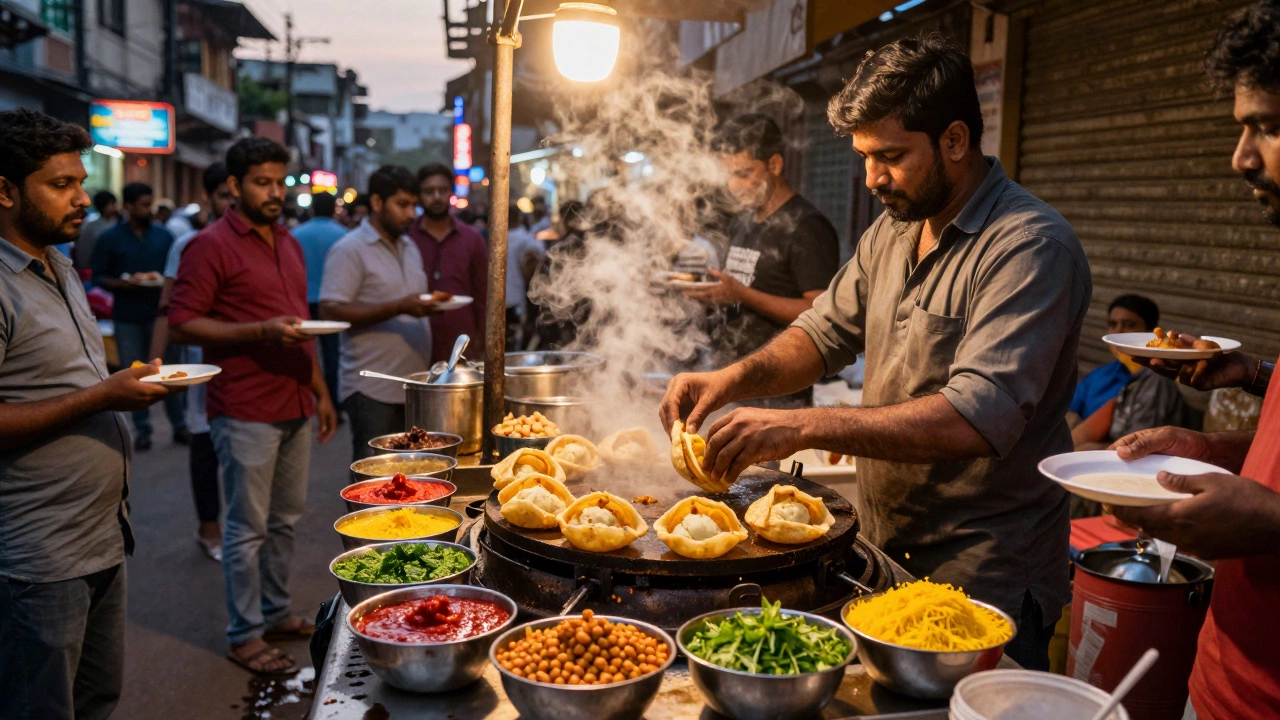
Walk through any busy street in Mumbai, Delhi, Kolkata, or Jaipur after sunset, and you’ll smell it before you see it-spiced onions sizzling on a griddle, the tang of tamarind chutney, the crisp crunch of fried dough. This isn’t just food. It’s culture, memory, and survival all fried in a single bite. But what do people in India actually call street food? There’s no single word. Instead, you’ll hear dozens of names depending on where you are, what you’re eating, and who’s selling it.
Chaat: The Umbrella Term
The most common catch-all term for Indian street food is chaat. It doesn’t mean one specific dish. It’s a category. Chaat refers to savory snacks that are tangy, spicy, crunchy, and often served with multiple chutneys. Think of it like ‘appetizer’ in Western cuisine-but with way more flavor bombs.
Popular chaat dishes include pani puri (crisp hollow puris filled with spiced water, potato, and chickpeas), sev puri (flat puris topped with potatoes, onions, and sev), and aloo tikki (fried potato patties with chutneys and yogurt). In North India, if someone says ‘Let’s get some chaat,’ they mean any of these. In South India, you won’t hear that word much. They have their own names.
Regional Names for Street Food
India’s 28 states each have their own street food identity. What’s called chaat in Delhi might be called paniya in Tamil Nadu or khaja in Odisha. Here’s how it breaks down by region:
- North India: Chaat, vada pav, samosa, bhel puri, jalebi
- Mumbai (Maharashtra): Vada pav (the ‘Indian burger’), pav bhaji, sev puri, misal pav
- Delhi: Chole bhature, aloo tikki, kulfi, momos (thanks to Tibetan influence)
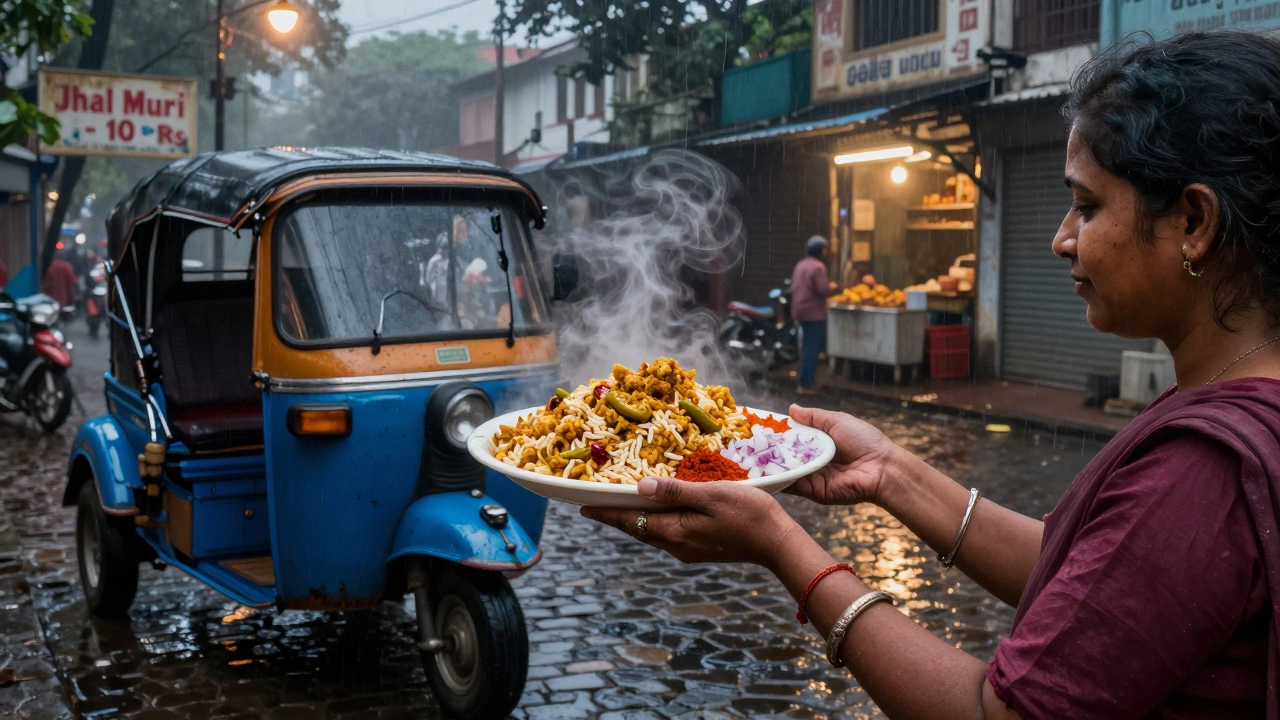
- West Bengal: Jhal muri (spicy puffed rice), ghugni (curried chickpeas), kathi rolls
- South India: Masala dosa, idli sambar, bonda, medu vada, ragi mudde
- East India: Puchka (same as pani puri, just a different name), luchi-alur dom, chhanar jilipi
- Central India: Bhutte ka kees (grated corn cooked with spices), dal bafla
Some dishes cross borders but keep local names. In Bihar and Uttar Pradesh, you’ll find chana jor garam (spiced chickpeas). In Gujarat, it’s dhokla or khandvi. Even the same snack can have different names-pani puri is called golgappa in North India, puchka in Bengal, and phuchka in parts of Bihar.
What Makes It Street Food?
Not every snack sold on the roadside counts as street food. Real Indian street food has three rules:
- It’s cooked fresh on the spot. No microwaves. No pre-packaged meals. You watch the potatoes get fried, the chutneys get mixed, the dough gets rolled.
- It’s cheap. A plate of bhel puri costs ₹20-30. A vada pav? ₹25. This is food for students, rickshaw drivers, office workers, and grandmas.
- It’s eaten standing up or walking. You don’t sit at a table. You hold it in your hand, balance it on your palm, and eat it fast before the crispness fades.
That’s why you won’t find packaged samosas from a supermarket labeled ‘street food.’ It’s not the same. The magic is in the moment-the heat of the oil, the vendor’s call, the clink of metal plates, the smell of cumin and chili.
Why There’s No Single Word
India doesn’t have one word for street food because it never needed one. For centuries, food has moved with people-traders, pilgrims, laborers. Each community developed its own snacks, and each city adopted them with its own twist. Street food wasn’t invented. It evolved.
There’s no official term like ‘fast food’ or ‘snacks’ in Hindi or other Indian languages that fully captures it. Even the word ‘street food’ is an English translation used mostly by tourists and food bloggers. Locals just say the name of the dish: ‘Ek plate pani puri, please.’ Or ‘Vada pav kya hai?’
More Than Just Food
Street food in India isn’t just about taste. It’s about identity. In Mumbai, eating vada pav with your fingers after a long day at work feels like coming home. In Kolkata, jhal muri on a rainy evening is comfort. In Jaipur, pyaaz kachori with mint chutney is breakfast.
These dishes are passed down through generations-not in cookbooks, but in the way a vendor folds the puri just right, or how the tamarind chutney is cooked until it’s sweet enough to balance the spice. You learn by watching. By eating. By asking, ‘Kaise banate hain?’ (How do you make it?)
What to Try First
If you’ve never tried Indian street food, start here:
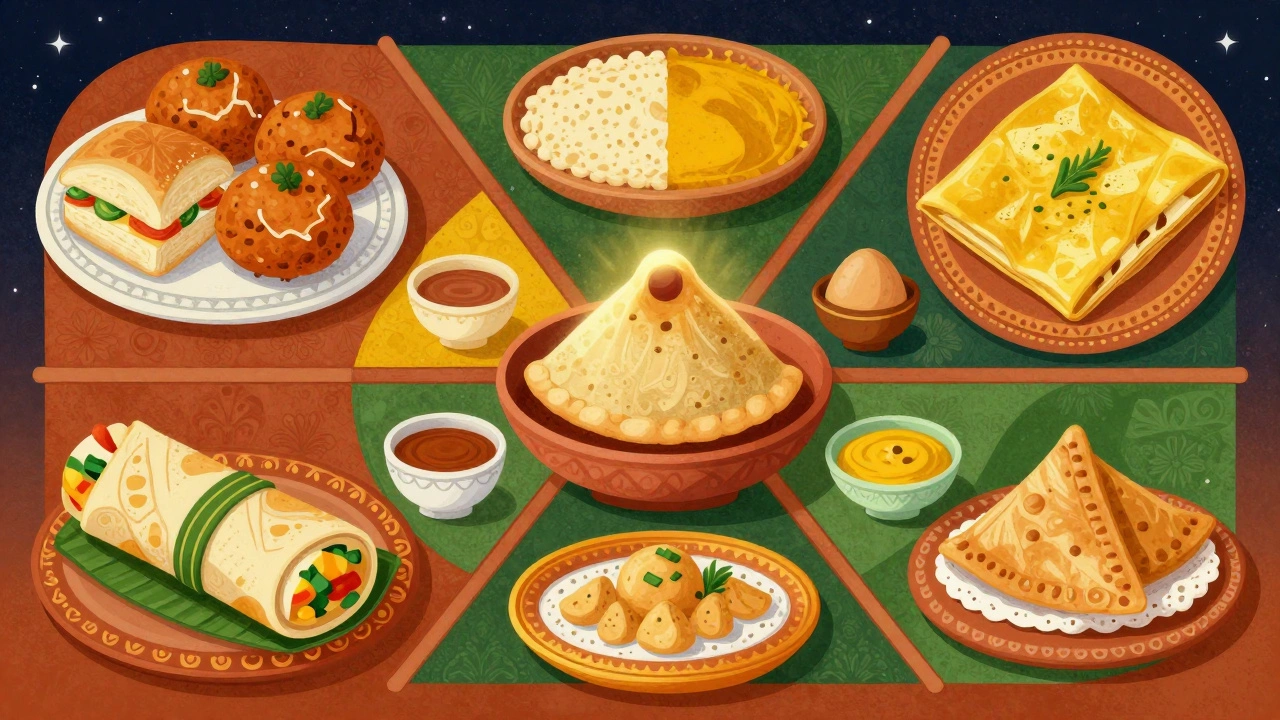
- Pani puri: The ultimate flavor explosion. Crisp shell, spicy water, sweet tamarind, tangy mint, chickpeas, potato.
- Vada pav: The Mumbai burger. Spicy potato fritter in a soft bun with chutneys.
- Bhel puri: A crunchy, sweet, sour salad made with puffed rice, sev, onions, and chutneys.
- Masala dosa: A crispy fermented rice crepe filled with spiced potatoes.
- Kathi roll: Paratha wrapped around grilled meat or veggies, onions, and chutney.
Don’t worry about hygiene. Look for stalls with a crowd-locals know where the food’s fresh. If the vendor is busy and the oil is clean, you’re good. Avoid stalls with flies hovering over the food, and always drink bottled water.
Is Street Food Safe?
Yes, if you know where to look. Millions eat street food daily without issue. The key is observation. A good vendor:
- Uses fresh ingredients-no day-old potatoes or reused oil.
- Keeps cooking surfaces clean and covered.
- Washes hands or uses gloves.
- Has a steady flow of customers-high turnover means fresh food.
Many street vendors in cities now follow hygiene guidelines set by FSSAI (Food Safety and Standards Authority of India). Look for the ‘FSSAI License’ sticker on the cart. It’s small, but it matters.
Final Thought
Street food in India isn’t something you ‘try.’ It’s something you live. It’s the taste of morning rush hours, evening gatherings, monsoon afternoons, and late-night cravings. There’s no single name for it because it’s not one thing. It’s a thousand little moments, fried in oil, wrapped in paper, and handed to you with a smile.
Next time you hear someone say, ‘Let’s get some chaat,’ don’t ask what it means. Just follow the smell.
What is the most popular street food in India?
Pani puri (also called golgappa or puchka) is the most popular across India. It’s loved for its burst of flavors-spicy, sweet, tangy, and crunchy-all in one bite. Vada pav is a close second, especially in Mumbai, where it’s considered the unofficial city snack.
Is chaat the same as street food in India?
Chaat is a major category of Indian street food, but not all street food is chaat. Chaat refers specifically to savory, tangy, spicy snacks like pani puri, sev puri, and aloo tikki. Other street foods like dosa, idli, or kathi roll aren’t called chaat, even though they’re sold on the street.
Do Indians call it ‘street food’?
Mostly no. Indians refer to street food by the name of the dish-like ‘vada pav,’ ‘pani puri,’ or ‘dosa.’ The term ‘street food’ is mostly used by tourists, media, or food writers. Locals might say ‘roadside ka khana’ (food from the roadside), but they’ll name the snack instead.
Is Indian street food spicy?
It can be, but not always. Many dishes like bhel puri or dahi bhalla are mild and refreshing. Spice levels are adjustable-you can ask for ‘thoda spicy’ (a little spicy) or ‘bina mirch’ (without chili). Vendors are used to adjusting heat based on your preference.
Can vegetarians eat Indian street food?
Absolutely. Most Indian street food is vegetarian by default. Dishes like chaat, dosa, idli, vada pav, and pani puri are plant-based. Even kathi rolls often come with paneer or veggies. Non-vegetarian options like chicken momos or kebabs exist, but they’re clearly labeled and not the norm.