What Is the Key Ingredient in Curry? The Secret Behind the Flavor
 Feb, 27 2026
Ask anyone who’s eaten a good chicken curry and they’ll tell you it’s not just spicy or rich - it’s curry. But what makes it taste like curry? Not the chicken. Not the coconut milk. Not even the onions or garlic. The real magic? It’s the spice blend that turns simple ingredients into something unforgettable. And if you’ve been using pre-made curry powder from a jar, you’re missing the point.
The Myth of 'Curry Powder'
Most Western kitchens treat 'curry powder' like salt or pepper - a single ingredient you grab off the shelf. But in India, there’s no such thing as curry powder. There’s no one-size-fits-all spice mix. Every region, every family, every cook has their own blend. What you buy in a supermarket is a colonial-era invention, a simplified version meant for foreign palates. It often contains turmeric, coriander, cumin, and chili - but it’s flat. Lifeless. It doesn’t bloom. It doesn’t sing.
The real key ingredient in curry isn’t one spice. It’s the process - the slow frying of whole spices in hot oil until they crackle and release their oils. That’s where the flavor gets locked in. But if you had to pick one spice that defines the soul of most Indian curries, it’s turmeric.
Turmeric: The Golden Heart of Curry
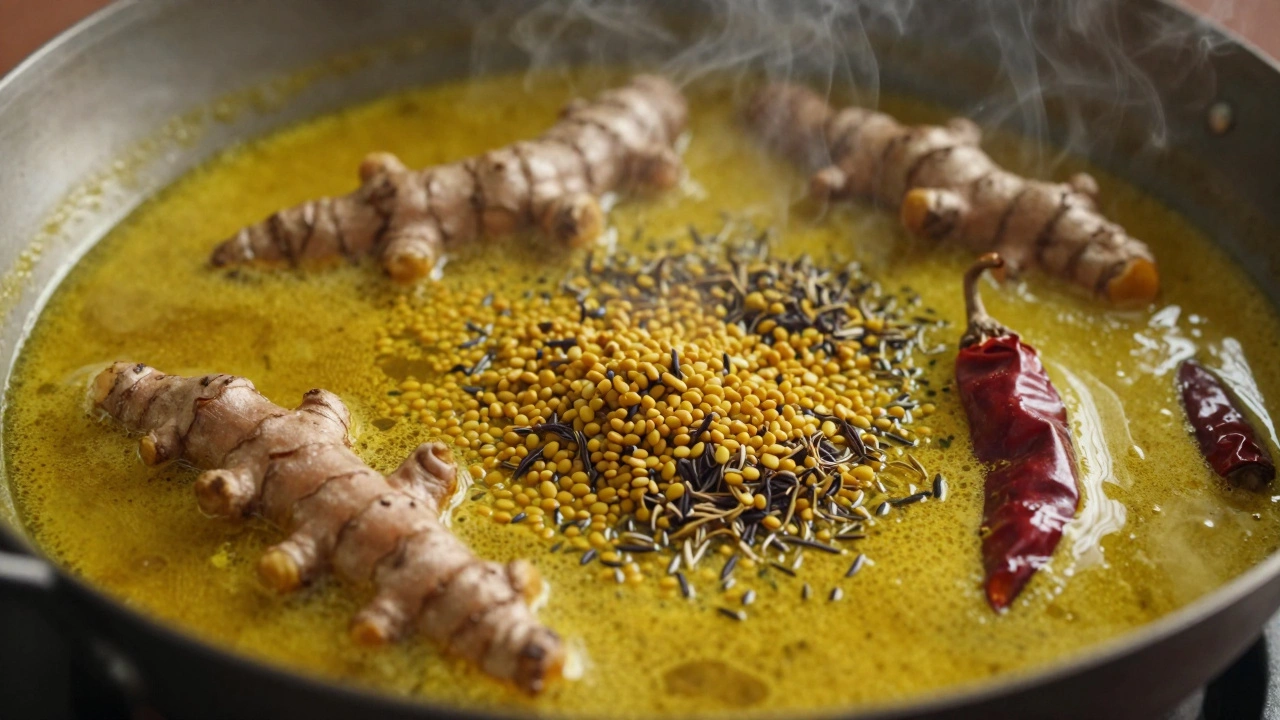
Turmeric isn’t just a colorant. Yes, it gives curry its bright yellow hue - but that’s the least important part. Turmeric contains curcumin, which isn’t just an antioxidant. It’s a flavor transformer. When you toast whole turmeric roots or fry ground turmeric in oil with other spices, it loses its raw earthiness and becomes warm, slightly bitter, deeply aromatic. It doesn’t shout. It hums.
In Mumbai homes, turmeric is added early - right after mustard seeds pop in the oil. It’s the first layer of flavor. Then come cumin, fenugreek, dried red chilies. But without turmeric, the curry just tastes like spiced stew. With it? It tastes like home.
Try this: make two batches of chicken curry. One with turmeric, one without. You’ll notice the one with turmeric has depth. It lingers on the tongue. It doesn’t just coat your palate - it settles into it.
The Other Players: Garam Masala and Beyond
Turmeric sets the base, but curry doesn’t stop there. The second layer? Garam masala. This isn’t the same as curry powder. Garam masala is added at the end - toasted lightly in a dry pan, then stirred in just before serving. It’s usually made of cinnamon, cardamom, cloves, black pepper, and sometimes nutmeg or bay leaves. It’s the perfume that lifts the whole dish.
Some cooks add asafoetida (hing) for depth. Others use dried mango powder (amchoor) for tang. In coastal areas, tamarind or kokum brings sourness. In the north, cream or yogurt adds richness. But none of these replace turmeric. They complement it.
Here’s the truth: if you skip turmeric, you’re not making curry. You’re making a spiced chicken stew. Curry, as it’s known in India, needs that golden backbone.
Why Store-Bought Curry Powder Falls Short
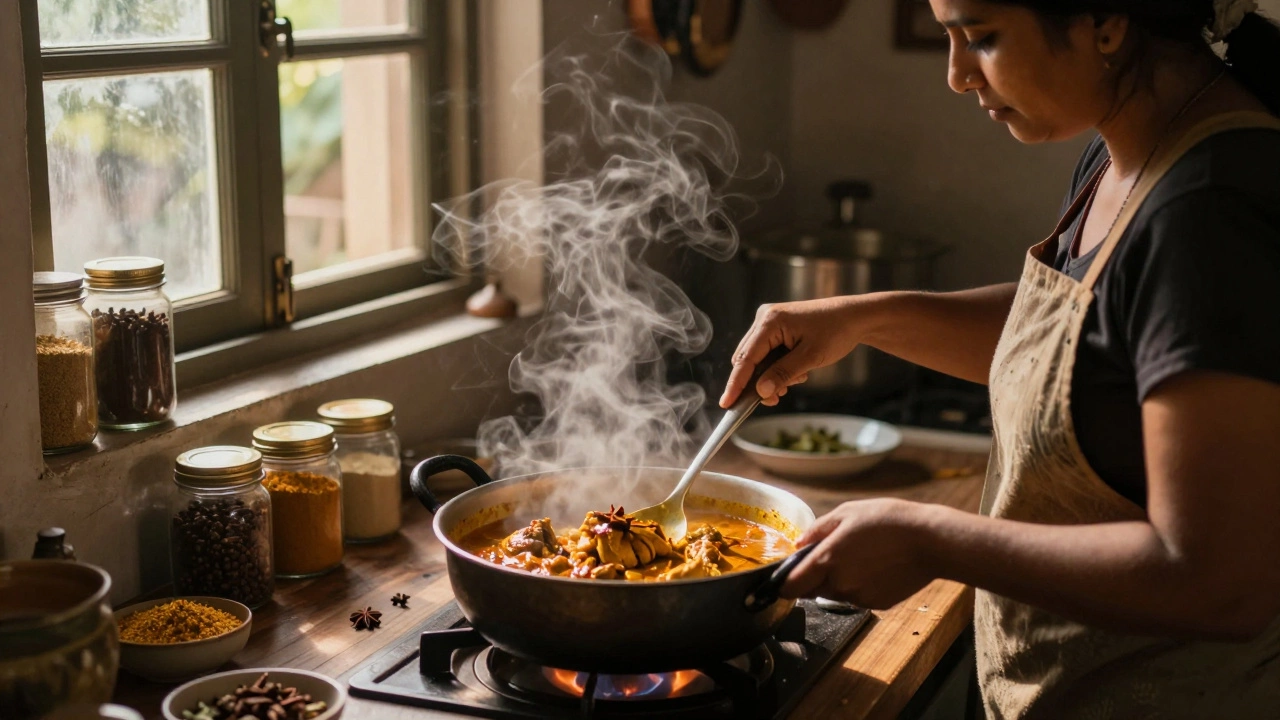
Pre-mixed curry powder loses its potency fast. Spices don’t stay fresh in jars for months. The essential oils evaporate. The heat-sensitive compounds break down. By the time that jar sits on your shelf for six months, you’re mostly tasting dust.
Compare it to coffee. Would you use pre-ground coffee that’s been sitting for a year? No. You grind it fresh. Same logic applies here. Whole spices, toasted and ground just before use, make all the difference.
Even the best store-bought blends can’t replicate the way turmeric, cumin, and coriander release their oils when heated in ghee or mustard oil. That’s the alchemy. That’s what turns heat into flavor.
A Simple Chicken Curry Formula (The Mumbai Way)
Here’s how a typical Mumbai home cook builds flavor - no fancy tools, no exotic ingredients:
- Heat 3 tablespoons of mustard oil or ghee until it just starts to smoke, then let it cool slightly.
- Add 1 teaspoon mustard seeds. Wait for them to pop.
- Add 1 teaspoon turmeric powder. Stir for 10 seconds - don’t let it burn.
- Add 1 teaspoon cumin seeds, 1/2 teaspoon fenugreek seeds, and 2 dried red chilies. Fry until fragrant.
- Add chopped onions. Cook until golden.
- Add minced ginger and garlic. Cook another minute.
- Add 1 pound of chicken pieces. Brown them slightly.
- Add 1 teaspoon ground coriander, 1/2 teaspoon ground cumin, and salt.
- Add 1 cup water or coconut milk. Simmer for 25 minutes.
- Just before serving, sprinkle 1/2 teaspoon garam masala and a squeeze of lime.
That’s it. No tomato paste. No cream. No sugar. Just turmeric, time, and heat.
The Real Secret: Freshness Over Formula
There’s no single ‘correct’ curry recipe. But there is one rule that never changes: the spices must be alive. You can’t fake the smell of fresh turmeric sizzling in hot oil. You can’t replicate the sound of cumin seeds popping. You can’t buy that in a jar.
If you want to know what the key ingredient in curry really is - it’s attention. It’s patience. It’s the willingness to let the spices speak for themselves instead of drowning them in sauces or shortcuts.
Try making this once. Just once. Use real turmeric. Toast the spices. Smell them. Listen to them. Taste the difference. Then ask yourself: why did I ever settle for the powder?
What Makes Curry Different From Other Spiced Dishes?
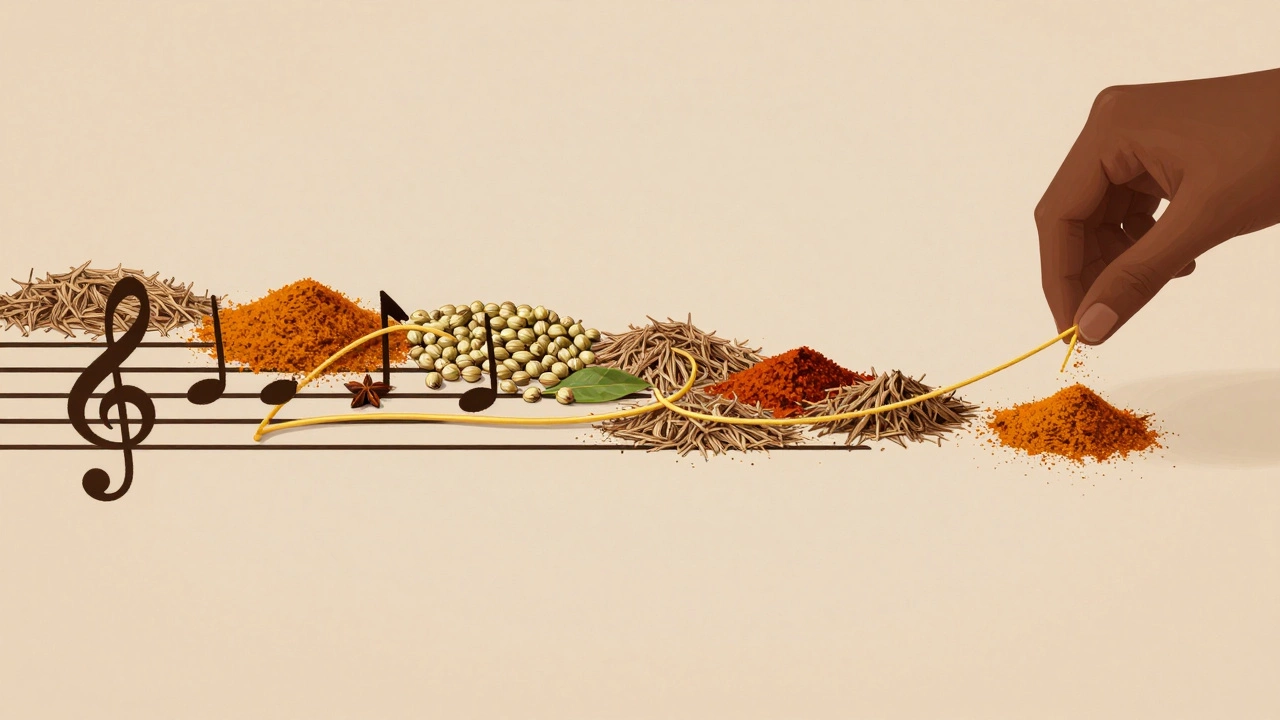
Curry isn’t just ‘spicy food.’ It’s a layered experience. Thai curries use coconut milk and lemongrass. Japanese curry has apples and soy. Indian curry is built on a foundation of dry-roasted spices and slow simmering. The texture is thicker. The flavor is more complex. It doesn’t rely on one dominant note - it’s a chorus.
That’s why curry from India doesn’t taste like curry from Thailand. And why store-bought curry powder can’t capture either.
How to Store Spices for Maximum Flavor
If you’re going to make curry regularly, store your spices right:
- Keep whole spices in airtight glass jars away from sunlight.
- Grind them in small batches - no more than 2 weeks’ worth at a time.
- Buy turmeric in powder form only if it’s bright yellow and smells earthy, not dusty.
- Replace ground spices every 6 months. Whole spices last up to 2 years.
Old spices don’t just lose flavor - they lose their ability to transform food.
Common Mistakes People Make With Curry
- Adding turmeric too late - it needs heat and time to bloom.
- Using pre-made curry powder as a substitute - it’s not the same.
- Overcooking garam masala - it burns easily and turns bitter.
- Skipping the oil-toasting step - that’s where flavor is born.
- Using low-quality chicken - the meat should be juicy, not rubbery.
Is turmeric the only key ingredient in curry?
No, but it’s the most essential. Turmeric gives curry its base flavor and color, but other spices like cumin, coriander, and garam masala build on it. Without turmeric, the dish loses its identity as a traditional Indian curry. You can still make a tasty chicken stew without it - but it won’t be curry.
Can I use curry powder instead of individual spices?
You can, but you’ll miss the depth. Store-bought curry powder is often stale, imbalanced, and lacks the complexity of freshly toasted whole spices. If you use it, add a pinch of fresh turmeric and a dash of garam masala at the end to rescue the flavor.
Why does my curry taste bland even with lots of spices?
You probably added the spices too late or didn’t toast them in oil. Spices need heat and fat to release their oils. If you stir them into a watery sauce, they just sit there. Always fry them in hot oil for 30-60 seconds before adding liquids.
What’s the difference between garam masala and curry powder?
Garam masala is a warming spice blend added at the end - it’s aromatic and sweet. Curry powder is a pre-mixed blend meant to be cooked early - but most commercial versions are outdated and dull. Garam masala has cinnamon, cardamom, and cloves. Curry powder usually has turmeric, coriander, and cumin. They’re not interchangeable.
Does chicken curry always need coconut milk?
No. Coconut milk is common in southern India and Sri Lankan curries, but most North Indian and Mumbai-style curries use water, yogurt, or tomato-based sauces. The key is the spice blend, not the liquid. Coconut milk adds richness, but it’s optional.