What Is the Most Common Breakfast in India?
 Dec, 12 2025
Indian Breakfast Finder
Find your perfect Indian breakfast based on your morning priorities. Select your constraints below to see which traditional dish best matches your needs.
Select Your Morning Priorities
Your Recommended Breakfast
Why this works for you: Based on your selections, this breakfast meets all your criteria for affordability, preparation time, and dietary needs as described in the article.
Ask anyone in India what they eat for breakfast, and you’ll get a different answer depending on whether they’re in Delhi, Chennai, Kolkata, or Mumbai. But if you had to pick one meal that shows up on more plates than any other across the country, it’s idli-sambar. Not because it’s fancy, not because it’s trendy, but because it’s simple, cheap, filling, and works for every kind of day - rushed mornings, lazy weekends, even hospital visits.
You’ll find idli-sambar in roadside stalls, home kitchens, hotel buffets, and even corporate cafeterias. It’s the breakfast that doesn’t ask for much: steamed rice and lentil cakes, soft and spongy, served with a spicy lentil stew called sambar, and a side of coconut chutney. No oven, no fancy gadgets, no long prep. Just a pressure cooker, a grinder, and a few hours of overnight fermentation. That’s it.
Why Idli-Sambar Dominates Indian Breakfasts
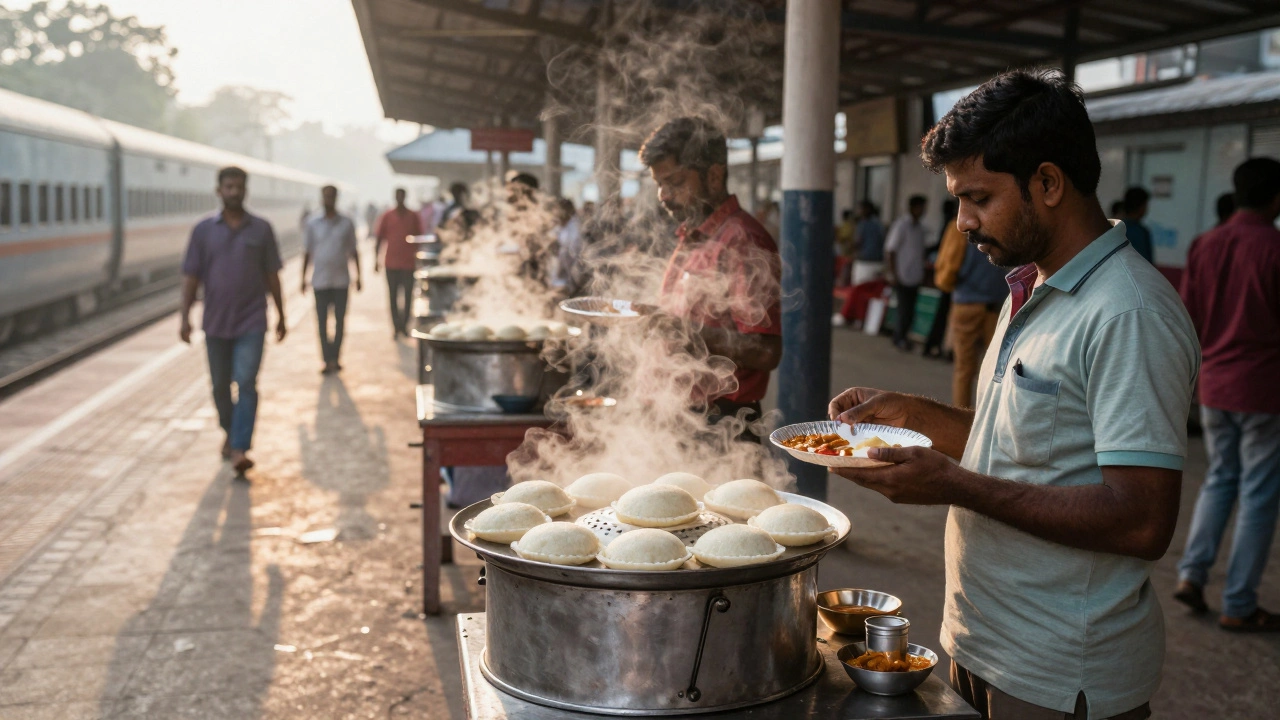
Idli isn’t just popular - it’s practically a national default. In Tamil Nadu, it’s eaten daily by over 85% of households, according to a 2023 survey by the Indian Institute of Food Processing Technology. But its reach goes far beyond South India. In Mumbai, you’ll see vendors selling idlis wrapped in banana leaves at train stations before 6 a.m. In Delhi, families who moved from the south still make it every Sunday. In Bangalore, it’s served with masala dosa on the same plate. It’s the breakfast that travels.
What makes it stick? First, it’s vegetarian and gluten-free, which fits India’s dietary norms for a huge portion of the population. Second, it’s easy to digest. That’s why hospitals serve it to patients recovering from surgery. Third, it’s cheap. A plate of four idlis with sambar and chutney costs under ₹30 in most cities. That’s less than a cup of coffee in New York.
The fermentation process isn’t just for flavor - it boosts nutrition. The bacteria that grow during fermentation break down phytic acid, which helps your body absorb more iron and zinc. Studies from the National Institute of Nutrition in Hyderabad show fermented idli has 30% higher bioavailability of nutrients than unfermented rice dishes. That’s why it’s often recommended for kids and pregnant women.
Other Strong Contenders Across India
But idli isn’t the only player. India’s breakfast map is as diverse as its languages. In Punjab, people start the day with parathas - flaky, buttery flatbreads stuffed with potatoes, paneer, or even minced meat. They’re fried in ghee and served with yogurt or pickle. It’s heavy, rich, and perfect for cold winters. A single paratha can keep you full until lunch.
In West Bengal, the breakfast is puchka - not the street snack you think of, but a softer, sweeter version called cholar dal with roshogolla on the side. Or sometimes, doi chira: flattened rice soaked in yogurt, topped with jaggery and banana. It’s light, cooling, and eaten slowly, often with a cup of tea.
In Gujarat, people eat dalia - a porridge made from cracked wheat, cooked with milk, sugar, and cardamom. It’s warm, soothing, and eaten with a sprinkle of chopped nuts. In Rajasthan, it’s dal baati churma - baked wheat balls dipped in ghee, served with lentils and a sweet crumbly mix. It’s a meal, not just a snack.
And then there’s the North Indian classic: upma. Made from semolina, onions, mustard seeds, and curry leaves, it’s quick, savory, and cooks in under 15 minutes. In Maharashtra and Karnataka, upma rivals idli for daily dominance. In urban apartments where space is tight and time is short, upma wins because you can make it with one pot and no fermentation.
What Makes a Breakfast ‘Common’ in India?
When we say ‘most common,’ we’re not talking about what’s eaten in five-star hotels or Instagram reels. We’re talking about what shows up on the plates of auto drivers, teachers, nurses, factory workers, and students who wake up at 5 a.m. The common breakfast has four traits:
- It’s made from locally available ingredients - rice, lentils, wheat, millet, vegetables.
- It doesn’t require electricity or fancy tools - no blenders, no toasters, no ovens.
- It can be made ahead or cooked fast - either fermented overnight or ready in 15 minutes.
- It’s affordable - under ₹50 per serving, often under ₹20.
Idli checks all four. So does upma. So does poha - flattened rice cooked with turmeric, peanuts, and curry leaves. Poha is especially big in Maharashtra and Madhya Pradesh. You can make it in 10 minutes, it’s light, and it doesn’t leave you feeling sluggish. Many office-goers in Pune swear by it.
The Rise of Quick Breakfasts in Cities
In Mumbai, Delhi, and Bengaluru, the old-school breakfasts are still alive - but now they’re being joined by new options. Ready-to-eat idli packs from brands like ITC’s Sunfeast or Mother’s Recipe are sold in supermarkets. Instant upma mixes, poha packets, and even pre-fermented idli batter in refrigerated sections are becoming normal. People still prefer homemade, but convenience is changing habits.
Young professionals who grew up eating idli at home now buy frozen idlis from the grocery store. They steam them in the microwave, pour hot sambar over them, and grab a chutney sachet. It’s not the same as the one made by their grandmother - but it’s close enough, and it saves 45 minutes.
Even fast-food chains have jumped in. McDonald’s in India offers the Masala Dosa Wrap. Domino’s has a paneer-tomato breakfast pizza. But none of these have replaced the real thing. Why? Because the real breakfast isn’t about taste alone - it’s about ritual. The smell of mustard seeds popping in oil. The sound of the grinder. The steam rising from the idli stand. That’s what people miss.
What You’ll Actually Find in a Typical Indian Home
If you walk into a middle-class Indian home at 7 a.m., here’s what you’re likely to see:
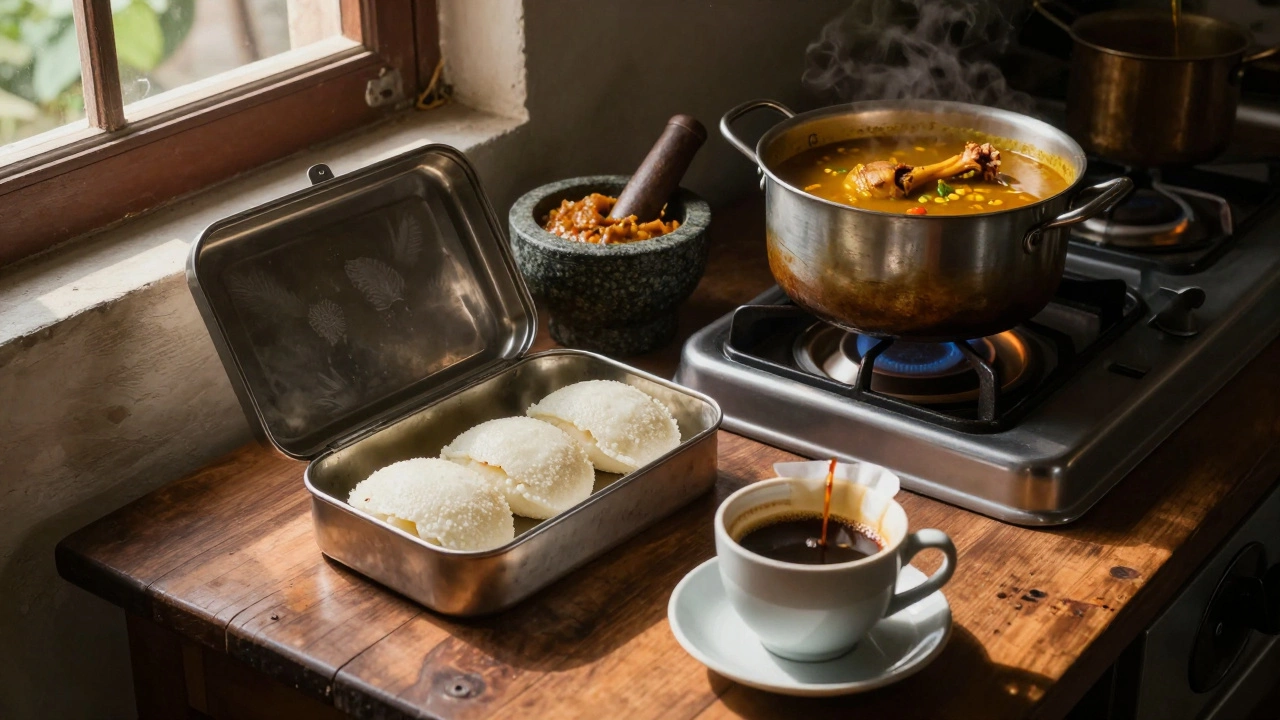
- A steel tiffin box with leftover idlis from last night’s dinner, reheated.
- A pot of sambar simmering on the stove, made with tamarind, lentils, and seasonal vegetables like drumstick or pumpkin.
- A small bowl of coconut chutney, freshly ground with green chilies and roasted peanuts.
- A cup of filter coffee, strong and sweet, poured from a height to cool it down.
That’s it. No toast. No cereal. No yogurt parfaits. No protein shakes. Just food that’s been eaten for centuries, made with care, and served with quiet routine.
Even in homes with two working parents and kids in school, breakfast isn’t rushed. It’s not something you grab on the way out. It’s something you sit for. Five minutes. Ten. Maybe longer if you’re talking to your sibling or listening to the morning news on the radio.
Why This Matters Beyond the Plate
Indian breakfasts aren’t just about fuel. They’re tied to culture, health, and rhythm. The fermentation in idli isn’t just a cooking step - it’s a tradition passed down from mother to daughter. The use of turmeric in upma isn’t just for color - it’s for anti-inflammatory benefits. The tea isn’t just a drink - it’s a pause button in a chaotic day.
When you eat idli-sambar, you’re not just eating rice and lentils. You’re eating centuries of wisdom about digestion, balance, and simplicity. You’re eating a meal that doesn’t need to be trendy to be perfect.
So if you ever wonder what the most common breakfast in India is - look past the viral food videos. Look at the train station at dawn. Look at the kitchen of a small apartment in Lucknow or the corner shop in Kochi. There, you’ll find the same thing: a plate of idlis, a bowl of sambar, and someone quietly enjoying it before the day begins.
Is idli the only common breakfast in India?
No, idli is the most widespread, but not the only one. Upma, poha, paratha, dalia, and doi chira are also daily staples in different regions. What they all share is affordability, simplicity, and local ingredients. Idli wins because it’s eaten across more states than any other.
Can I make idli without a steamer?
Yes. You can use a pressure cooker without the weight. Add water to the bottom, place a stand or inverted bowl inside, and put the idli mold on top. Cover and cook on medium heat for 10-12 minutes. Many households do this daily. A regular pot with a tight lid and a heatproof rack also works.
Why is sambar served with idli?
Sambar balances the mild flavor of idli with tangy, spicy, and savory notes. It adds protein from lentils, fiber from vegetables, and flavor from tamarind and spices. Together, they create a complete meal - carbs from rice, protein from lentils, and micronutrients from veggies. It’s nutrition in a bowl.
Is idli healthy for weight loss?
Yes, if eaten in moderation. One idli has about 35-40 calories, is low in fat, and high in fiber due to fermentation. Paired with sambar (not fried or overly oily), it’s a light, filling breakfast that won’t spike blood sugar. Many dietitians in India recommend it for weight management.
What’s the fastest Indian breakfast for busy mornings?
Poha is the fastest. It takes 8-10 minutes to cook. Just rinse flattened rice, sauté mustard seeds, curry leaves, onions, and turmeric in oil, then add the rice and a splash of water. Cover and steam for a few minutes. Add lemon juice and peanuts at the end. No fermentation, no waiting. You can make it even faster with pre-cooked poha packets.