Which Dal Does Not Need Soaking? Quick Cooking Lentils for Busy Days
 Nov, 16 2025
Dal Cooking Guide
Which Dal Cooks Fastest?
Select a dal type to see cooking recommendations.
Ever stood in front of your kitchen, hungry, with a pot of dal that’s been soaking for hours? You didn’t plan ahead, and now you’re stuck waiting while your stomach growls. The truth? Not all dals need soaking. Some cook fast enough to be ready in under 30 minutes-no soaking, no waiting, no stress.
Why Soaking Dal Is Usually Recommended
Most dals are soaked to reduce cooking time and improve digestibility. Soaking breaks down phytic acid and oligosaccharides, which can cause bloating. It also softens the outer skin, helping the lentil cook evenly. But soaking isn’t a rule-it’s a helper. Some dals are naturally quick-cooking because of their size, structure, or how they’re processed.
The Dal That Doesn’t Need Soaking: Moong Dal
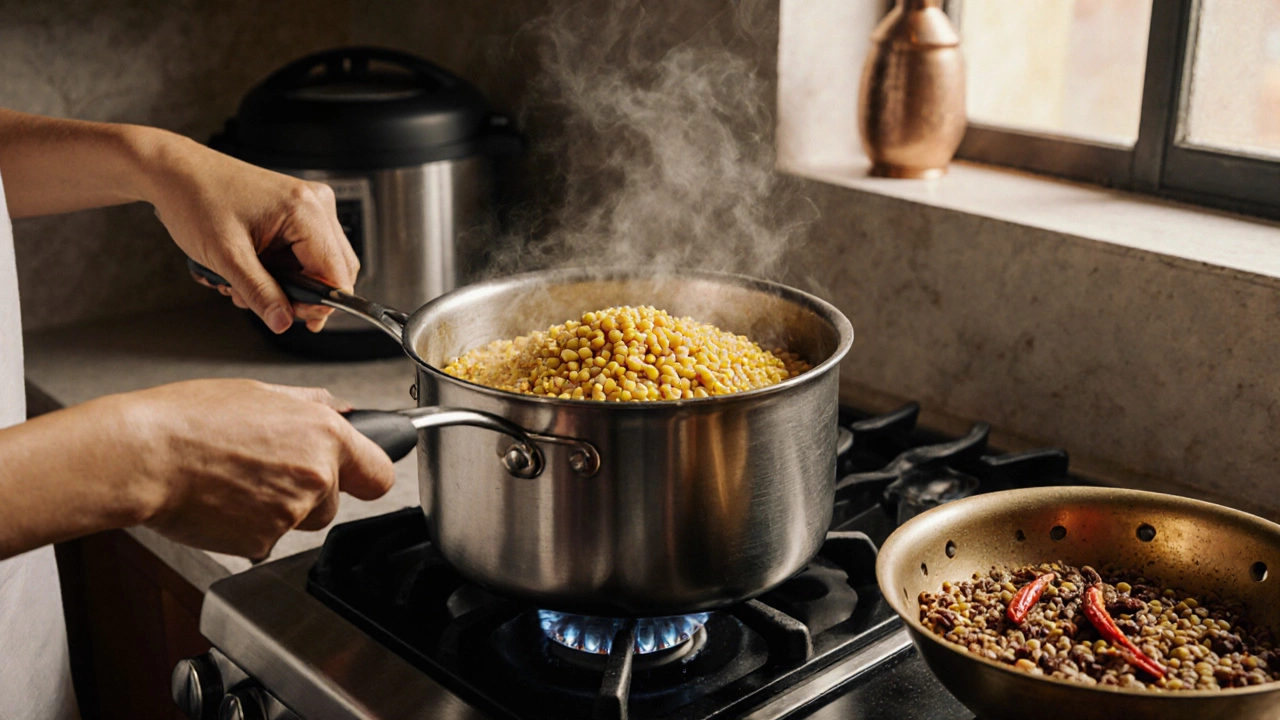
Yellow moong dal, the split and skinned version, is the champion of no-soak cooking. It’s small, thin, and has had its outer husk removed. That means water penetrates it fast. You can rinse it, throw it in a pot with water and spices, and have a tender, creamy dal in 20 to 25 minutes on the stove. Even in a pressure cooker, it’s done in under 10 minutes with no pre-soak.
Why does it work so well? Moong dal has a lower fiber density than other lentils. Its starch structure breaks down quickly under heat. That’s why it’s the go-to for quick meals like moong dal khichdi, dal tadka, or even a simple bowl with rice.
Other Dals That Can Skip Soaking (With Caveats)
Not all dals are equal. Here’s what else works without soaking, and what you should watch out for:
- Red lentils (masoor dal): These cook fast too-about 15 to 20 minutes. They break down easily, making them perfect for soups or creamy dals. No soaking needed, but watch the water level. They turn mushy fast if overcooked.
- Split pigeon pea (toor dal): This is the most common dal in South Indian sambar. It can be cooked without soaking, but it takes longer-35 to 45 minutes on the stove. Pressure cooking cuts it to 15 minutes. Soaking still helps if you’re cooking on low heat or want a smoother texture.
- Split chickpeas (chana dal): These are small and dense. They cook in 25 to 30 minutes without soaking, especially in a pressure cooker. But if you’re boiling them slowly, soaking cuts the time by half and improves texture.
What about bigger dals like urad dal or chana (whole chickpeas)? Skip soaking at your own risk. Urad dal can take over an hour without soaking. Whole chana? Forget it. They need overnight soaking or a pressure cooker with steam.
How to Cook Moong Dal Without Soaking
Here’s the simplest method that works every time:
- Rinse 1 cup of yellow moong dal under cold water until the water runs clear.
- Place it in a pot with 2.5 cups of water. Add a pinch of turmeric and salt.
- Bring to a boil, then reduce heat to low. Cover and simmer for 20 minutes.
- Stir occasionally. If it’s too thick, add a splash of hot water.
- While the dal cooks, heat 1 tbsp oil or ghee in a small pan. Add 1 tsp cumin seeds, 2 dried red chilies, a pinch of asafoetida, and a few curry leaves. Let them sizzle for 20 seconds.
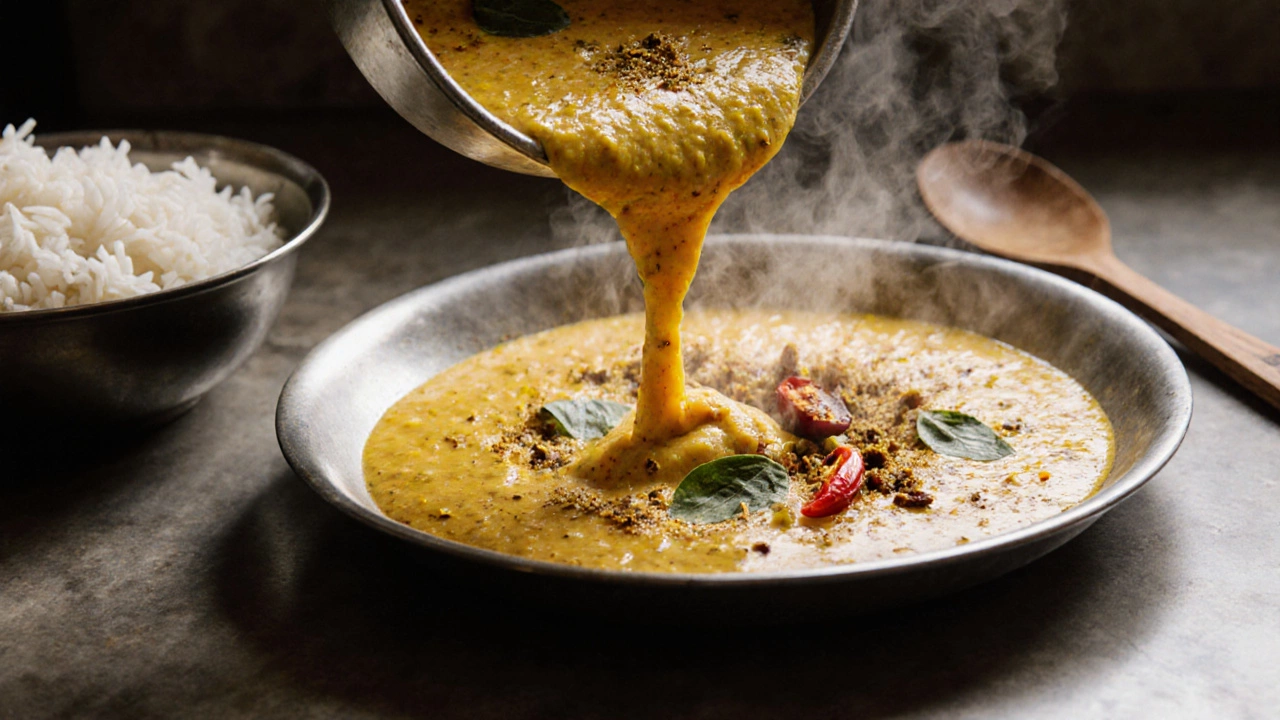
- Pour this tempering over the cooked dal. Stir. Done.
That’s it. No soaking. No waiting. Just a bowl of warm, comforting dal ready before your rice even finishes steaming.
When Soaking Still Makes Sense
Even if you’re using moong dal, there are times soaking helps:
- If you have digestion issues-soaking reduces gas-causing compounds.
- If you’re making a dish where texture matters, like dal makhani or sweet moong halwa.
- If you’re cooking on a slow stove or using a clay pot.
Soaking for just 30 minutes can cut cooking time by 5 to 10 minutes and make the dal creamier. It’s optional, not mandatory.
Why This Matters for Everyday Cooking
In a busy household-especially in cities like Bengaluru where dinner is often rushed after work-this small change saves real time. You don’t need to plan your meals 6 hours ahead. You can open your pantry, pick up moong dal, and have a protein-rich, fiber-packed meal on the table before your kids ask for dinner.
Moong dal isn’t just fast. It’s also one of the easiest dals to digest. It’s gentle on the stomach, low in FODMAPs, and packed with plant-based protein. That makes it ideal for kids, elderly people, and anyone recovering from illness.
What About Instant or Pre-Cooked Dals?
Instant dals in packets? They’re precooked and dehydrated. They cook in 5 minutes, but they often have added salt, preservatives, and flavor enhancers. If you’re looking for clean, whole-food cooking, stick with plain, unprocessed moong dal. It’s cheaper, healthier, and tastes better.
Myth Busting: “All Lentils Need Soaking”
This myth comes from old recipes written for wood stoves or slow-cooking pots. Back then, soaking was necessary to make dals edible in hours, not minutes. Today, with gas stoves, pressure cookers, and modern milling, we don’t need to follow those rules blindly.
Moong dal proves that not all dals are the same. You don’t need to treat them like they are. Learn which ones work fast, and you’ll never waste time again.
Quick Reference: Soak or Skip?
| Dal Type | Soak Needed? | Cook Time (No Soak) | Best For |
|---|---|---|---|
| Yellow Moong Dal | No | 20-25 mins | Quick dal tadka, khichdi |
| Red Lentils (Masoor Dal) | No | 15-20 mins | Smooth dals, soups |
| Toor Dal | Optional | 35-45 mins | Sambar, curries |
| Chana Dal | Optional | 25-30 mins | Tempered dals, snacks |
| Urad Dal (Split) | Yes | 60+ mins | Dosa batter, dal fry |
| Whole Chana | Yes | 2+ hours | Chana masala, salads |
Frequently Asked Questions
Can I cook moong dal in a rice cooker without soaking?
Yes. Use a 1:2.5 ratio of moong dal to water. Set your rice cooker to the “porridge” or “soup” setting. It will take about 30 minutes. Stir once halfway through if your cooker doesn’t have a stir function.
Why does my dal still feel gritty after cooking without soaking?
It’s probably not fully rinsed. Moong dal has fine dust from milling. Rinse it under running water 3-4 times until the water runs clear. That removes the grit and helps it cook evenly.
Is unsoaked dal harder to digest?
For most people, no. Moong dal is naturally low in complex sugars that cause gas. If you’re sensitive, try soaking it for 30 minutes instead of overnight. That reduces bloating without adding hours to your prep time.
Can I use green moong dal without soaking?
Green moong dal (with skin) takes longer-about 40-45 minutes without soaking. It’s chewier and holds its shape better. If you want speed, stick with yellow (split and skinned) moong dal. Green is better for sprouting or salads.
What’s the best way to store unsoaked dal?
Keep it in an airtight container in a cool, dry place. Moong dal lasts over a year if stored properly. No need to refrigerate. Just avoid moisture-wet dal spoils faster.
Next Steps
If you’re new to cooking dals, start with moong dal. It’s forgiving, fast, and delicious. Once you’re comfortable, try red lentils. Then experiment with toor dal on the stove without soaking-see how it turns out. You’ll learn which dals suit your pace, your taste, and your schedule.
Forget the soaking myth. Not all lentils are the same. Moong dal is your shortcut to healthy, home-cooked meals-no advance planning needed.