Which Indian State Has the Best Street Food? Top Contenders and What Makes Them Stand Out
 Mar, 10 2026
Street Food Preference Finder
Discover Your Perfect Street Food Destination
Answer three quick questions to find which Indian state best matches your street food preferences. Based on the article's analysis of Mumbai, Delhi, Kolkata, Rajasthan, and Hyderabad.
Your Perfect Street Food Destination:
Ask anyone who’s eaten their way across India, and they’ll tell you: street food isn’t just snack food here-it’s culture on a plate. Every city, every neighborhood, every corner cart has its own signature. But if you’re asking which Indian state has the best street food, the answer isn’t simple. There’s no single winner. Instead, there are a few states that don’t just compete-they redefine what street food can be.
Mumbai: The Unofficial Street Food Capital
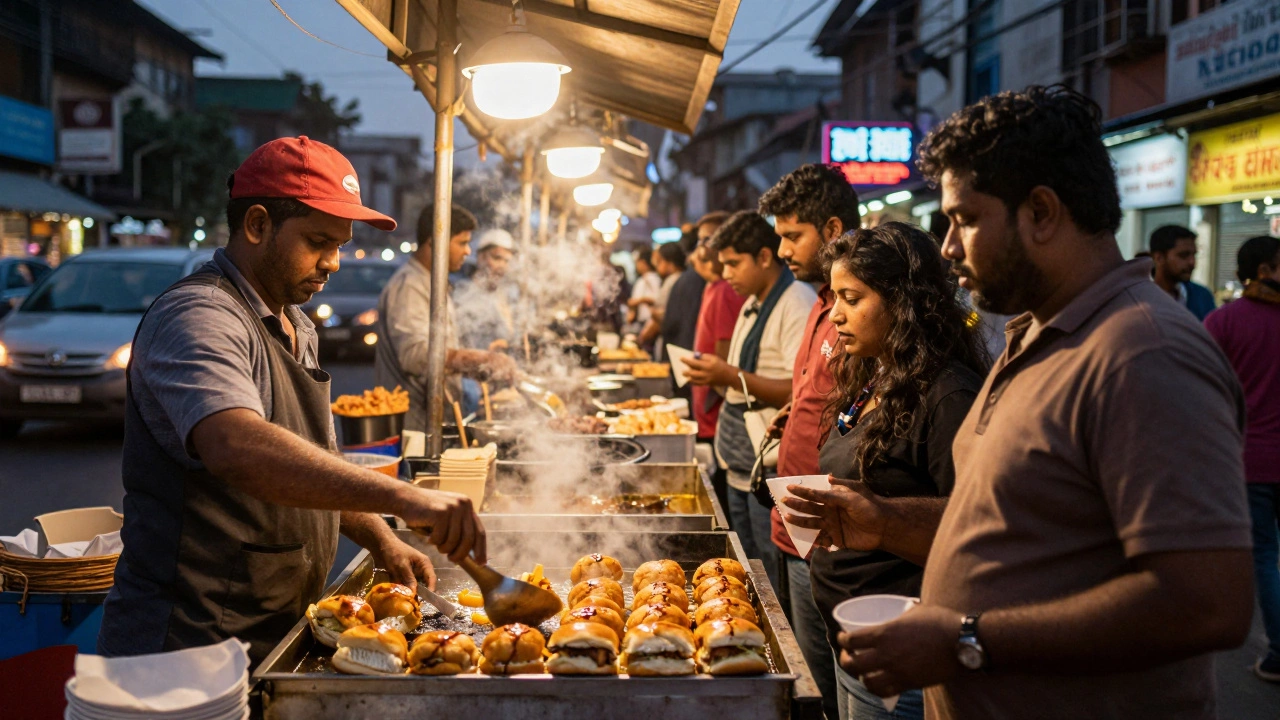
If you’ve ever stood in a line at a Mumbai chowpatty at 8 p.m., watching a vendor toss vada pav in hot oil while shouting over the traffic noise, you know why this city is a top contender. Mumbai’s street food isn’t just popular-it’s essential. The city eats it for breakfast, lunch, dinner, and midnight snacks. The vada pav, a spiced potato fritter stuffed in a bun with chutneys, is the city’s unofficial burger. It’s cheap, filling, and everywhere. You’ll find it from a cart near a train station or a stall outside a temple, all made the same way but somehow tasting different each time.
Then there’s pani puri. Not just any pani puri-Mumbai’s version has a tangy tamarind water, spicy green chutney, and a hint of roasted cumin. The crunch of the puri, the burst of flavor inside-it’s a sensory rush. And don’t forget the sev puri, the bhel puri, the ragda patties. Each has its own loyal crowd. Mumbai doesn’t have one street food scene. It has dozens, layered over decades of migration, innovation, and hunger.
Delhi: Where History Meets Heat
Delhi’s street food carries the weight of empires. The old city of Shahjahanabad still hums with the flavors of Mughal-era kitchens turned roadside stalls. Here, the paratha isn’t just bread-it’s a canvas. Butter parathas stuffed with paneer, aloo, or even keema are fried fresh, then served with yogurt, pickle, and a side of raw onion. The magic happens at Chandni Chowk, where the scent of cumin and ghee lingers in the air like a promise.
Chaat here is an art form. The aloo tikki, a mashed potato patty topped with chickpeas, yogurt, and chutneys, is served with such precision that each bite balances sweet, sour, spicy, and crunchy. The dahi bhalla? Soft lentil dumplings soaked in thick yogurt, sprinkled with roasted cumin and coriander. It’s not just food-it’s texture, temperature, and timing, all in one bite.
And then there’s the kachori. Not the dry, oily kind you find elsewhere. Delhi’s kachori is flaky, hot, and stuffed with spiced lentils. It’s eaten with a side of tamarind chutney and a sip of masala chai. You don’t just eat it-you experience it.
Kolkata: The Sweet-Spicy Heart
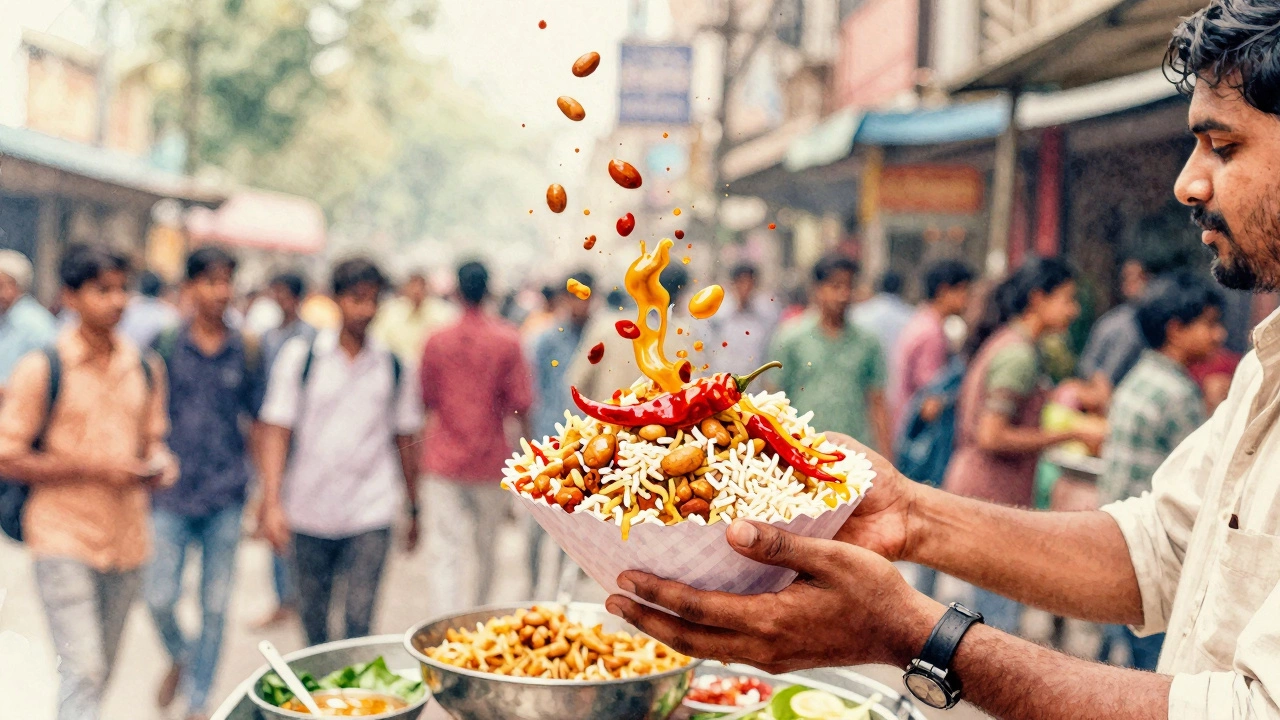
Kolkata’s street food is like its people-loud, layered, and full of surprises. The city doesn’t just serve food; it performs it. The jhal muri, a mix of puffed rice, peanuts, chopped onions, chili, and mustard oil, is tossed fresh in front of you. You get a paper cone, you eat it standing up, and you’re already thinking about the next one.
Then there’s the phuchka-the Bengali version of pani puri. It’s bigger, softer, and the water inside is less sweet and more herbal. The filling? A blend of boiled potatoes, chickpeas, and a hint of mint. It’s not just a snack; it’s a ritual. You hold it, you dip it, you bite-and the burst of flavor hits before you even chew.
Kolkata’s roll is another legend. A paratha wrapped around scrambled egg, potato, onion, chutney, and sometimes chicken or paneer. It’s messy, it’s greasy, and it’s the most common lunch for students, drivers, and office workers. You eat it on the sidewalk, one hand holding the roll, the other holding your bag. It’s not fancy. But it’s perfect.
Rajasthan: Desert Flavors with a Bold Punch
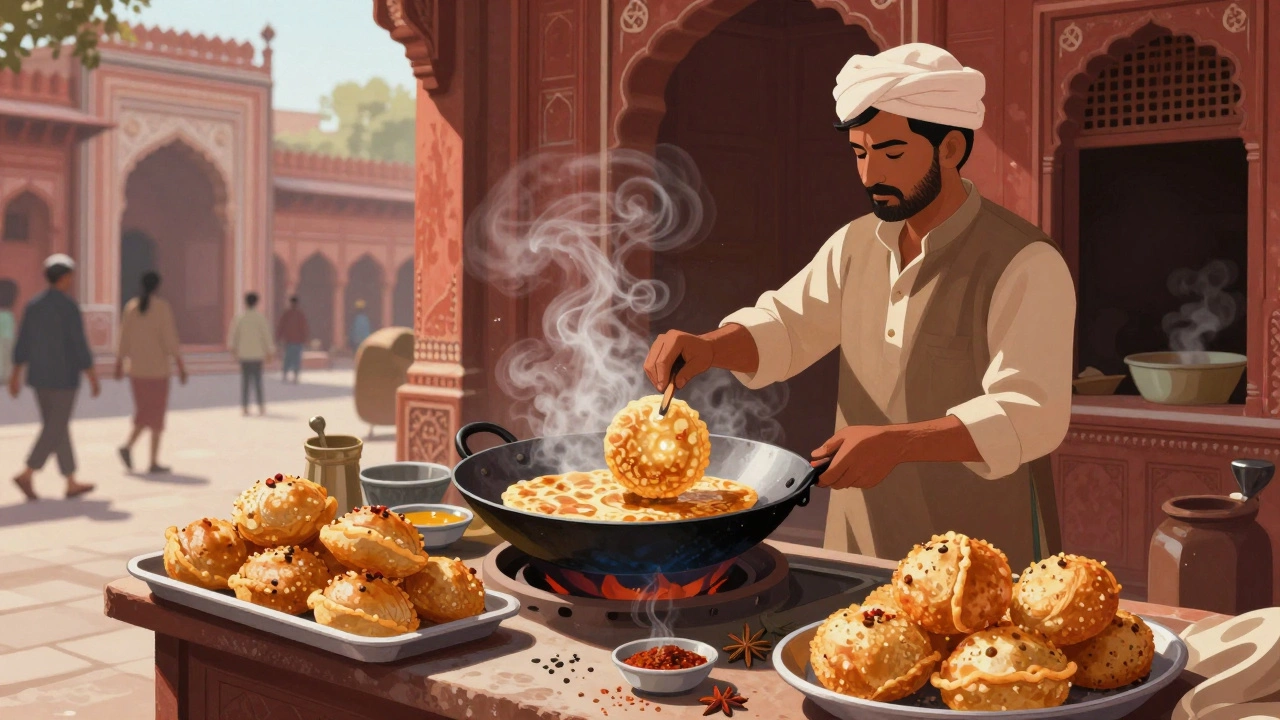
If Mumbai is chaos and Delhi is tradition, Rajasthan is boldness. The food here is built for heat, dust, and long days. The pyaaz kachori is a deep-fried pastry filled with onions, spices, and a hint of jaggery. It’s served with tamarind chutney and a dollop of mint yogurt. It’s spicy, sweet, and crunchy-all at once.
Then there’s dal baati churma. Not something you find on every corner, but in rural markets and roadside dhabas, it’s a must. Hard wheat balls (baati) are baked in a tandoor, then dunked in ghee. Served with lentil curry (dal) and a sweet, crushed wheat dessert (churma), it’s hearty, filling, and deeply traditional. It’s not quick. But it’s unforgettable.
And let’s not forget the ghewar. A honeycomb-like sweet made during festivals, but sold year-round near temples. It’s soaked in sugar syrup and topped with dry fruits. You’ll find it next to a savory snack, and you’ll eat both.
Hyderabad: A Mughal Legacy on a Stick
Hyderabad’s street food carries the legacy of Nizams and royal kitchens. The haleem, a slow-cooked stew of wheat, barley, meat, and spices, is served during Ramadan but available year-round at places like Paradise and Aminabad. It’s thick, rich, and takes hours to make. You don’t just eat it-you savor it.
The mirchi bajji, a large green chili dipped in gram flour and fried, is spicy enough to make you sweat. It’s served with tangy tamarind chutney to cool things down. The kebabs here aren’t just grilled-they’re marinated for days in yogurt, garlic, and spices, then slow-cooked on charcoal.
And then there’s the Irani chai. Not a drink, really-it’s a ritual. Served in small glasses with biscuit on the side, it’s sweet, strong, and served with a smile. It’s the perfect end to a spicy meal.
Why There’s No Single Winner
Here’s the truth: no one state has the best street food in India. Because the best street food isn’t about rankings. It’s about context. Mumbai’s food is fast, loud, and fueled by the rhythm of a city that never sleeps. Delhi’s is layered with history, each bite carrying centuries of influence. Kolkata’s is playful, inventive, and deeply personal. Rajasthan’s is rugged and bold, shaped by the desert. Hyderabad’s is royal, slow, and full of soul.
What makes Indian street food great isn’t one place. It’s the fact that in every corner of the country, someone is cooking something with love, using ingredients that cost pennies, and serving it with pride. You don’t need to visit all five states to taste the best. You just need to go where the crowd is, follow the smell, and trust the vendor’s hands.
What to Look For
- **Freshness**: Look for stalls where food is made to order. If it’s sitting under a heat lamp, walk away.
- **Crowds**: If locals are lining up, it’s usually a good sign. Not always-but often.
- **Clean hands**: The vendor doesn’t need a fancy kitchen. But they should wash their hands before handling food.
- **Spice level**: Ask for "less spicy" if you’re unsure. Most vendors will adjust it.
- **Cash only**: Most street vendors don’t accept cards. Keep small bills handy.
Final Thought
There’s no trophy for the best street food in India. But if you’re looking for a place to start, try Mumbai for variety, Delhi for depth, Kolkata for fun, Rajasthan for boldness, and Hyderabad for richness. Eat at least one thing from each. Then decide for yourself.
Is street food in India safe to eat?
Yes, if you choose wisely. Most street vendors follow hygiene practices passed down through generations. Look for busy stalls-high turnover means fresh food. Avoid anything sitting out for hours. Drink bottled water, and stick to items that are cooked hot and served immediately. Millions eat street food daily without issue.
What’s the cheapest street food in India?
The cheapest options are usually pani puri, vada pav, and bhel puri. In most cities, you can get a plate for ₹10-₹20 (about 12-25 cents USD). In smaller towns, it’s even cheaper. These snacks are designed to be affordable for students, laborers, and families.
Which state has the spiciest street food?
Rajasthan and Hyderabad are known for bold heat. Rajasthan’s pyaaz kachori and Hyderabadi mirchi bajji pack serious punch. But spice levels vary by vendor. Always ask for "less spicy" if you’re unsure. Mumbai and Kolkata tend to balance heat with sweetness and tang.
Can vegetarians find good street food in India?
Absolutely. Most Indian street food is vegetarian by default. Vada pav, pani puri, bhel puri, sev puri, aloo tikki, and dosas are all plant-based. Even in cities like Hyderabad, where meat dishes are popular, vegetarian options are abundant and often more numerous.
What’s the most surprising street food you’ve tried?
In Kolkata, I tried the jhal muri with a side of sweetened roasted chickpeas. It sounds odd-spicy, crunchy puffed rice with sugary legumes. But together, they create a perfect balance of salt, heat, crunch, and sweetness. It’s not on any tourist list. But locals swear by it. That’s the magic of Indian street food-it’s not about what you expect. It’s about what you didn’t know you needed.