Why Is Tandoori Chicken Orange? The Real Reason Behind the Color
 Feb, 13 2026
Tandoori Chicken Color Estimator
Customize Your Recipe
Adjust ingredients to see how they affect your tandoori chicken's color.
Color Prediction
Predicted color intensity
Why This Matters
Authentic tandoori chicken gets its vibrant orange from Kashmiri chili's carotenoids. Full-fat yogurt and long marination help lock in the color, while insufficient chili or low-fat yogurt results in pale chicken.
Ever taken a bite of tandoori chicken and wondered why it’s such a bright, almost unnatural orange? You’re not alone. Most people assume it’s food dye or some chemical trick. But if you’ve ever made tandoori chicken the traditional way - especially in a home kitchen in India - you know the color comes from something far more natural. And it’s not even the spice you think it is.
It’s Not Red Pepper, It’s Kashmiri Chili
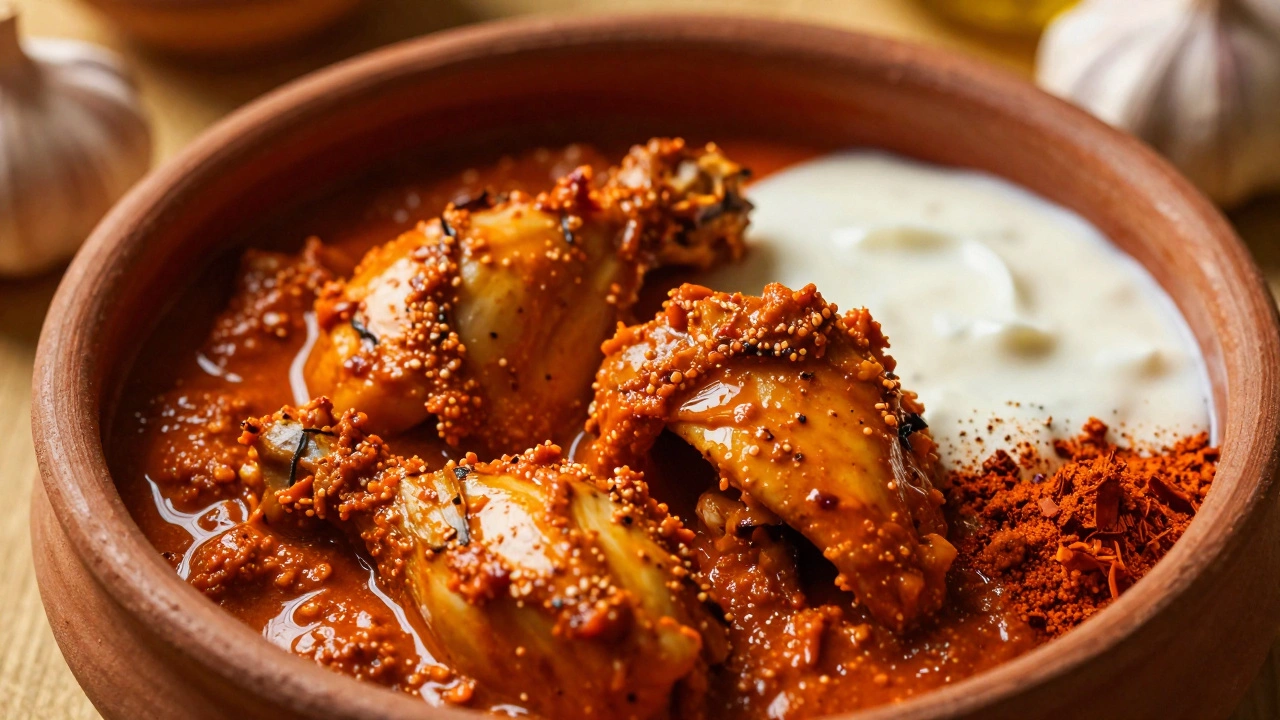
Many assume the orange hue comes from paprika or cayenne pepper. But those spices give a deep red, not the vivid orange you see on restaurant plates. The real secret? Kashmiri chili is a mild, deeply colored dried red chili native to the Kashmir region of India, known for its rich pigment and low heat. It’s not used for spice - it’s used for color. Kashmiri chili powder contains high levels of natural carotenoids, the same pigments found in carrots and tomatoes. These pigments turn bright orange-red when heated and coated in yogurt and oil.
If you’ve ever made tandoori chicken with regular chili powder, you’ll notice the difference. Regular chili powder gives a dull, brownish-red tint. Kashmiri chili? It’s electric. Even a teaspoon can turn a whole marinade into that signature shade. That’s why home cooks in North India keep jars of it in their spice racks - not because it’s hot, but because it looks like fire.
The Yogurt and Oil Factor
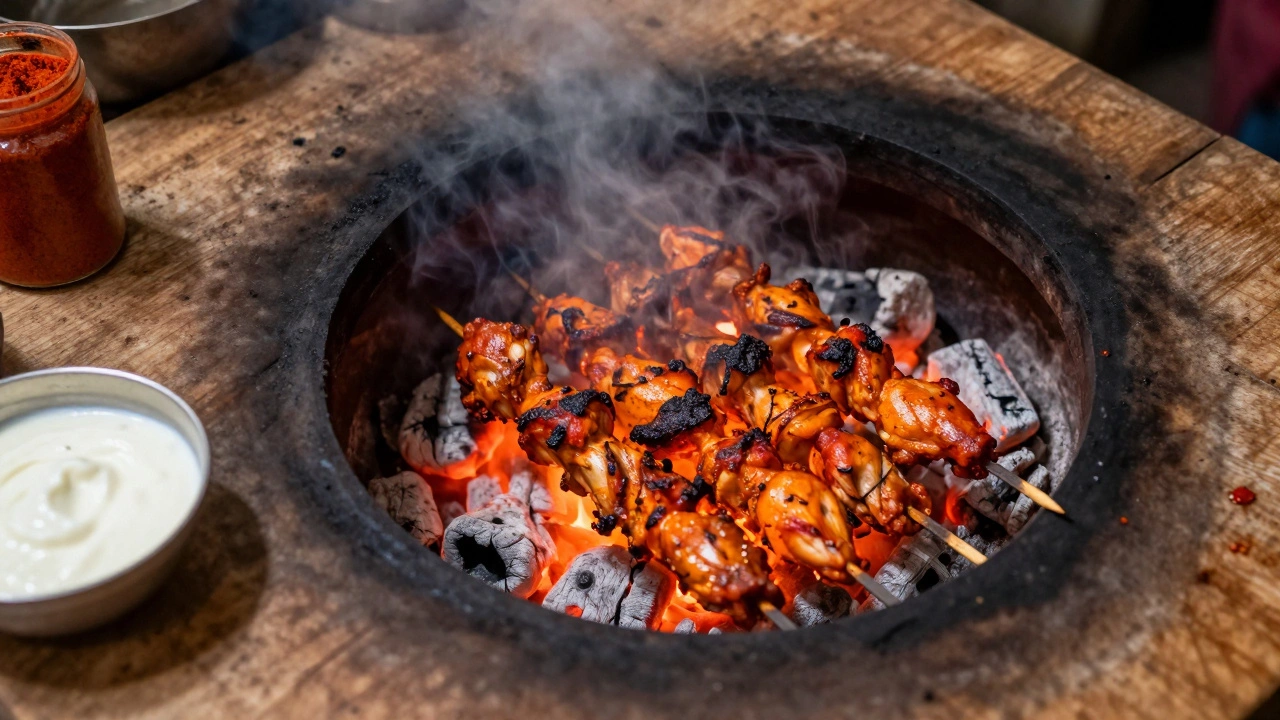
The color doesn’t just come from chili powder alone. The marinade is a mix of yogurt, oil, lemon juice, garlic, ginger, and spices. The yogurt does more than tenderize - it acts as a carrier. When you smear the paste onto chicken, the yogurt clings to the surface, locking in the chili pigment. Then, when the chicken hits the tandoor (or oven), the heat causes the oils and yogurt to caramelize slightly, intensifying the color.
That’s why tandoori chicken from street vendors in Delhi or Lucknow often looks more orange than the version you get at a fancy restaurant. They use more yogurt and more Kashmiri chili, and they cook it hotter and faster. The surface gets slightly charred, but the pigment stays vibrant. It’s not dye - it’s chemistry.
Why Do Restaurants Use Food Coloring?
Here’s where things get tricky. Outside of India, especially in Western countries, many restaurants add red food coloring - often Red #40 or annatto - to make the chicken look "authentic." Why? Because most people expect it to be bright orange. If it’s not, they think it’s bland or poorly made.
Some Indian-owned restaurants in the U.S. or U.K. do this too. It’s not because they’re trying to deceive you. It’s because customers ask, "Where’s the color?" They’ve seen it on TV or in photos, and they expect that neon orange. So restaurants give it to them - even if it’s not traditional.
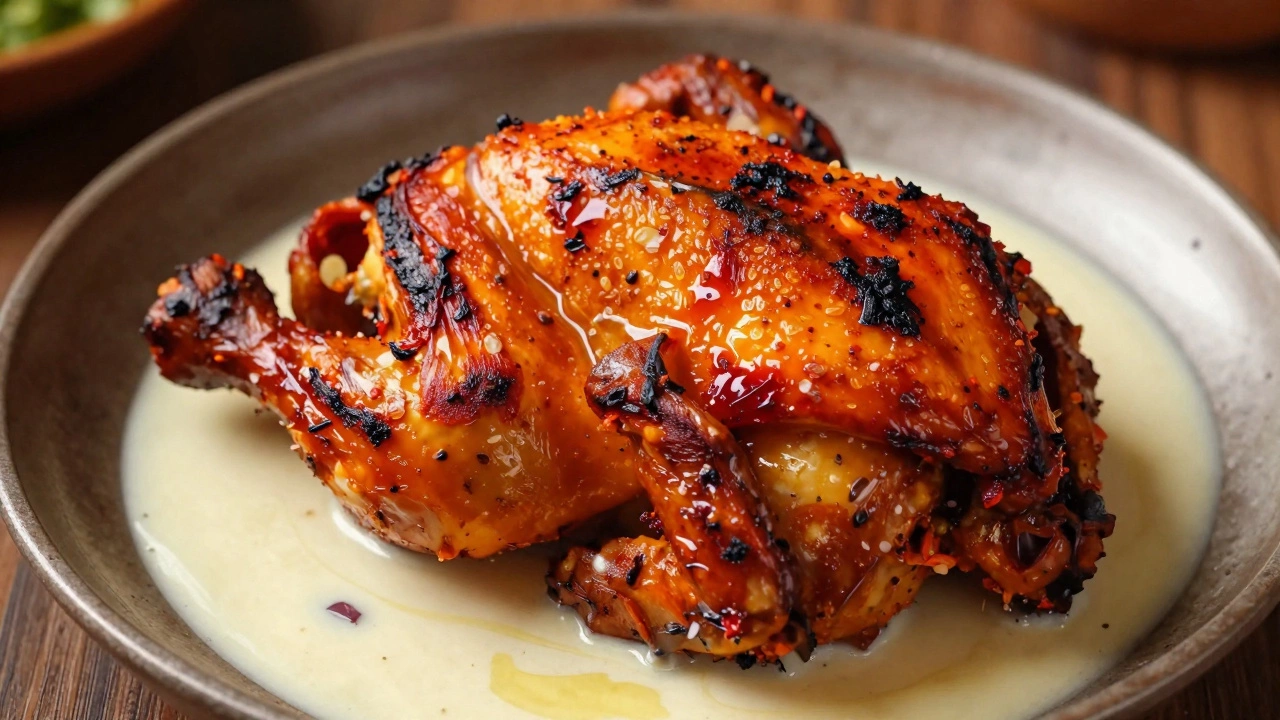
But if you make it at home with real Kashmiri chili, you’ll see the truth: the color is deep, rich, and slightly uneven. It’s not a flat, plastic orange. It’s a warm, glowing red-orange that varies from piece to piece. That’s the real thing.
How to Get the Real Color at Home
If you want that authentic hue without artificial stuff, here’s what works:
- Use Kashmiri chili powder - not paprika, not cayenne. Look for brands like MDH or Everest that label it as "Kashmiri" on the packet.
- Use full-fat yogurt. Low-fat yogurt won’t hold the color as well.
- Marinate for at least 4 hours, preferably overnight. The longer it sits, the more the color penetrates the skin.
- Use a little oil - 1 to 2 tablespoons. It helps the pigment stick and brown evenly.
- Roast at high heat. If you don’t have a tandoor, use your oven’s broiler on high. The char brings out the color.
Pro tip: If you can’t find Kashmiri chili powder, mix 1 part paprika with 1 part sweet red pepper powder and a pinch of turmeric. It won’t be perfect, but it’ll get you closer than red dye.
The Truth About "Food Coloring" Myths
There’s a myth that tandoori chicken is dyed with beet juice or cochineal. That’s false. Beet juice fades under heat. Cochineal - made from insects - is used in some candies and drinks, but not in Indian tandoori cooking. The only natural coloring agent used for centuries is Kashmiri chili.
Even the famous tandoori chicken from Delhi’s iconic restaurants like Moti Mahal or Karim’s doesn’t use artificial color. Their secret? Decades of sourcing the best Kashmiri chili from local markets in Old Delhi. The color is a byproduct of quality, not a trick.
What Happens If You Skip the Chili?
If you leave out the Kashmiri chili, your chicken will still taste great - garlicky, tangy, smoky. But it’ll look pale. Yellowish, even. That’s because the turmeric in the marinade (which you probably still use) gives a faint yellow tint, not orange. Without the chili, you lose the visual punch.
And here’s the thing: in India, the color is part of the experience. People don’t just eat tandoori chicken - they admire it. The bright hue signals freshness, flavor, and care. It’s part of the tradition.
Final Thought: Color Isn’t Just for Show
That orange isn’t fake. It’s not dye. It’s not magic. It’s a centuries-old technique using a simple, natural ingredient that does three things at once: adds flavor, tenderizes meat, and paints the dish with unforgettable color. The next time you see a plate of tandoori chicken, look closely. The orange? That’s the fingerprint of Kashmiri chili - a quiet hero of Indian kitchens.
Is tandoori chicken supposed to be orange?
Yes, authentic tandoori chicken should have a vibrant orange-red hue. This comes naturally from Kashmiri chili powder, not artificial dye. If your chicken is pale or bright red like a fire truck, it may have been colored with additives. The real version is rich, slightly uneven, and deepens with heat.
Can I use paprika instead of Kashmiri chili?
Paprika gives a redder, less orange tone and lacks the depth of Kashmiri chili. It’s not a direct substitute. If you must use paprika, mix it with a pinch of turmeric and a small amount of sweet red pepper powder to mimic the warmth and brightness. But for true color and flavor, Kashmiri chili is unmatched.
Why is my tandoori chicken not orange even though I used Kashmiri chili?
There are a few reasons. You might be using too little chili powder - you need at least 1-2 tablespoons per 500g of chicken. Or your yogurt might be low-fat, which doesn’t hold pigment well. Also, if you didn’t marinate long enough (less than 4 hours), the color won’t develop. And if you cooked it at low heat, the pigments won’t intensify. Try increasing the chili, using full-fat yogurt, and broiling on high.
Does tandoori chicken contain food coloring?
Traditional homemade tandoori chicken does not. The color comes from Kashmiri chili. However, many restaurants outside India, especially in the U.S. and Europe, add red food coloring (like Red #40) to meet customer expectations. Always ask if you’re unsure - or better yet, make it at home with real ingredients.
Is Kashmiri chili powder spicy?
Surprisingly, no - not really. Kashmiri chili powder is mild, with a Scoville rating of 1,000-2,000, which is about 10 times milder than cayenne. Its purpose is color, not heat. That’s why it’s perfect for tandoori chicken - it adds a beautiful hue without making the dish too spicy for most palates.