Athlete Diet: Fueling Performance with Indian Flavors
When talking about athlete diet, the set of foods and timing strategies athletes use to maximize energy, recovery, and health. Also known as sports nutrition, it shapes how bodies handle training stress and competition. An protein intake, the amount and quality of protein consumed daily is a pillar because muscles need building blocks after each workout. Carbohydrate timing, strategic consumption of carbs before, during, and after training fuels high‑intensity effort and refills glycogen stores. Lastly, hydration, the balance of fluids and electrolytes throughout the day directly influences stamina, cognition, and injury risk. Together, these three entities create a framework where athlete diet supports both peak performance and long‑term health.
Key Components of an Effective Athlete Diet
Beyond protein, carbs, and water, athletes often seek ingredients that boost recovery without adding unnecessary calories. Indian superfoods like moringa leaves, turmeric, and millets have high antioxidant levels and micronutrients that aid inflammation control and bone health. For veg athletes, a vegetarian athlete diet can rely on paneer, tofu, lentils, and chickpea‑based snacks to meet protein goals, while fruit‑rich smoothies with guava or amla provide vitamin C for collagen synthesis. Timing matters too: a pre‑workout snack of banana with a spoonful of peanut butter delivers quick carbs and healthy fats, whereas a post‑session bowl of quinoa, mixed vegetables, and a dash of ghee replenishes glycogen and supplies essential fats. Hydration isn’t just water; adding a pinch of salt or a splash of coconut water restores electrolytes lost in sweat, which is crucial for endurance events.
Planning meals around training cycles helps athletes stay in an anabolic state. On heavy‑lift days, increasing protein to 1.6‑2.2 g per kilogram of body weight and pairing it with medium‑glycemic carbs like sweet potatoes speeds muscle repair. On lighter cardio days, the focus shifts to lighter proteins and higher fiber carbs to keep energy stable. Snacks such as roasted chickpeas, spiced almonds, or homemade protein bars using jaggery and roasted gram flour keep cravings at bay while delivering steady fuel. All these strategies—protein sourcing, carbohydrate timing, electrolyte‑rich hydration, and culturally relevant superfoods—interlock to form a holistic athlete diet that respects both performance goals and Indian culinary heritage. Below you’ll find a curated set of articles that dive deeper into each of these topics, offering step‑by‑step guides, common pitfalls, and tasty recipe ideas to put theory into practice.
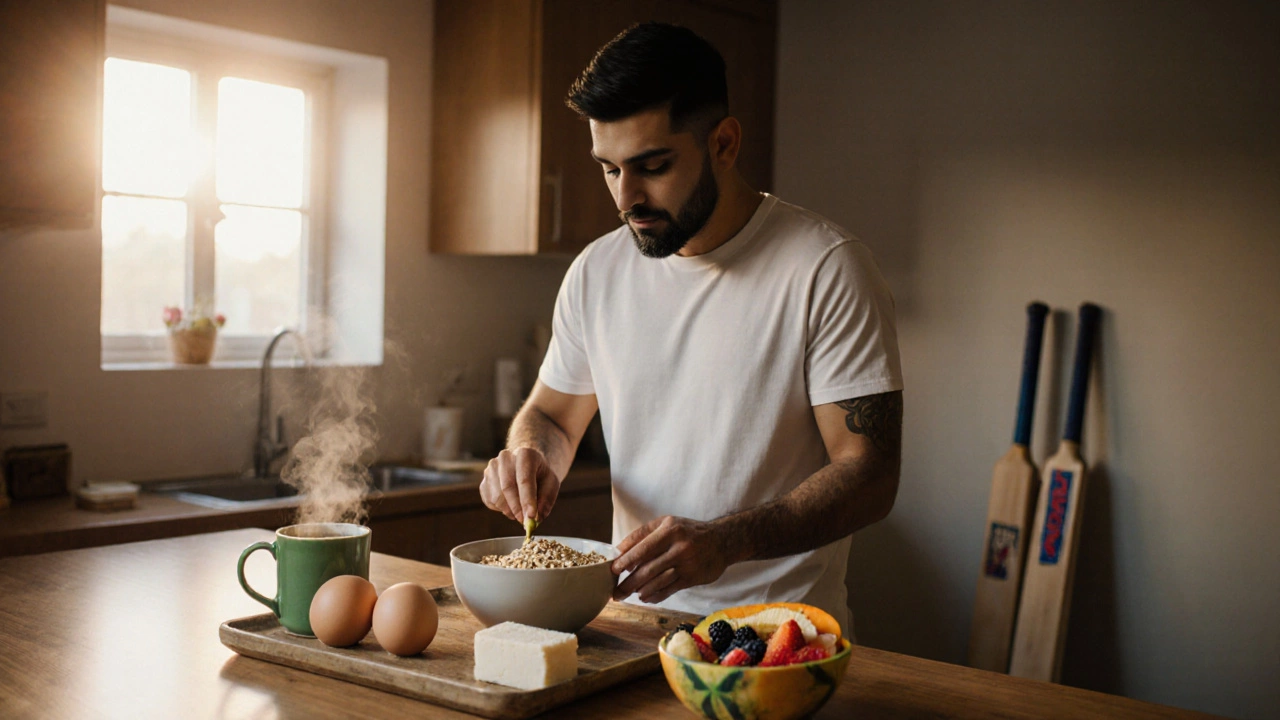
Virat Kohli's Morning Breakfast: Quick Indian Meals for Peak Performance
Discover the quick, healthy breakfast choices of Virat Kohli, why they work for an elite athlete, and how you can recreate them at home with simple Indian ingredients.