Which Is the Dessert Queen of India? The Sweet That Rules Every Celebration
 Jan, 23 2026
Gulab Jamun Syrup Consistency Calculator
Sugar Syrup Calculator
This tool helps you determine if your sugar syrup has reached the ideal "one-thread" consistency for authentic gulab jamun.
How to Test Consistency
The "one-thread" test is the traditional method for determining syrup readiness:
- 1. Dip a spoon in the syrup
- 2. Lift the spoon and let syrup drip
- 3. When the syrup forms a single thread before breaking, it's ready
- 4. If it's too runny (breaks immediately), cook longer
- 5. If too thick (forms a ball), add water
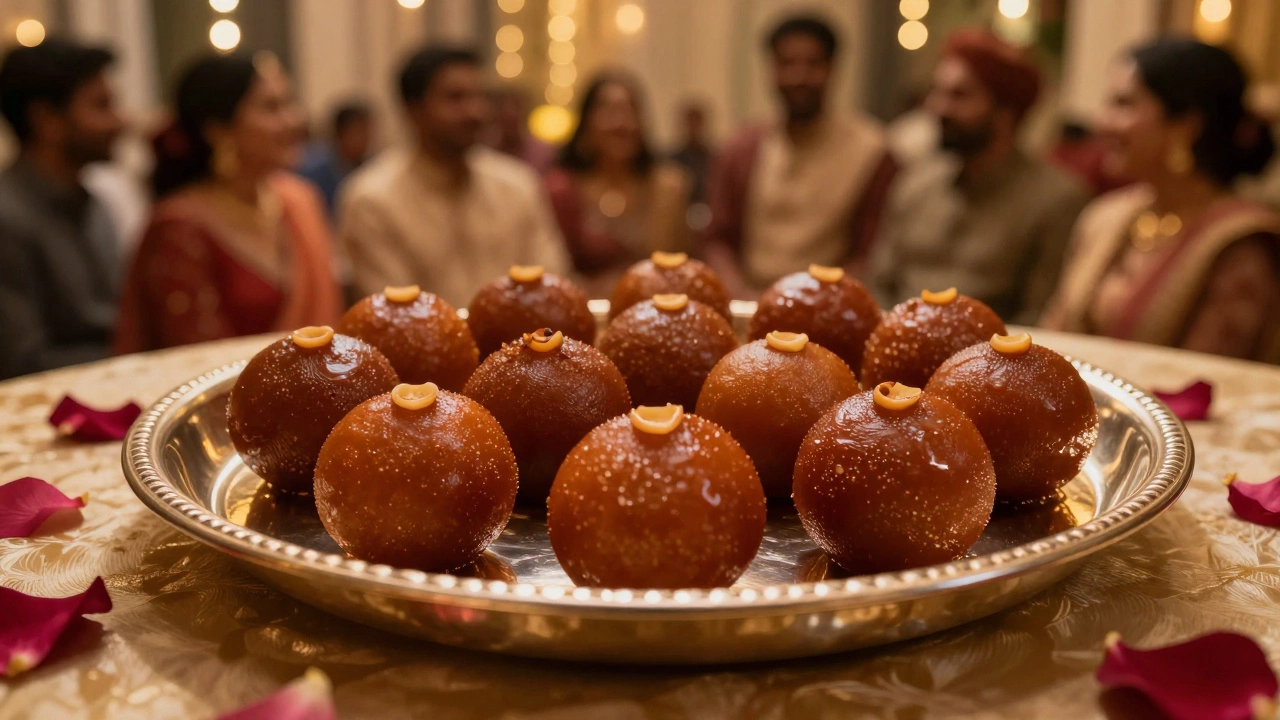
Ask anyone in India what the most loved dessert is, and you’ll get a dozen answers. But if you want to know which one truly holds the crown-the dessert queen-you need to look beyond popularity and into history, emotion, and everyday life. In homes from Mumbai to Kolkata, at weddings in Delhi and temple festivals in Chennai, one sweet stands above the rest: gulab jamun.
Why Gulab Jamun Isn’t Just Another Sweet
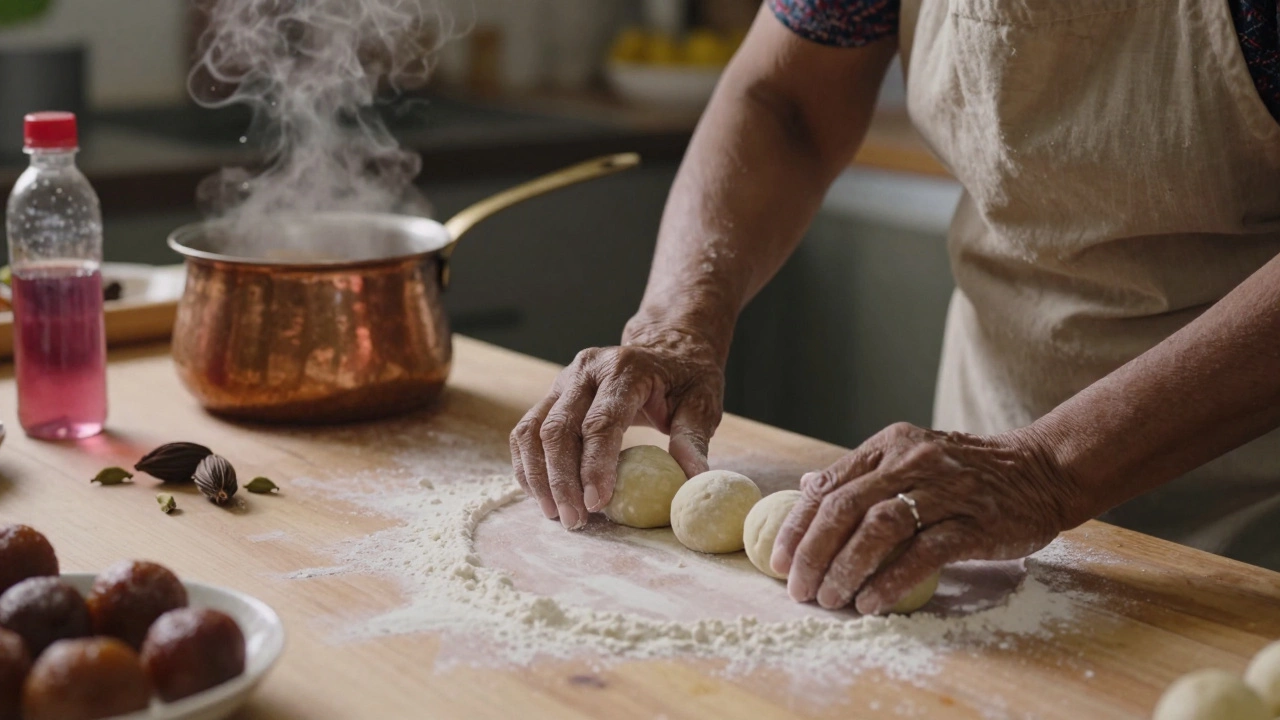
Gulab jamun isn’t just fried dough soaked in syrup. It’s a ritual. The dough is made from khoya-milk solids reduced for hours until thick and creamy. It’s kneaded by hand, rolled into perfect little balls, then fried slowly until golden brown. Only then is it dropped into warm sugar syrup flavored with cardamom, rose water, and sometimes saffron. The result? A dessert that’s soft as a cloud, sweet without being cloying, and fragrant enough to make you close your eyes just to breathe it in.
Unlike other sweets that come and go with seasons, gulab jamun shows up everywhere. Diwali? Check. Eid? Check. A baby’s first birthday? Check. Even a simple family dinner ends with it. You won’t find a single Indian wedding reception without at least one tray of gulab jamun, warm and glistening under the lights.
The Competition: Rasgulla, Jalebi, Kheer
Some argue rasgulla deserves the throne. Made from chhena (cottage cheese) balls boiled in light sugar syrup, it’s lighter, more delicate, and a staple in Bengal and Odisha. But rasgulla doesn’t travel well. It falls apart if packed too tightly. It’s a dessert meant to be eaten fresh, right after it’s made. That limits its reach.
Jalebi? Crispy, orange, twisted, and dripping with syrup. It’s the street snack king. But jalebi is eaten as a treat, not a centerpiece. You grab one from a vendor on the way home. You don’t serve it at your mother’s 60th birthday.
Kheer, the rice pudding, is deeply traditional. Made with milk, rice, and cardamom, it’s the dessert of temples and quiet evenings. But it’s not flashy. It doesn’t have the drama of a golden ball melting in your mouth. It’s comforting, yes-but it doesn’t command a room.
Gulab jamun? It’s both humble and regal. It can be served on a banana leaf or in a crystal bowl. It’s eaten with fingers or with a spoon. It’s vegan-friendly if made without dairy (some versions use milk powder instead of khoya). It lasts for days in syrup. It survives transport, heat, and time.
The Science Behind the Sweetness
There’s a reason gulab jamun stays soft even after sitting for hours. The syrup doesn’t just sweeten-it penetrates. The fried dough has a porous structure, like a sponge. When dipped in warm syrup, capillary action pulls the liquid deep inside. The sugar concentration is just right-not too thick, not too thin. Most home cooks use a 1:1 ratio of sugar to water, boiled until it reaches a one-thread consistency.
The cardamom and rose water aren’t just flavorings. They balance the sweetness. Without them, gulab jamun would be cloying. With them, it becomes layered. You taste the milkiness first, then the warmth of cardamom, then the floral hint of rose, and finally the sugar that lingers just long enough to make you reach for another.
Regional Variations You Need to Know
Not all gulab jamun are the same. In North India, they’re often larger, softer, and soaked longer. In Gujarat, they’re sometimes shaped like small dumplings and served with a sprinkle of crushed pistachios. In Hyderabad, they’re called gulab jamun but made with khoya and flour in a 3:1 ratio, giving them a slightly chewier texture.
In some parts of Bihar and Jharkhand, they’re fried in ghee instead of oil for a richer taste. In Maharashtra, you might find them dipped in saffron-infused syrup and served chilled. In Nepal, they’re often smaller and served with a dollop of whipped cream-a modern twist that’s catching on in urban households.
But here’s the truth: no matter the variation, the core stays the same. It’s always fried dough, always syrup, always meant to be shared.
Why It’s the Queen, Not Just a Favorite
Think about what makes a queen. She doesn’t need to be the loudest. She doesn’t need to be the newest. She just needs to be present-always. When you ask an Indian grandmother what sweet she made for her wedding, she doesn’t say “jalebi.” She says, “Gulab jamun.”
It’s the dessert that survives generations. It’s the one your aunt remembers from her childhood, the one your cousin’s baby licks off their fingers for the first time, the one your uncle still insists on making himself, even though he’s never been good at rolling perfect spheres.
It’s not about complexity. It’s about connection. Every gulab jamun carries a memory. A family recipe passed down. A late-night cooking session before a festival. A child’s first bite, eyes wide with surprise.

How to Make It Right (The Simple Way)
You don’t need fancy tools. You don’t need to be a chef. Here’s how to make authentic gulab jamun at home:
- Use full-fat milk powder (not low-fat). 1 cup works for a small batch.
- Add 2 tablespoons of all-purpose flour and a pinch of baking soda. Mix well.
- Slowly add warm milk, a tablespoon at a time, until the dough is soft but not sticky. Knead for 2 minutes.
- Roll into 1-inch balls. Don’t overwork them-this keeps them soft.
- Fry in medium heat oil (not hot). They should turn golden slowly, about 8-10 minutes.
- Meanwhile, make syrup: 1 cup sugar, 1 cup water, 4-5 crushed cardamom pods, and 1 teaspoon rose water. Boil until it reaches one-thread consistency.
- Drop the hot balls into the warm syrup. Let them soak for at least 4 hours, or overnight.
Pro tip: Never refrigerate gulab jamun. It hardens the syrup. Serve at room temperature.
When to Serve It-and When Not To
Gulab jamun belongs at celebrations. It’s not a breakfast item. You won’t find it in a lunchbox. But it’s perfect after a heavy meal, when you want something that says, “We’re done eating, but we’re not done celebrating.”
Don’t serve it with ice cream. That’s a trend that ruins the texture. Don’t douse it in chocolate syrup. That’s not Indian. Don’t skip the rose water. That’s where the soul of the sweet lives.
The Real Test: Would You Miss It?
Try this: imagine an Indian wedding without gulab jamun. No golden balls on the dessert table. No sticky fingers at the end of the night. No grandmother smiling as she hands out the last few. Would it feel like a wedding? Probably not.
That’s why gulab jamun isn’t just the most popular sweet. It’s the one that holds the culture together. It’s sweet, yes-but more than that, it’s familiar. It’s home. And in a country with over 2,000 distinct sweets, that’s the highest honor of all.
Is gulab jamun the same as rasgulla?
No. Gulab jamun is made from khoya or milk powder, fried, then soaked in syrup. Rasgulla is made from chhena (cottage cheese), boiled in light sugar syrup, and never fried. Gulab jamun is denser and richer; rasgulla is softer and spongier.
Can I make gulab jamun without khoya?
Yes. Most modern recipes use full-fat milk powder instead of khoya. It’s easier, faster, and still tastes authentic. Just make sure the milk powder is unsweetened and high-fat. Add a pinch of baking soda to help the balls puff up.
Why do my gulab jamun crack while frying?
Cracking happens when the dough is too dry or the oil is too hot. Make sure your dough is soft and pliable, like earlobe texture. Fry on medium-low heat so they cook through slowly. If the oil smokes, it’s too hot.
How long do gulab jamun last?
They last up to 5 days in the syrup at room temperature. Never refrigerate them-it makes them hard. Keep them covered in their syrup to stay soft and moist. After 5 days, the syrup may start to ferment slightly-discard if it smells off.
Is gulab jamun healthy?
Not really. It’s high in sugar and calories due to syrup and fried dough. But it’s made from milk solids, so it has some calcium and protein. Enjoy it in moderation as a treat, not a daily snack. A small piece (about 30g) is enough to satisfy.