Virat Kohli's Morning Breakfast: Quick Indian Meals for Peak Performance
 Oct, 23 2025
Athlete Breakfast Calculator
Create Your Kohli-Style Breakfast
Calculate your custom breakfast nutrition based on Virat Kohli's athlete-approved components
Your Custom Breakfast Nutrition
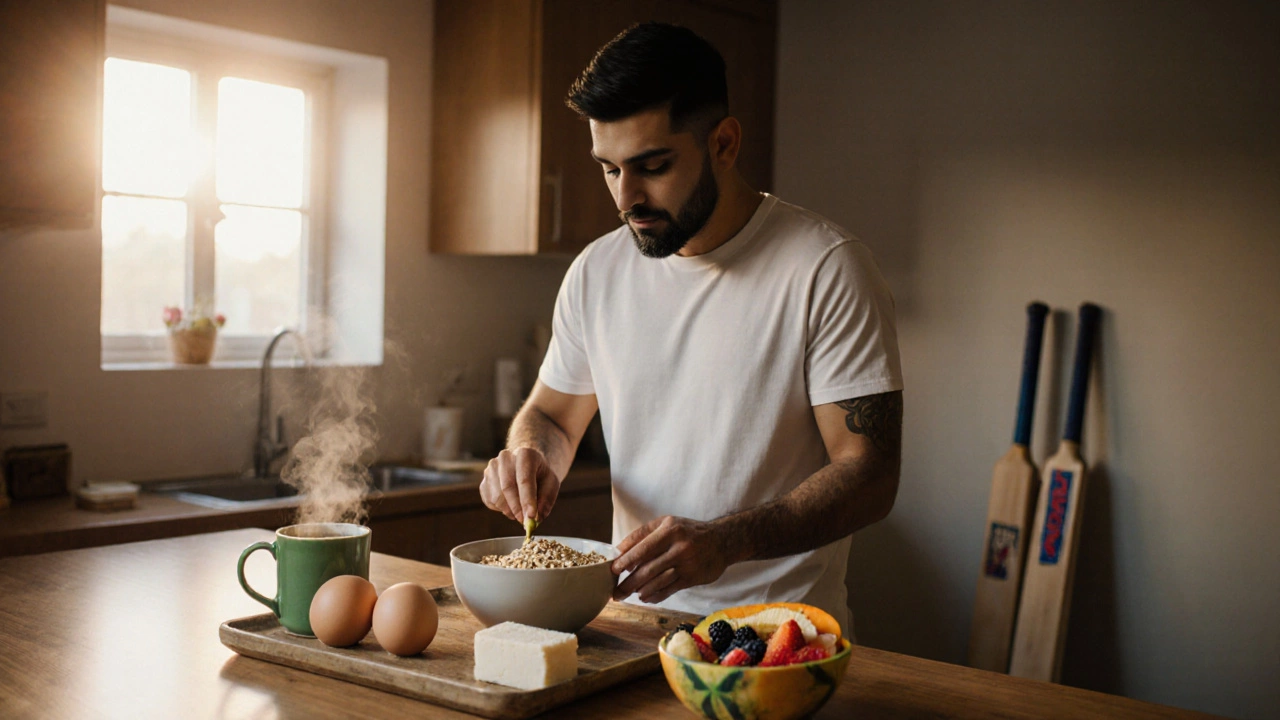
Ever wondered what fuels the energy of India’s cricket legend when he steps onto the pitch? The secret isn’t a fancy smoothie bar - it’s a handful of simple, wholesome foods that any busy fan can pull together before sunrise. Below is a deep dive into Virat Kohli breakfast habits, why they work for a top‑level athlete, and how you can adapt them for a quick, nutritious start to your day.
Who is Virat Kohli?
When you see the name Virat Kohli is an Indian cricketer celebrated for his aggressive batting, leadership, and meticulous fitness regime, you instantly picture a powerhouse of stamina and focus. Beyond the sixes, Kohli follows a diet plan that mirrors his rigorous training - high protein, moderate carbs, and plenty of antioxidants. Knowing his breakfast choices gives a glimpse into the nutritional backbone of an elite sportsperson.
Why Breakfast Matters for Athletes
Morning fuel sets the tone for metabolism, muscle repair, and mental clarity. For a fast‑twitch athlete like Kohli, the ideal breakfast does three things:
- Replenishes glycogen consumed during overnight fasting, ensuring steady energy for early‑morning practice.
- Provides high‑quality protein to kick‑start muscle protein synthesis.
- Includes micronutrients - vitamins C, E, and antioxidants - that combat oxidative stress from intense training.
Missing any of these pillars can lead to early fatigue, slower recovery, and a dip in focus, something no captain can afford.
Core Components of Kohli’s Breakfast
While the exact menu can vary based on travel schedule, several staples appear repeatedly in interviews and his social media stories. Below is a breakdown of those items, why they’re chosen, and how they can be prepared in under 15 minutes.
Protein Power: Eggs, Paneer, and Greek Yogurt
Paneer is a fresh Indian cheese rich in casein protein and calcium makes an easy scramble or cube‑side salad. A typical serving (100 g) delivers about 18 g of protein and 265 mg of calcium, perfect for bone health and muscle repair.
Eggs are another go‑to. Two boiled eggs provide roughly 12 g of protein, essential amino acids, and choline - a brain‑boosting nutrient that supports reaction time on the field. If you’re watching cholesterol, opt for egg whites and add one whole yolk for flavor.
Greek yogurt, often paired with honey or fruit, adds probiotic cultures that aid gut health - a subtle edge for nutrient absorption.
Complex Carbs: Oats, Poha, and Whole‑Wheat Paratha
Oats is a whole grain packed with beta‑glucan fiber that stabilizes blood sugar and improves satiety. A quick stovetop bowl with milk, a pinch of cinnamon, and a handful of nuts can be ready in five minutes.
Poha - flattened rice cooked with mustard seeds, curry leaves, and peas - is a beloved Maharashtrian breakfast. It’s low‑GI, light on the stomach, and can be tossed with a squeeze of lemon for vitamin C.
Whole‑wheat paratha, brushed with a thin layer of ghee, supplies sustained energy without the spike of refined flour.
Fruits and Antioxidants
Seasonal fruits like papaya, berries, or banana appear in Kohli’s plate almost daily. They contribute natural sugars for quick energy, fiber for digestion, and antioxidants that fight free‑radical damage from intense workouts.
One popular combo is a small fruit salad featuring kiwi, orange segments, and pomegranate seeds - a colorful burst of vitamin C and polyphenols.
Hydration Helpers: Green Tea and Coconut Water
Green Tea is a low‑caffeine beverage rich in catechins that boost metabolism and reduce inflammation. A warm cup post‑meal aids digestion and provides a gentle caffeine lift without the jittery crash of coffee.
Coconut water, especially during travel, repletes electrolytes lost through sweat, keeping muscles contractile and nerves firing.
Sample Quick Breakfast Inspired by Kohli
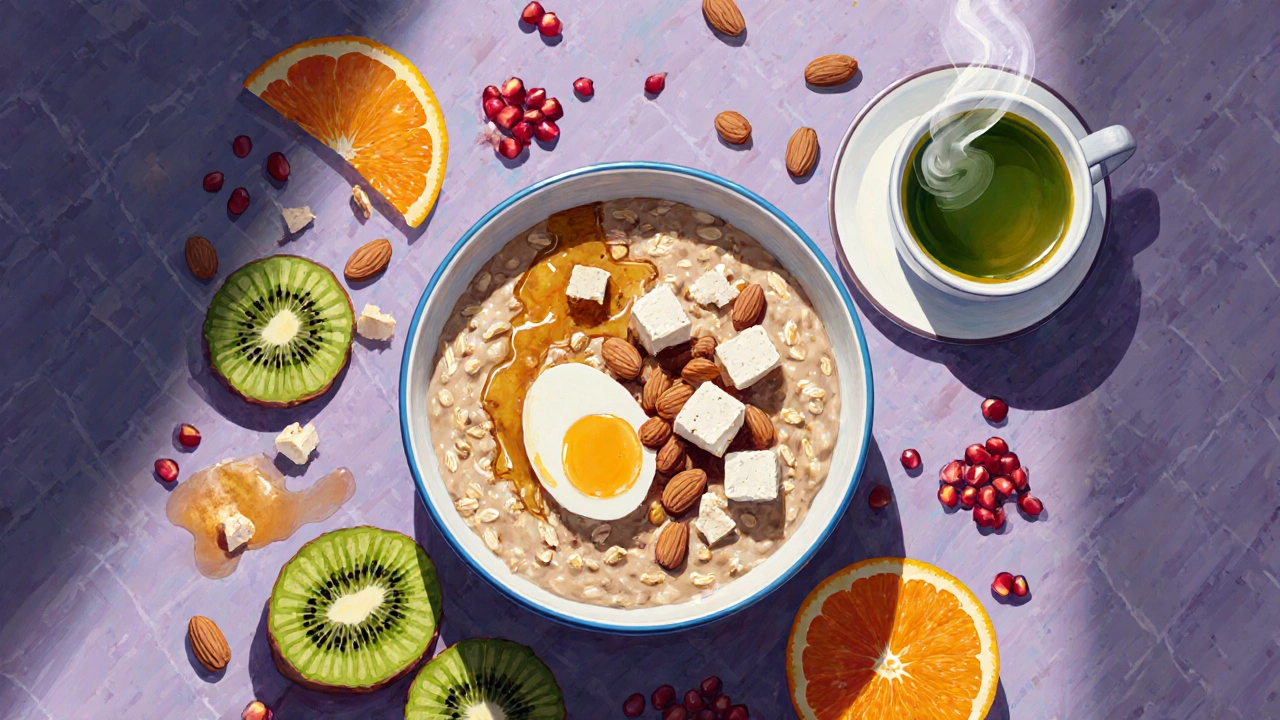
Here’s a 10‑minute recipe that captures the spirit of Kohli’s morning plate. It mixes protein, carbs, and fruit in a single bowl - perfect for busy professionals or students.
- Boil two eggs while you heat a non‑stick pan.
- In the pan, toss ½ cup of rolled Oats with a splash of milk, a pinch of salt, and a handful of chopped almonds. Stir for 2‑3 minutes until creamy.
- Slice the boiled eggs and add them to the oat mixture. Sprinkle ¼ cup of crumbled Paneer for extra protein.
- Top with a small bowl of mixed fruit - papaya cubes, a few berries, and a drizzle of honey.
- Finish with a steaming cup of Green Tea and enjoy.
The dish delivers roughly 35 g of protein, 45 g of carbs, and 10 g of healthy fats - a balanced macro profile that mirrors what Kohli eats before a match.
Nutrition Snapshot: Kohli’s Typical Breakfast Items
| Food Item | Portion | Calories | Protein (g) | Carbs (g) | Key Micronutrients |
|---|---|---|---|---|---|
| Boiled Eggs | 2 large | 156 | 12 | 1.2 | Vitamin D, Selenium |
| Paneer (cottage cheese) | 100 g | 265 | 18 | 3.0 | Calcium, Phosphorus |
| Rolled Oats | ½ cup (dry) | 150 | 5 | 27 | Magnesium, Beta‑glucan |
| Poha (flattened rice) | 1 cup cooked | 130 | 2.5 | 28 | Iron, Vitamin C (if tossed with lemon) |
| Mixed Fruit Salad | 1 cup | 90 | 1.5 | 22 | Vitamin C, Potassium |
| Green Tea | 1 cup | 2 | 0 | 0 | Catechins, Fluoride |
When you add a little ghee or a spoonful of peanut butter, the calories rise, but you also get essential fats that help absorb fat‑soluble vitamins. Adjust portions based on your own activity level - an office worker may shave half a cup of oats, while a marathon trainer can double the protein.
Tips to Replicate the Athlete’s Breakfast on a Budget
- Buy in bulk. Large packs of oats or paneer stay fresh for weeks and cost less per serving.
- Seasonal fruits. When mangoes are out, substitute with locally available banana or guava - the nutrient profile stays similar.
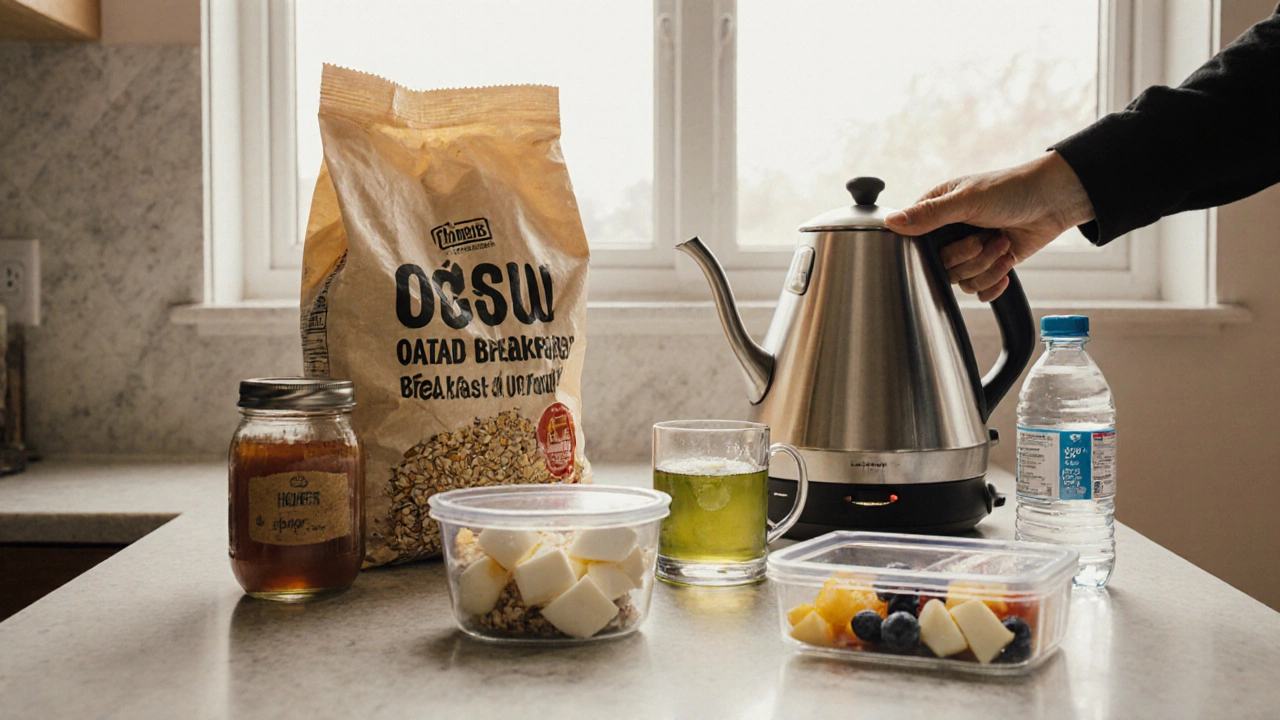
- Prep the night before. Boil eggs, rinse and chop fruit, and store paneer cubes in an airtight container. In the morning you only need to heat the oats.
- Swap expensive nuts. Peanut or roasted chickpeas provide crunch and protein at a fraction of almond cost.
- DIY green tea mix. Buy loose leaf tea in bulk and steep for a few minutes; it’s cheaper than bagged varieties and richer in antioxidants.
These hacks keep the meal under ₹80 (about $1) while still delivering the same macro balance that powers a world‑class cricketer.
How to Tailor the Breakfast for Different Goals
If you’re training for endurance, lean toward more carbs - increase the poha portion or add a banana. For strength building, boost protein - add a scoop of whey isolate to your oats or double the paneer. Weight‑loss seekers can trim the ghee and replace paneer with low‑fat cottage cheese, keeping calories in check without sacrificing satiety.
Remember, the core principle remains: protein + complex carbs + fruit + hydration. Mix and match within those categories, and you’ll stay aligned with the athlete’s philosophy.
Common Misconceptions About Celebrity Diets
People often assume that a star’s diet is ultra‑strict or requires exotic ingredients. In reality, Kohli’s breakfast is surprisingly ordinary - just well‑balanced and timed. The myth that you need expensive superfoods to achieve elite performance is busted when you look at the ingredient list: eggs, oats, paneer, fruit, and tea are all readily available in any Indian kitchen.
The real secret lies in consistency, portion control, and pairing food with a rigorous training schedule. If you’re consistent with a nutritionally balanced breakfast, you’ll notice smoother energy levels and better recovery, even if you’re not playing international cricket.
Quick Recap of the Essentials
- Protein sources: eggs, paneer, Greek yogurt.
- Complex carbs: oats, poha, whole‑wheat paratha.
- Fruits for natural sugars and antioxidants.
- Hydration: green tea, coconut water.
- Prep tips: batch‑cook, use seasonal produce, buy in bulk.
Adopt these components, adjust portions to your lifestyle, and you’ll be eating like a champion without the celebrity price tag.
What does Virat Kohli usually eat for breakfast?
His go‑to breakfast includes boiled eggs, paneer or Greek yogurt, a bowl of oats or poha, fresh fruit, and a cup of green tea or coconut water. The combination supplies protein, complex carbs, and antioxidants.
Can I replace paneer with tofu?
Absolutely. Tofu offers similar protein levels and works well in scrambles or salads. Just ensure you choose a firm variety for texture.
How much time does the breakfast actually take?
With pre‑boiled eggs and pre‑cut fruit, the whole meal can be assembled in 5‑10 minutes. Cooking oats or poha takes about 3‑4 minutes on the stovetop.
Is the breakfast suitable for vegetarians?
Yes. Paneer, eggs, and Greek yogurt are all vegetarian. For a fully lacto‑ovo vegetarian menu, stick to paneer, yogurt, and eggs, and swap any meat‑based protein for beans or lentils if desired.
What are the calorie counts for his typical breakfast?
A standard combo of two boiled eggs, 100 g paneer, half a cup of oats, and a fruit cup totals roughly 800‑900 kcal. Adjust portions up or down based on your daily energy needs.