Chicken Brine: How to Boost Flavor & Juiciness
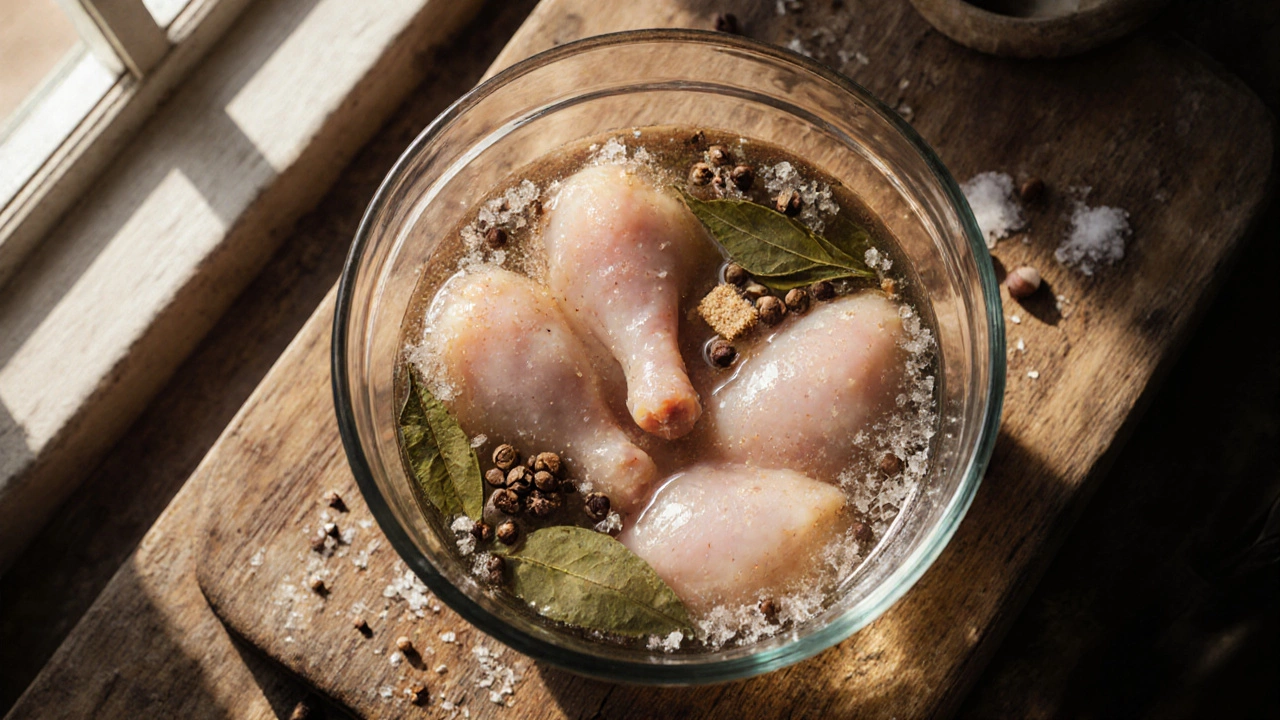
When working with Chicken brine, a salt‑water solution used to soak whole or cut chicken before cooking, helping it stay moist and absorb seasonings. Also known as wet brining, it pre‑hydrates the meat and balances flavors, you’re actually tapping into a simple science trick that cooks swear by. The core idea is straightforward: brining creates an osmotic pressure that forces water into the muscle fibers, so the bird stays juicy even at high heat. This technique is a staple in Indian kitchens where spices and aromatics mingle with the brine, but the basics apply to any cuisine.
One of the most critical players in a Brine solution, the mixture of water, salt, and optional flavorings that does the work is Salt, the key solute that creates the necessary osmotic pressure. Without enough salt, the water won’t penetrate the meat; too much and you risk a salty punch. A good rule of thumb is about 5‑6 % salt by weight of the water. Adding a pinch of sugar can help with browning, while herbs, garlic, or ginger bring that Indian flair many of our readers love. The brine’s temperature matters too—keep it cold (refrigerated) to stay safe and avoid bacterial growth.
Beyond salt, Spices, aromatic ingredients like cumin, coriander, or turmeric that infuse flavor into the brine turn a plain soak into a flavor engine. In Indian cooking, whole spices released into the liquid can penetrate the chicken’s surface, giving you that deep, earthy note before you even start cooking. This connection—spices influencing the flavor profile of chicken brine—creates a bridge between traditional techniques and modern convenience. Whether you’re grilling, roasting, or pan‑searing, a well‑spiced brine sets the stage for a finished dish that’s moist, tender, and unmistakably aromatic.
Practical Tips & Safety First
Wet brining isn’t just about taste; it also improves cooking uniformity. Because the meat starts at a higher moisture level, it reaches the target internal temperature more evenly, reducing the risk of dry spots. However, you must respect food safety rules: keep the brine and chicken below 40 °F (4 °C) and limit soak time—generally 2‑4 hours for boneless pieces, up to 12 hours for whole birds. Over‑brining can make the texture mushy, so timing is key. After the soak, rinse the chicken briefly, pat dry, and let it air‑rest for a few minutes before seasoning and cooking. This extra step helps the skin crisp up if you’re roasting or frying.
With these basics covered, you’re ready to explore the rest of our collection. Below you’ll find articles that dive deeper into related topics—perfect timing for garlic and ginger, the science behind lemon curdling, and even how to tell if your roti will puff. Each piece adds a layer to the big picture of Indian cooking techniques, giving you a toolbox of tips you can mix and match with your brining experiments. Happy cooking, and enjoy the juicy results!
Best Soaks to Make Chicken Tender - Simple Tips for Juicy Results
Discover the best liquids to soak chicken for ultimate tenderness. Learn brining, buttermilk, yogurt, citrus, and enzymatic methods with timing, ratios, and tips.