Cooking Lentils: Easy Ways to Make Dal That’s Nutritious and Quick
When you think of cooking lentils, a staple protein source in Indian households that’s fast, affordable, and packed with nutrients. Also known as dal, it’s the backbone of countless meals—from quick weeknight dinners to hearty family lunches. Unlike beans, most Indian lentils don’t need overnight soaking, which makes them perfect for busy days. Yellow moong dal, for example, cooks in under 30 minutes without any prep. That’s the kind of convenience that keeps it on the stove every week.
Not all lentils are the same. Urad dal needs longer soaking if you’re making dosa batter, but for a simple dal, you can skip it. Masoor dal cooks fast and breaks down into a creamy texture, while toor dal holds its shape better and is ideal for sambar. Each type has its own flavor and texture, and knowing which one to use makes all the difference. The key isn’t just boiling them—it’s managing heat, water ratio, and when to add spices. Too much boiling turns dal to mush; too little leaves it gritty. A gentle simmer after the initial boil is what turns ordinary lentils into something comforting.
People often skip lentils because they think they’re boring. But that’s only if you’re not seasoning them right. A tempering of cumin, mustard seeds, garlic, and dried red chilies at the end? That’s what transforms plain dal into something you’ll crave. And when you pair it with rice or roti, you get a complete protein—no meat needed. That’s why so many Indian families rely on it daily. It’s not just food. It’s fuel that’s gentle on digestion, rich in fiber, and keeps you full longer. You’ll find posts here that break down exactly which dals are best for nighttime meals, which ones skip soaking entirely, and how to make them taste like they’ve been simmering for hours—even when you only had 20 minutes.
There’s also a health angle you can’t ignore. Lentils are one of the few plant-based foods that deliver serious protein without the fat or cholesterol. Combine that with the fact that they’re naturally gluten-free and low on the glycemic index, and you’ve got a food that works for weight loss, diabetes, or just eating cleaner. The posts below show you how to use lentils in snacks, breakfasts, and even kid-friendly meals—not just as side dishes. You’ll learn why full-fat milk matters for paneer, how to pick the right dal for sleep, and why fermented chutney boosts gut health alongside your dal. This isn’t just about boiling water and adding spices. It’s about understanding how to make lentils work for your life, your body, and your taste buds.
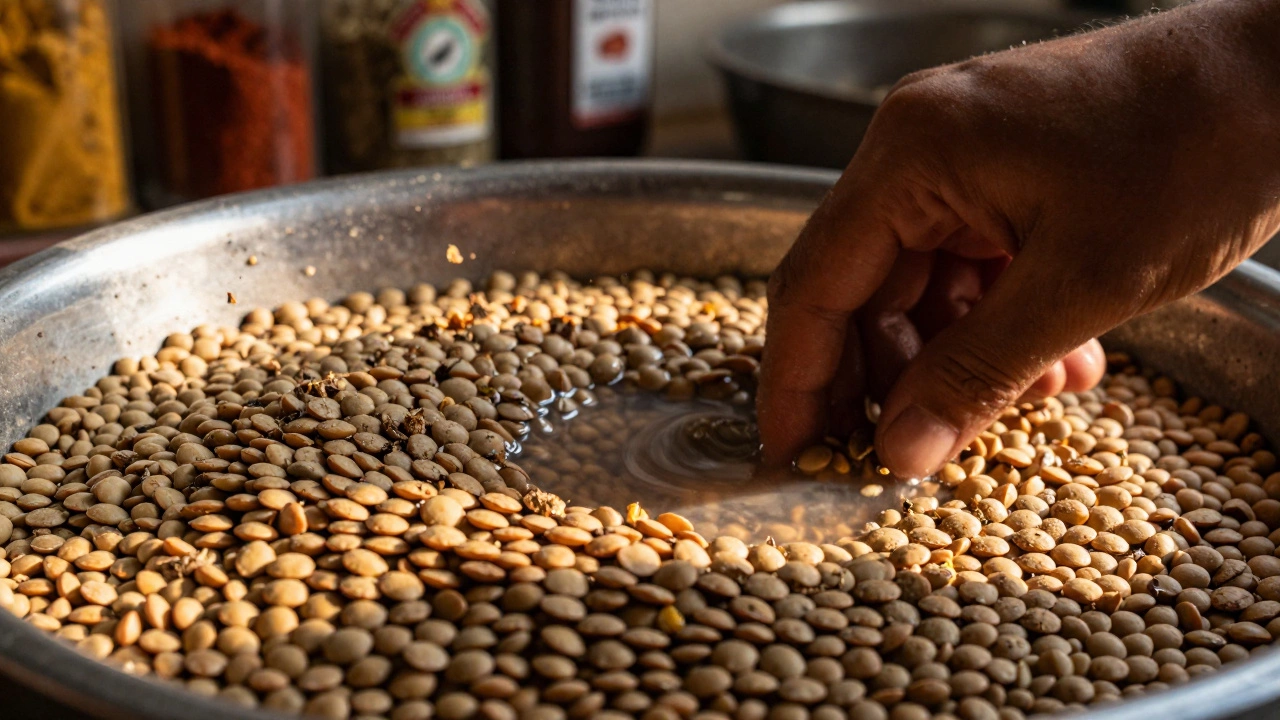
What Happens If You Don't Rinse Lentils? The Real Risk in Your Dal
Skipping rinsing lentils can make your dal gritty, muddy, and hard to digest. Learn why this simple step matters for flavor, safety, and texture in Indian cooking.