What Happens If You Don't Rinse Lentils? The Real Risk in Your Dal
 Dec, 1 2025
Lentil Rinsing Risk Checker
Assess Your Lentil Safety Risk
Enter details about your lentils to see the risk level of skipping rinsing.
Ever skipped rinsing your lentils because you were in a hurry? You’re not alone. Many people think it’s just a step from old cookbooks-something your grandma did, but not really needed anymore. But skipping this simple step can change your dal in ways you didn’t expect. And no, it’s not just about a little dirt. What happens if you don’t rinse lentils? The answer might make you rethink your next pot of dal.
What’s Actually on Unrinsed Lentils?
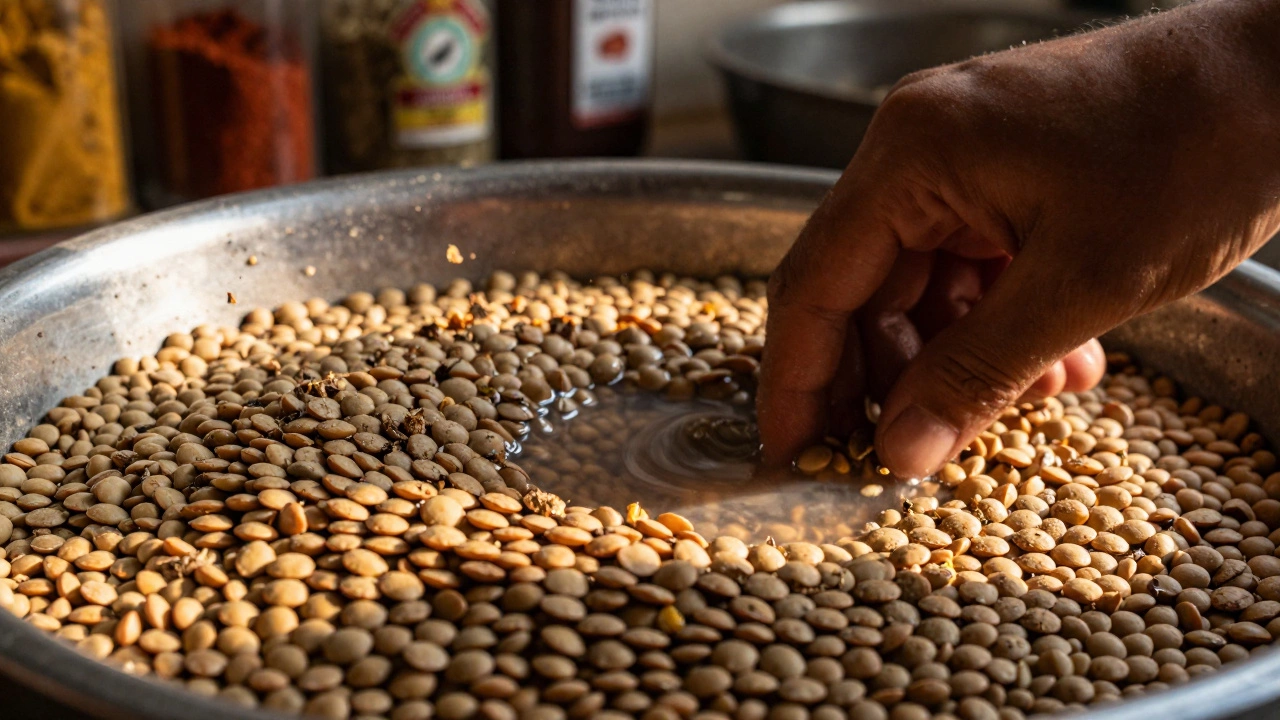
Lentils don’t come clean from the field. They’re harvested, dried, and shipped in bulk-often with dust, tiny stones, broken pods, and even bits of soil stuck to them. In India, where lentils like masoor, toor, or chana dal are cooked almost daily, this isn’t just a hygiene issue. It’s a texture and safety issue.
When you open a bag of lentils, you might see a fine gray powder. That’s not flour-it’s dried dirt and husk particles. Some of it is harmless. But not all. In rare cases, lentils can carry traces of mold, insect fragments, or even pesticide residue from storage. The Food Safety and Standards Authority of India (FSSAI) recommends rinsing pulses before cooking, not because it’s tradition, but because it’s science.
And yes, even if your lentils are labeled "pre-washed," rinse them anyway. That label means they were cleaned once in a factory, not that they’re spotless by the time they reach your kitchen.
What Happens When You Skip the Rinse?
Let’s say you dump a cup of unrinsed lentils straight into your pressure cooker. You add water, spices, and cook as usual. What happens next?
- Your dal tastes gritty. Even a few tiny stones or dirt particles can make their way into your final dish. You won’t see them until you bite down-and that’s not a pleasant surprise.
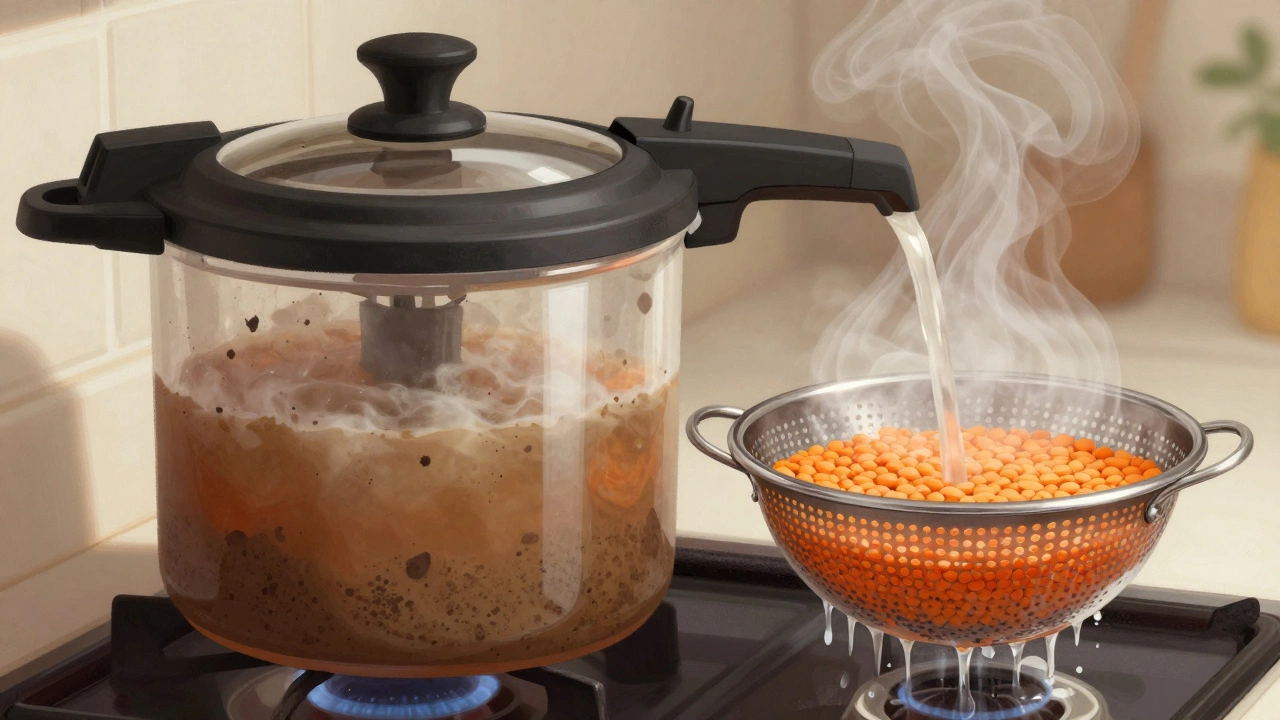
- It turns cloudy and slimy. Lentils release starch when cooked. If they’re dirty, that starch mixes with dust and debris, creating a thick, muddy broth instead of a clear, flavorful one. Your dal might look like weak tea instead of golden comfort food.
- You get an off smell. Rotten or moldy bits in the batch can start breaking down during cooking. The result? A faint sour or musty odor that lingers even after spices are added.
- It’s harder to digest. Dirt and debris can irritate your gut lining. For people with sensitive stomachs or IBS, this can mean bloating, cramps, or even nausea the next day.
One study from the Indian Institute of Food Processing Technology found that lentils rinsed three times had 92% less surface debris than those rinsed once. And the ones not rinsed at all? Up to 18% of the batch contained visible foreign matter after cooking.
Why Rinse? It’s Not Just About Cleanliness
People think rinsing is only for removing dirt. But there’s more to it.
Lentils have a natural coating called saponin. It’s not harmful, but it’s bitter. Think of it like the foam you see when you boil chickpeas. That’s saponin. It helps protect the seed in the wild, but in your kitchen, it makes your dal taste flat or soapy. Rinsing removes most of it.
Also, rinsing helps reduce cooking time. Dirty lentils absorb water unevenly. Some stay hard while others turn mushy. Rinsed lentils cook faster and more evenly. You’ll get that perfect texture-soft but holding shape-every time.
In Mumbai homes, where dal is served with rice or roti at least five days a week, this small step makes a big difference. A well-rinsed dal doesn’t need extra ghee or cream to taste good. It’s clean, bright, and lets the turmeric and cumin shine.
How to Rinse Lentils the Right Way
You don’t need fancy tools. Just a bowl and running water.
- Put your lentils in a large bowl.
- Cover them with cold water-about two inches above the lentils.
- Swirl them with your hand for 15-20 seconds. Watch the water turn cloudy.
- Pour out the water. Don’t drain in a colander yet-some debris floats.
- Repeat 2-3 times until the water runs clear.
- Now drain in a fine-mesh strainer. Shake gently to remove excess water.
Pro tip: If you’re short on time, rinse under a fast-running tap for 30 seconds while gently rubbing the lentils with your fingers. It’s not perfect, but it’s better than nothing.
When Is It Okay to Skip Rinsing?
Almost never.
Some people say, "I buy organic lentils, so I don’t need to rinse." But organic doesn’t mean dirt-free. It just means no synthetic pesticides were used during farming. Dirt? Still there.
Pre-cooked or canned lentils? Those are already rinsed and ready. No need to wash them again. But if you’re using dry lentils from a bag, jar, or bulk bin? Always rinse.
And no, soaking isn’t a substitute for rinsing. Soaking helps soften lentils and reduce cooking time, but it doesn’t remove dirt or saponin. You still need to rinse before soaking.
Real-Life Consequences
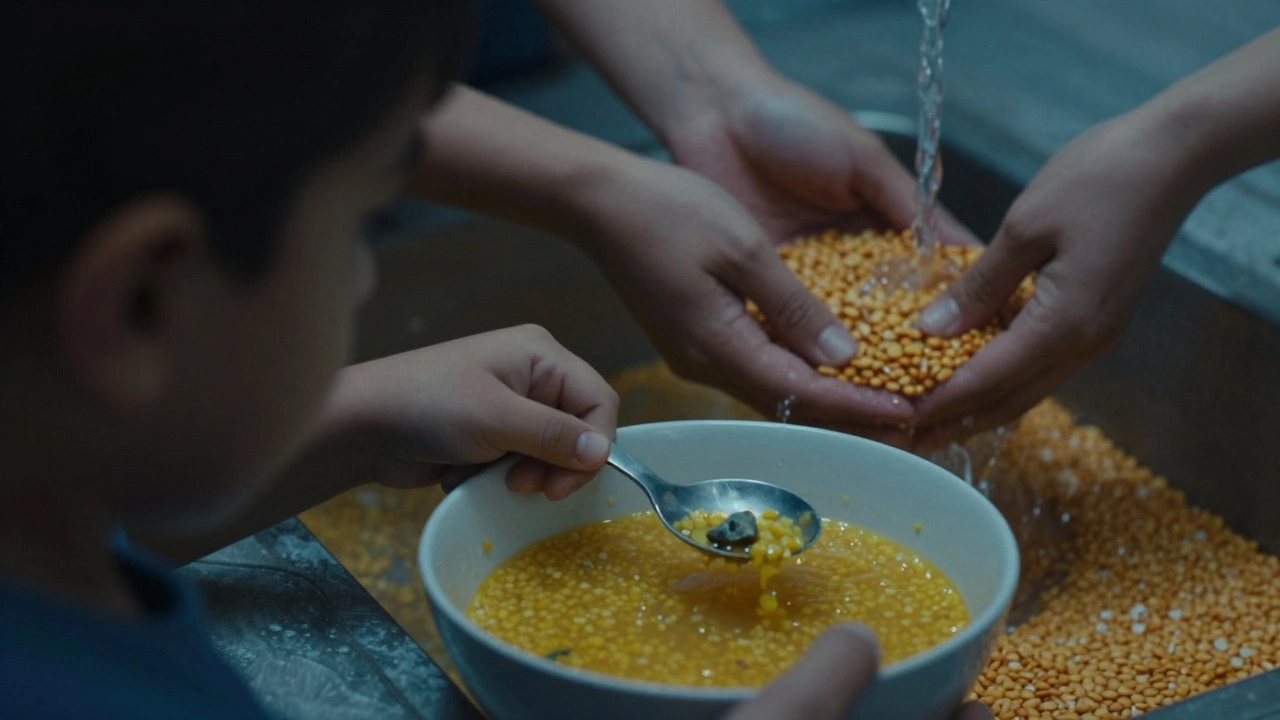
A friend of mine once skipped rinsing her toor dal. She served it to her 2-year-old. The child bit into a small stone and cracked a tooth. She didn’t know lentils could have rocks in them. Neither did I-until then.
Another time, I made dal for a dinner party. Forgot to rinse. The broth looked fine, but after two bites, half the guests put their spoons down. "It tastes... off," one said. I tasted it. It was muddy. Not spicy enough. Not salty enough. Just... dirty.
That’s the thing about rinsing: you won’t notice it’s missing until it’s too late. And when you do, it’s not just bad flavor-it’s broken trust. Your food should never surprise you with grit.
Final Thought: It’s a Small Step With Big Rewards
Rinsing lentils takes less than a minute. It costs nothing. It doesn’t require special skills. And it makes your dal taste better, digest easier, and feel safer.
Every time you skip it, you’re gambling-not with your health, maybe, but with the quality of your meal. And in a kitchen where food is love, why take that chance?
Next time you open a bag of lentils, remember: clean ingredients make better food. Rinse them. It’s not a chore. It’s part of the recipe.
Do I need to rinse lentils even if they look clean?
Yes. Even if lentils look clean, they can still have dust, saponin, or tiny debris you can’t see. Rinsing removes what your eyes miss and improves flavor and texture.
Can rinsing remove pesticides from lentils?
Rinsing helps reduce surface pesticide residue, but it won’t eliminate it completely. If you’re concerned, choose organic lentils and always rinse them regardless. Washing is the first line of defense.
What if I forget to rinse lentils before cooking?
If you realize after cooking, there’s no way to fix it. The grit and debris are now mixed in. Don’t eat it if you find stones or feel a gritty texture. For next time, make rinsing part of your routine-right after you open the bag.
Does rinsing remove nutrients from lentils?
No. Rinsing doesn’t wash away vitamins or minerals. Lentils store nutrients inside their seeds, not on the surface. What you lose is dirt, not nutrition.
Why does my dal turn cloudy even after rinsing?
Cloudiness after rinsing is normal. It’s starch from the lentils, not dirt. If the water was clear before cooking, your lentils were clean. The cloudiness will settle or can be skimmed off if you want a clearer broth.