Rinse Lentils: Why It Matters and How to Do It Right
When you rinse lentils, the process of washing dried legumes before cooking to remove dust, debris, and natural compounds that can cause bloating. Also known as washing dal, it’s not optional if you want digestible, clean-tasting meals. Most people skip this step because it seems trivial—until their stomach pays the price. Unrinsed lentils carry fine dust, tiny stones, and even traces of pesticides from farming. More importantly, they contain saponins and phytic acid—natural compounds that interfere with digestion and nutrient absorption. Rinsing them under cold running water for 30 to 60 seconds removes most of it, making your dal easier on your gut and more nutritious.
Not all lentils need the same treatment. yellow moong dal, a fast-cooking lentil commonly used in Indian kitchens for soups and khichdi, is often rinsed lightly because it’s already been hulled and polished. But urad dal, the black lentil used in dosa and idli batter, needs a thorough rinse—sometimes even two—to get rid of the slimy coating that forms during storage. Skipping this can turn your batter bitter or gummy. Even chana dal, split chickpeas used in curries and snacks, benefits from a good rinse. It removes the chalky residue that sticks to the surface after processing.
There’s a myth that rinsing washes away nutrients. It doesn’t. The vitamins and minerals in lentils are inside the seed, not on the surface. What you’re removing is junk—not nutrition. And if you’ve ever had a dal that tasted gritty or left a weird aftertaste? That’s not the spice. That’s un-rinsed lentils. A quick rinse before soaking or cooking makes a real difference in texture, flavor, and how your body handles the meal. It’s the kind of small habit that turns good cooking into great cooking.
Look at the posts below. You’ll find tips on which dals skip soaking, how to cook them fast, and even which ones are best at night. Every single one assumes you’ve rinsed your lentils properly. Because if you haven’t, none of the other steps matter as much. This isn’t just a chore—it’s the foundation.
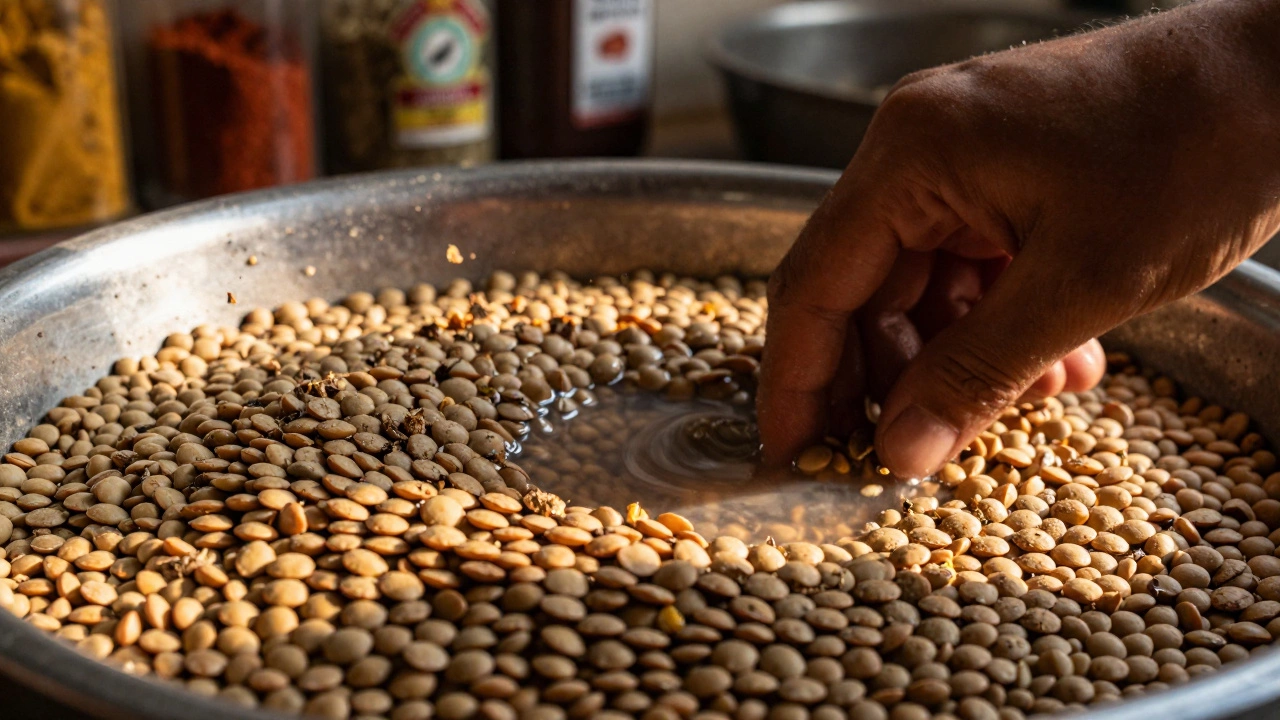
What Happens If You Don't Rinse Lentils? The Real Risk in Your Dal
Skipping rinsing lentils can make your dal gritty, muddy, and hard to digest. Learn why this simple step matters for flavor, safety, and texture in Indian cooking.