Lentil Preparation: Quick, Healthy Ways to Cook Dal Without Soaking
When it comes to lentil preparation, the process of cleaning, cooking, and seasoning dried legumes like moong, masoor, and toor dal. Also known as dal cooking, it’s one of the most everyday tasks in an Indian kitchen. Most people think you need to soak lentils overnight—but that’s not true for all of them. In fact, yellow moong dal, a small, split yellow lentil used in soups, khichdi, and snacks skips soaking entirely and cooks in under 30 minutes. Same goes for red masoor dal, a bright red lentil that breaks down easily and thickens curries. These aren’t exceptions—they’re the rule in homes where meals need to be ready fast, without losing nutrition or flavor.
Why does this matter? Because soaking isn’t just extra work—it’s often unnecessary. Lentils like urad dal or chana dal benefit from soaking if you’re making dosa batter or crispy snacks, but for everyday dal, it’s a myth. The real secret is rinsing well, using fresh water, and cooking on the right heat. A pinch of turmeric and a tempering of cumin and garlic transforms plain lentils into something comforting and filling. And if you’re worried about digestion, toor dal, a staple in South Indian sambar, is naturally easier on the stomach than heavier legumes. You don’t need fancy tools, either. A pressure cooker cuts time in half, but even a regular pot works if you give it time and a lid.
What you’ll find in the posts below isn’t just recipes—it’s a guide to the real, no-nonsense way Indian families cook lentils every day. You’ll learn which dals skip soaking, how to fix watery or mushy dal, why some lentils turn bitter if overcooked, and how to make them taste rich without cream or butter. There’s also advice on pairing dal with rice or roti, using it in snacks, and even eating it at night without bloating. No fluff. No long prep. Just practical, tested methods that work whether you’re cooking for one or feeding a crowd.
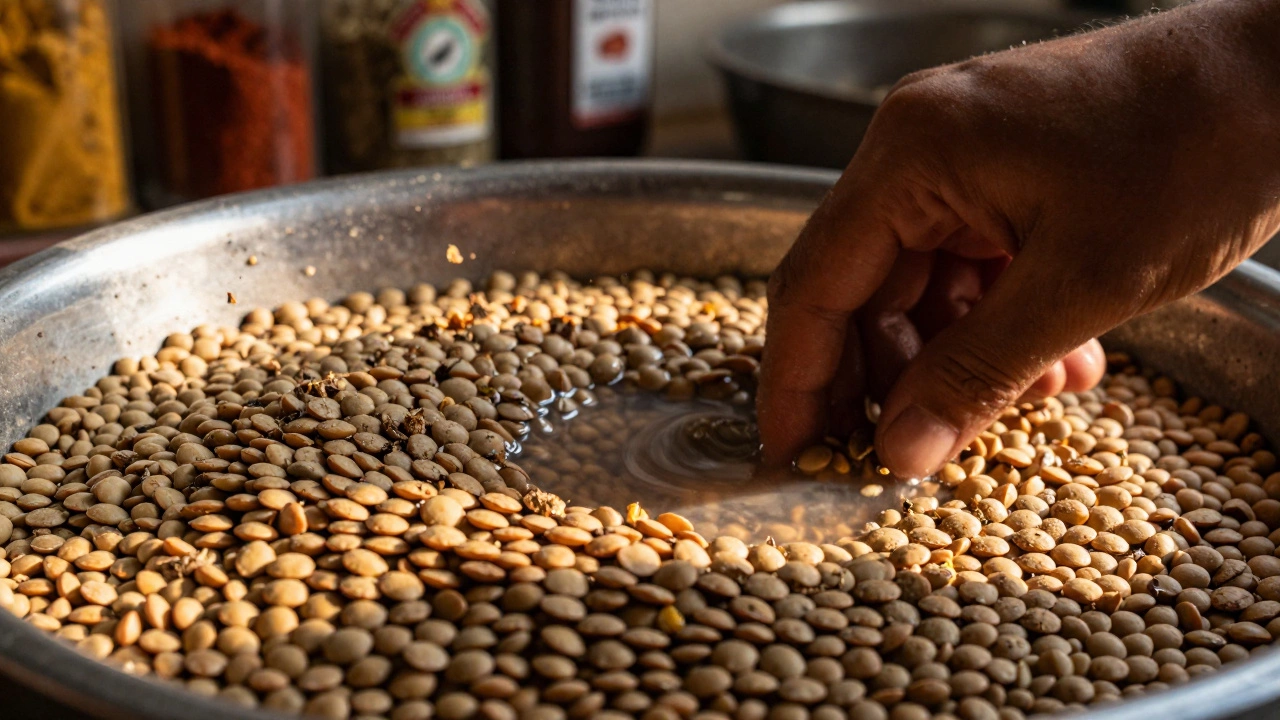
What Happens If You Don't Rinse Lentils? The Real Risk in Your Dal
Skipping rinsing lentils can make your dal gritty, muddy, and hard to digest. Learn why this simple step matters for flavor, safety, and texture in Indian cooking.