Curry with Raw Chicken: Safe Cooking, Best Spices, and Simple Recipes
When you cook curry with raw chicken, a popular Indian dish where uncooked chicken is simmered in spiced gravy. Also known as chicken curry, it’s one of the most common meals in Indian homes—but only if done right. Many people skip the basics and end up with dry, undercooked, or bland chicken. The key isn’t just the recipe—it’s understanding how heat, timing, and spice balance work together to turn raw chicken into tender, flavorful meat.
Not all chicken curries are the same. In South India, they use coconut milk and curry leaves for a tangy base. In North India, yogurt and tomato paste thicken the sauce and tenderize the meat before cooking. The raw chicken, uncooked poultry pieces used as the main protein in curries. Also known as chicken pieces, it must reach an internal temperature of 165°F (74°C) to be safe. That’s not optional. Undercooked chicken carries salmonella and other risks. But overcooking it turns it rubbery. The trick? Brown the chicken first on medium heat to seal in juices, then slow-simmer it in the sauce. This lets the spices soak in without drying out the meat.
Spices make or break this dish. Turmeric gives color, cumin adds earthiness, coriander brings brightness, and garam masala finishes it off. But you don’t need every spice in your cabinet. A simple mix of onion, garlic, ginger, and chili—cooked until golden—is enough for a rich base. Many think curry powder is the answer, but most store-bought versions are stale and dull. Freshly ground spices, toasted lightly in oil, release oils that stick to the chicken and cling to the sauce. Indian curry spices, the blend of ground seeds, roots, and pods used to flavor meat and vegetable dishes across India. Also known as masala, they’re the soul of every good curry.
Some people worry about cooking chicken in curry because they’ve heard it takes too long. It doesn’t. Boneless chicken thighs cook in 20 minutes if you start with a hot pan. Bone-in pieces take 30 to 35. The real time-saver? Prepping your spices ahead. Keep ground cumin, coriander, and turmeric in small jars. When you’re ready to cook, you’re not fumbling with whole spices and a mortar. And don’t rinse chicken before cooking—that just spreads bacteria. Pat it dry instead. Moisture stops browning. No browning means no flavor.
What about leftovers? Chicken curry tastes better the next day. The spices keep working into the meat as it sits. Store it in the fridge for up to 3 days, or freeze portions for up to 3 months. Reheat gently—don’t boil it. Boiling makes chicken tough again. Serve it with plain rice, roti, or even naan. A sprinkle of fresh cilantro on top makes it feel restaurant-quality, even if you made it in 30 minutes.
You’ll find plenty of recipes below—some quick, some traditional, some with coconut or yogurt, some with no cream at all. They all share one thing: they start with raw chicken and end with something delicious. No fluff. No shortcuts that compromise safety. Just real methods used in Indian kitchens. Whether you’re cooking for the first time or looking to fix a bland curry, what’s here will help you get it right.
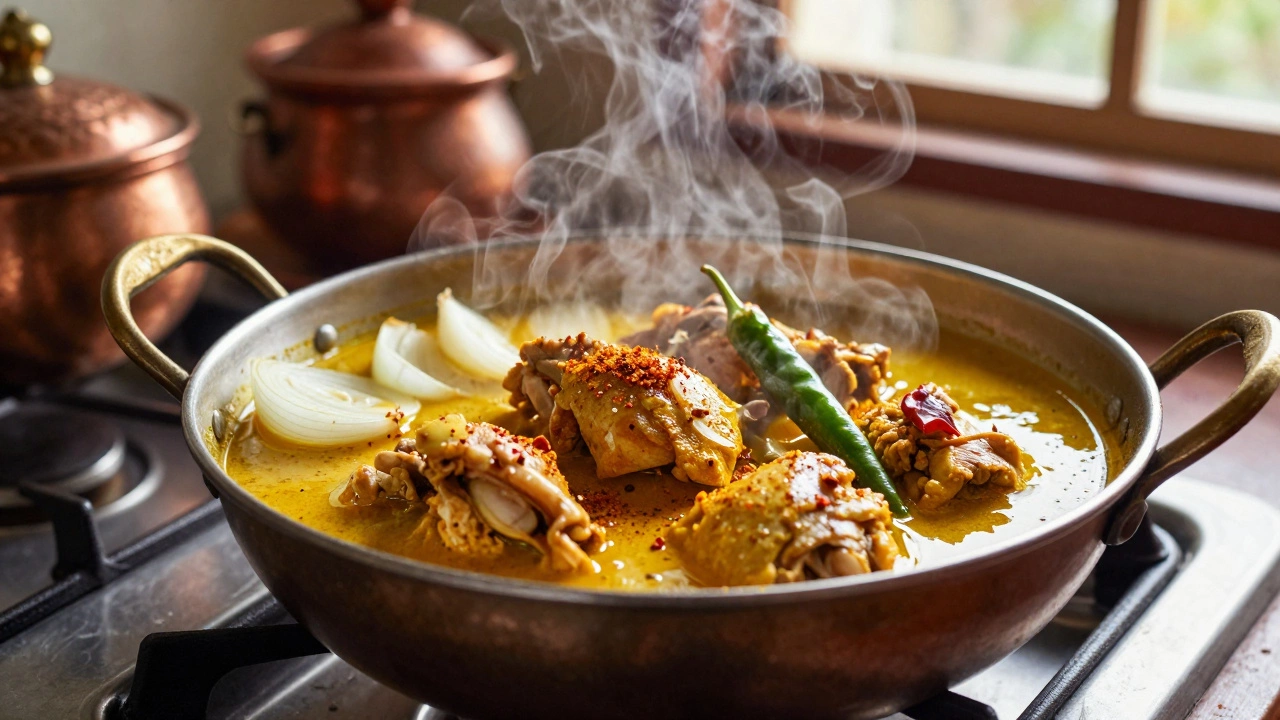
Can You Put Raw Chicken Into a Curry? Yes, Here's How to Do It Right
Yes, you can safely put raw chicken into a curry. Learn how to brown, simmer, and season it properly for tender, flavorful results every time-no pre-cooking needed.