Garlic Timing: When to Add Garlic for Maximum Flavor
When working with garlic timing, the practice of choosing the exact moment to introduce garlic during cooking. Also known as garlic addition schedule, it directly influences aroma, heat, and texture. Relatedly, garlic, a staple bulb used worldwide for its pungent flavor and health benefits, is the star ingredient here. marination, the process of soaking foods in seasoned liquid before cooking often relies on garlic's early infusion, while sautéing, quick frying over high heat to develop flavor dictates a later, controlled addition.
Why does timing matter? Garlic contains allicin, a compound that forms when the cloves are crushed. Allicin reacts quickly to heat: a short burst of high heat releases a sharp bite, while prolonged cooking mellows it into sweet, caramelized notes. If you toss garlic in at the start of a simmer, the allicin can break down entirely, leaving a muted background. Add it midway and you keep enough bite for a punchy finish. Knowing this chemical dance helps you decide whether you want a dish to whisper garlic or shout it.
Early garlic addition shines in dishes that build a flavor base, such as classic Indian curries. When you kick‑off a curry with oil, onions, and garlic, the garlic infuses the fat, turning the whole pot into an aromatic foundation. This technique ties directly to the broader set of curry ingredients, spices, herbs, and aromatics that form the backbone of Indian sauces. The result is a deep, unified taste where garlic doesn't stand out alone but supports every spice that follows.
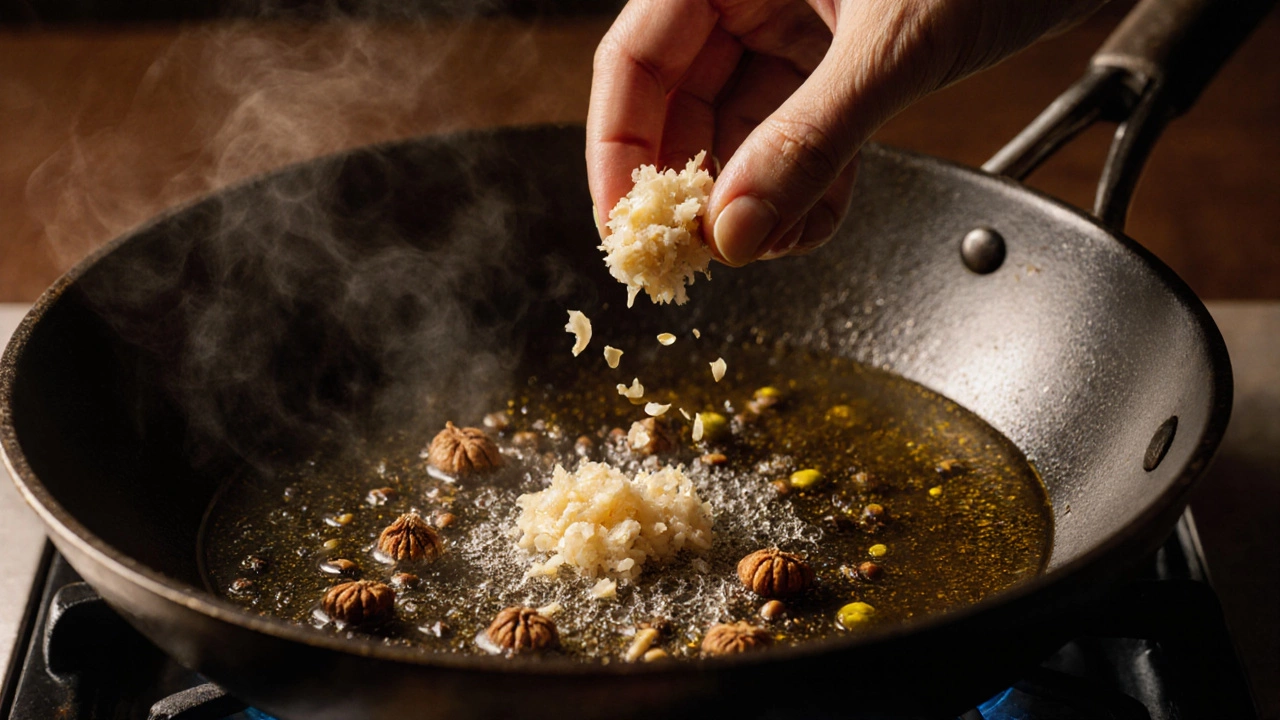
Mid‑cook garlic works best when you want a golden, nutty flavor without the raw edge. Think of a tempering step: heat oil, add sliced or minced garlic, and watch it sizzle to a light brown. This stage, often called sautéing, creates a sweet, toasted layer that can be mixed into dals, sautéed vegetables, or finishing sauces. The timing here ensures the garlic's sugars caramelize just enough to add richness without turning bitter.
Saving garlic for the final minutes gives you that fresh, sharp zing. A handful of minced garlic tossed into a hot dal right before serving, or a raw garlic chutney drizzled over a biryani, delivers a bright pop that cuts through richness. This late addition is also the go‑to for garnish: it preserves the raw aroma that many Indian dishes celebrate.
When you're marinating meats, fish, or paneer, garlic timing shifts again. Adding crushed garlic to the marinating liquid at the start lets its flavors penetrate the protein over hours, creating a deep, uniform taste. However, if you prefer a punchy garlic burst in a grilled kebab, sprinkle fresh garlic just before cooking. This dual approach shows how marination intertwines with timing to achieve both depth and surface flavor.
Practical tips for common Indian recipes: • For roti dough, a quick dash of garlic oil right before kneading imparts a subtle hint without overwhelming the bread. • In dal, add a spoonful of minced garlic after the lentils soften, then sauté briefly for a balanced flavor. • For biryani, mix a few crushed garlic cloves into the yogurt‑based marination and keep a few raw slices for the final layering. These examples tie back to earlier posts about oil in roti dough, baking soda in roti, and curry ingredients, showing that garlic timing is a versatile tool across dishes.
Key Timing Rules
1. Start: Use garlic in the oil‑onion base for deep, integrated flavor. 2. Middle: Sauté for golden, sweet notes. 3. End: Add raw or lightly cooked garlic for bright, sharp impact. Remember, the same garlic can play three different roles in one meal, simply by shifting when you drop it in.
Armed with these timing cues, you’ll be able to fine‑tune the garlic profile in any recipe you tackle. Below you’ll find a curated list of articles that dive deeper into each stage, give you exact ratios, and share real‑world kitchen tricks. Let’s explore how garlic timing fits into the broader world of Indian cooking.
Perfect Timing: When to Add Garlic and Ginger to Curry
Learn the exact moments to add garlic and ginger in curry for maximum flavor, avoid bitterness, and boost health benefits with practical timing tips.