Indian Chapati Secrets – Master the Perfect Flatbread
When working with Indian chapati secrets, the body of knowledge that explains how to achieve soft, puffed Indian flatbreads. Also known as chapati tricks, it helps anyone wanting better results in the kitchen. If you want Indian chapati secrets that actually work, start by understanding the core ingredients. Chapati, a thin unleavened bread made from whole‑wheat flour (atta) is the centerpiece, while roti, the regional term for the same flatbread, often varies in thickness and cooking style. The relationship is simple: chapati is a type of roti, and both rely on dough hydration, flour quality, and heat distribution. Knowing that, you can see why the right flour‑to‑water ratio is a key factor for puffing.
Key Factors for a Perfect Chapati
The biggest roadblock to a fluffy chapati is uneven gluten development. That’s where proper kneading and optional leavening agents come in. Adding a pinch of baking soda, a mild alkaline that softens the gluten network can make the dough more elastic and help it puff quickly on the tawa. However, too much soda will give a bitter taste and change the color. A good rule of thumb is one gram per kilogram of flour – enough to boost softness without compromising flavor. This technique shows how baking soda influences roti softness, creating a clear semantic link: "Baking soda influences roti softness."
Beyond ingredients, temperature control is crucial. Preheat the tawa until it’s hot but not smoking; a moderate heat lets the chapati steam from the inside while the outside browns. When you place the rolled dough on the pan, listen for a gentle sizzle – that’s the cue that steam is forming, which is the driving force behind puffing. Flip after 20‑30 seconds, then press gently with a cloth or spatula; the pressure forces trapped steam to expand, causing the bread to puff. This step demonstrates the semantic triple: "Proper heat enables steam formation, which creates puffed chapati."
Rolling technique also matters. Aim for a uniform thickness of about 2‑3 mm; rolling too thin makes the bread brittle, while thick pieces stay flat. Use a light dusting of flour to avoid sticking, but don’t over‑flour, as excess dry flour can prevent steam buildup. Even rolling connects to dough hydration: "Even rolling requires balanced dough hydration," reinforcing the idea that flour‑to‑water ratio affects every later step.
Storage and serving add the final polish. Keep cooked chapatis in a clean kitchen towel; the residual heat creates a mini‑steamer that retains softness for up to an hour. If you need to store longer, wrap them tightly in foil and reheat briefly on a dry pan – the steam trapped inside will revive the fluffiness. These practical tips turn theoretical knowledge into everyday results, and they tie back to the central theme of Indian chapati secrets.
Now that you’ve seen why dough hydration, gentle leavening, and heat management matter, you’re ready to explore the full range of tips, troubleshooting tricks, and flavor variations we’ve gathered. Below you’ll find articles that dive deeper into each of these aspects, from common puffing problems to inventive ingredient swaps, so you can keep perfect chapatis on your plate every day.
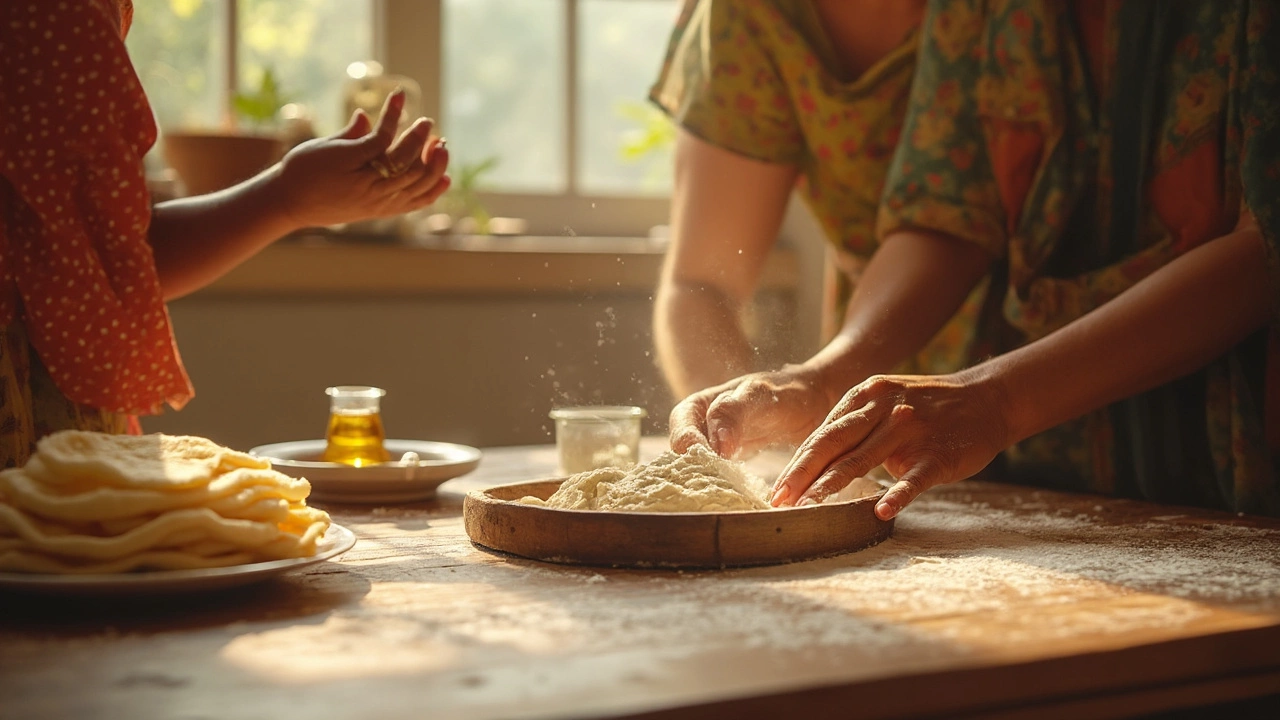
Best Time to Add Oil in Roti Dough: Tips for Fluffy Rotis Every Time
Want softer, tastier rotis? Discover exactly when and why to add oil to your dough. Get flavorful and fluffy results with these tried-and-tested tips.