Low‑Calorie Cuisine: Healthy Indian Recipes & Tips
When talking about Low‑Calorie Cuisine, a style of cooking that trims calories without sacrificing taste, often by using lean proteins, plenty of vegetables, and smart seasoning, you instantly think of a handful of supporting ideas. First, nutrient‑dense superfoods, ingredients like moringa leaves, lentils, and millets that pack vitamins, minerals, and fiber while staying low in calories form the backbone of many Indian plates. Second, Indian vegetarian meals, traditional dishes that rely on beans, dals, and vegetables, naturally fitting the low‑calorie goal offer endless variety—from fluffy dosa to hearty sambar. Third, dal nutrition, the protein‑rich, fiber‑laden lentil stews that keep you full longer while adding minimal calories acts as a versatile base for meals across the sub‑continent. These entities intersect: superfoods boost the nutritional profile of vegetarian meals, and dal’s protein content supports satiety, making the whole approach sustainable for daily cooking.
Key Elements of Low‑Calorie Indian Cooking
At the heart of low‑calorie cuisine lies a simple rule: maximize flavor, minimize empty calories. That means swapping heavy creams for low‑fat yogurt, choosing whole‑grain flours over refined ones, and grilling or steaming instead of deep‑frying. For example, replacing ghee in a roti dough with a splash of water cuts calories while preserving softness—something you’ll see in many of our guides. Adding a squeeze of lemon to biryani not only lifts taste but also reduces the need for extra oil. The same principle applies to sauces; a mustard‑seed tempering with a dash of vinegar can replace a calorie‑rich cashew paste. Understanding how each ingredient contributes to the overall calorie count lets you tweak recipes without losing authenticity. Our collection below shows real‑world applications: from perfect dosa batter soaking times that keep the batter light, to pantry‑friendly chutney storage tips that avoid waste.
Beyond ingredients, technique matters. Soaking dal for a few hours cuts cooking time and improves digestibility, meaning you can use less oil during the final tempering. Brining chicken in buttermilk for a short period tenderizes the meat while keeping the fat content low, a trick that appears in our "Best Soaks to Make Chicken Tender" article. Even the order of adding aromatics—like dropping garlic and ginger at the right stage—enhances flavor without needing extra salt or sugar. These practical insights stitch together the broader theme of low‑calorie Indian cooking: every step, from preparation to plating, offers an opportunity to shave off unnecessary calories while celebrating bold spices.
Ready to see these ideas in action? Below you’ll find a curated set of articles that dive deep into specific techniques, ingredient swaps, and nutrition facts—all tied to the low‑calorie cooking mindset. Whether you’re looking for a quick tip on paneer safety or a detailed breakdown of dal’s protein content, the posts ahead give you the tools to create satisfying, light meals that stay true to Indian flavor traditions.
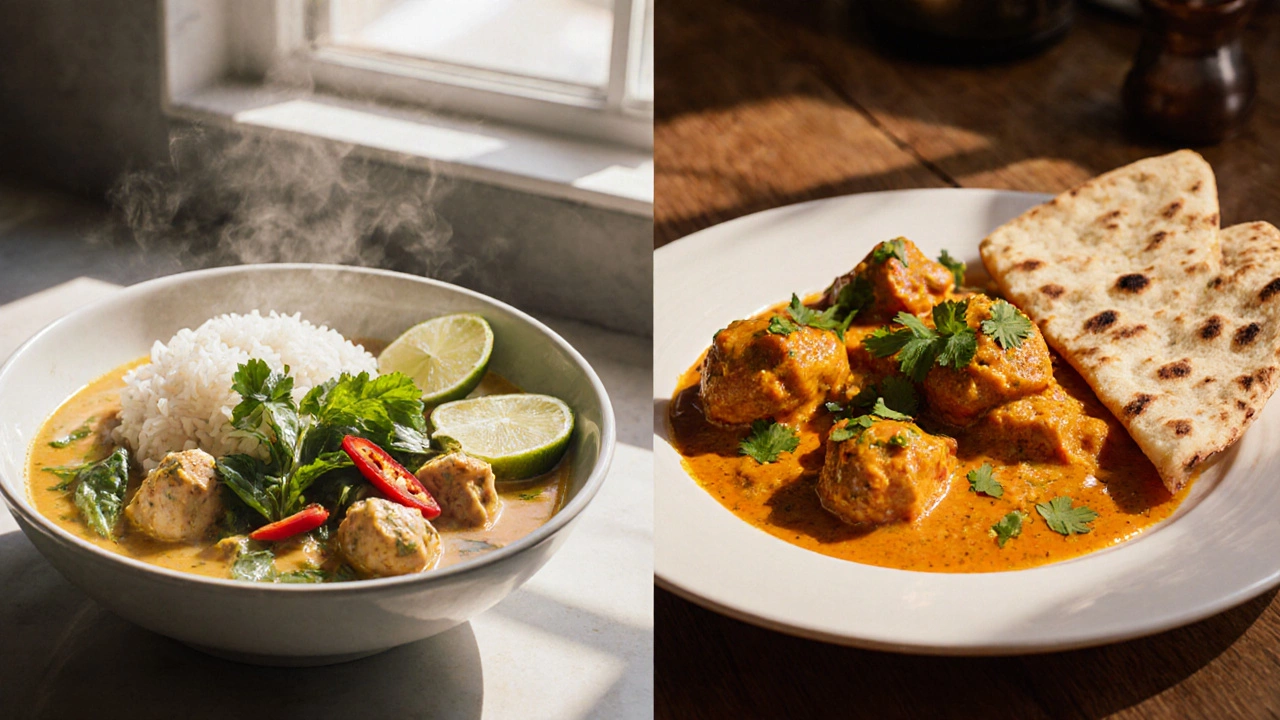
Thai vs Indian Food: Which Is Healthier?
Compare Thai and Indian cuisines on calories, fats, sugar, sodium, and nutrients. Learn which dishes are healthier and get practical tips plus easy recipes.