What Is a Very Mild Indian Curry? Easy Recipes for Beginners and Kids
 Dec, 1 2025
Mild Curry Calculator
Customize your spices
Recommended sides
Special tips
If you’ve ever been scared off by the heat of Indian food, you’re not alone. Many people assume all Indian curries are fiery, but that’s not true. There are plenty of mild Indian curries that are creamy, comforting, and perfect for kids, seniors, or anyone who just wants flavor without the burn. In fact, some of the most loved dishes in Indian homes are deliberately mild-cooked with love, not chilies.
What Makes a Curry Mild?
A mild Indian curry isn’t just a curry without chili peppers. It’s about balance. The heat in Indian food comes mostly from green chilies, dried red chilies, and chili powder. But flavor? That comes from spices like cumin, coriander, turmeric, cardamom, cinnamon, and cloves. A mild curry uses these spices generously while keeping the heat low or absent.
Many Indian households cook two versions of the same dish-one spicy for adults, one mild for children or guests. The base is the same: onions, garlic, ginger, tomatoes, and yogurt or cream. The difference? No green chilies, no Kashmiri chili powder, and no extra heat from black pepper or cayenne.
Some restaurants label dishes as "mild," but that doesn’t always mean no heat. In homes, "mild" means you can eat it without reaching for water. Think of it like a gentle hug in a bowl.
Best Mild Indian Curries to Try
Here are five truly mild curries you can make at home, even if you’ve never cooked Indian food before.
- Butter Chicken (Murgh Makhani) - This is the most famous mild curry in the world. Tender chicken is marinated in yogurt and spices, then simmered in a rich tomato-and-butter sauce with a touch of cream. The spice blend includes garam masala, cumin, and paprika-but no chilies. It’s sweet, smoky, and silky.
- Paneer Makhani - The vegetarian version of butter chicken. Soft paneer cubes soak up the same creamy tomato sauce. It’s mild, satisfying, and pairs perfectly with naan or basmati rice.
- Kadai Paneer (Mild Version) - Normally made with red chilies, but you can skip them. Use bell peppers instead for sweetness and color. The dish still gets depth from toasted coriander and cumin seeds, and a splash of cream at the end.
- Malai Kofta - Vegetable dumplings made from mashed potatoes and paneer, fried lightly and floated in a creamy, cardamom-scented sauce. It’s sweet, rich, and never spicy. A favorite at family dinners.
- Chana Masala (Mild) - Chickpeas cooked with tomatoes, onions, and spices like cumin, coriander, and amchur (dry mango powder). Skip the dried red chilies, and you’ve got a hearty, tangy curry that’s full of protein and flavor without the burn.
These dishes are staples in Mumbai homes. You won’t find them on spicy food challenge menus, but you’ll find them on Sunday lunch tables, next to steaming bowls of rice.
How to Make Any Curry Mild
You don’t need to buy special "mild curry powder." Most Indian kitchens build flavor from scratch. Here’s how to tame any recipe:
- Remove all chilies. That means green chilies, dried red chilies, and chili powder. Use smoked paprika instead for color and a hint of depth.
- Use yogurt or cream. These cool down the spices naturally. Add a tablespoon of plain yogurt at the end, or stir in heavy cream.
- Balance with sweetness. A pinch of sugar or a splash of coconut milk softens acidity and heat. In home cooking, a little jaggery (unrefined cane sugar) is often used.
- Toast spices gently. Don’t burn cumin or coriander seeds. Lightly fry them in oil until fragrant-this releases flavor without adding heat.
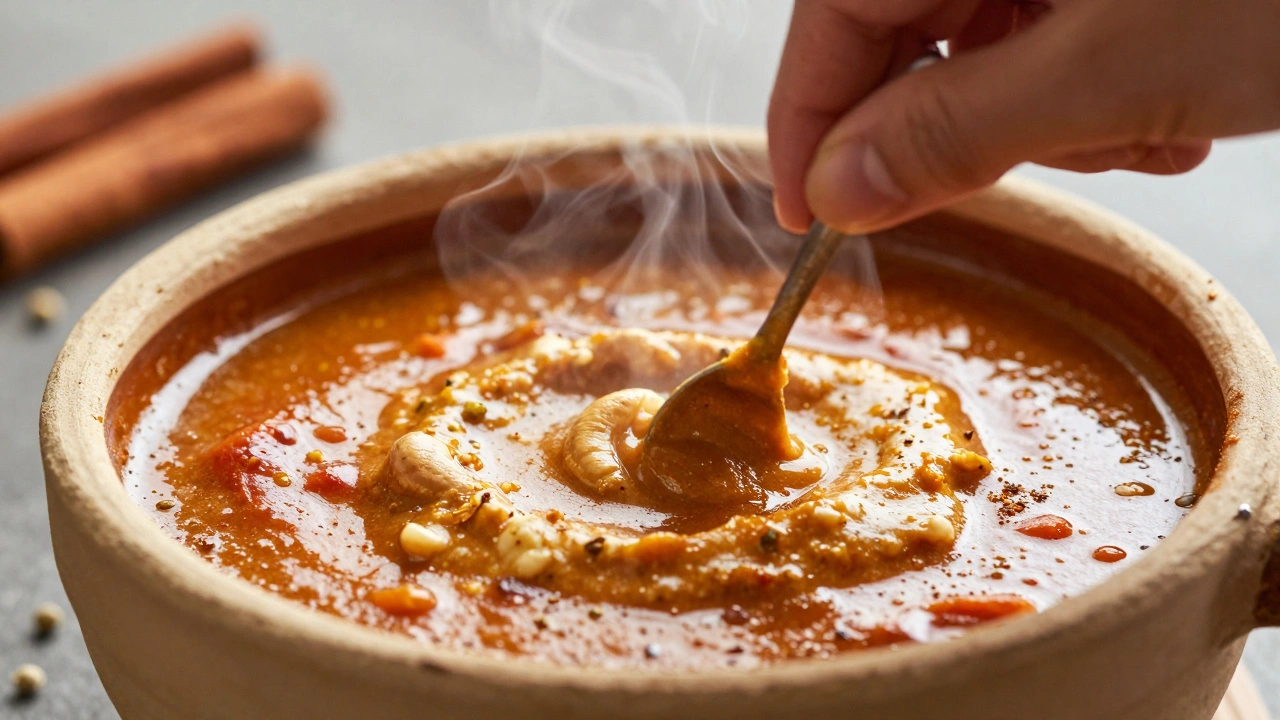
- Add dairy at the end. Stir in cashew paste, coconut milk, or milk-based gravy just before serving. This rounds out the taste and makes it smoother.
One trick I learned from my grandmother: if you accidentally make a curry too spicy, don’t panic. Add a splash of milk or a spoonful of plain yogurt. Stir well. Wait five minutes. The heat will fade.
What to Serve With Mild Curries
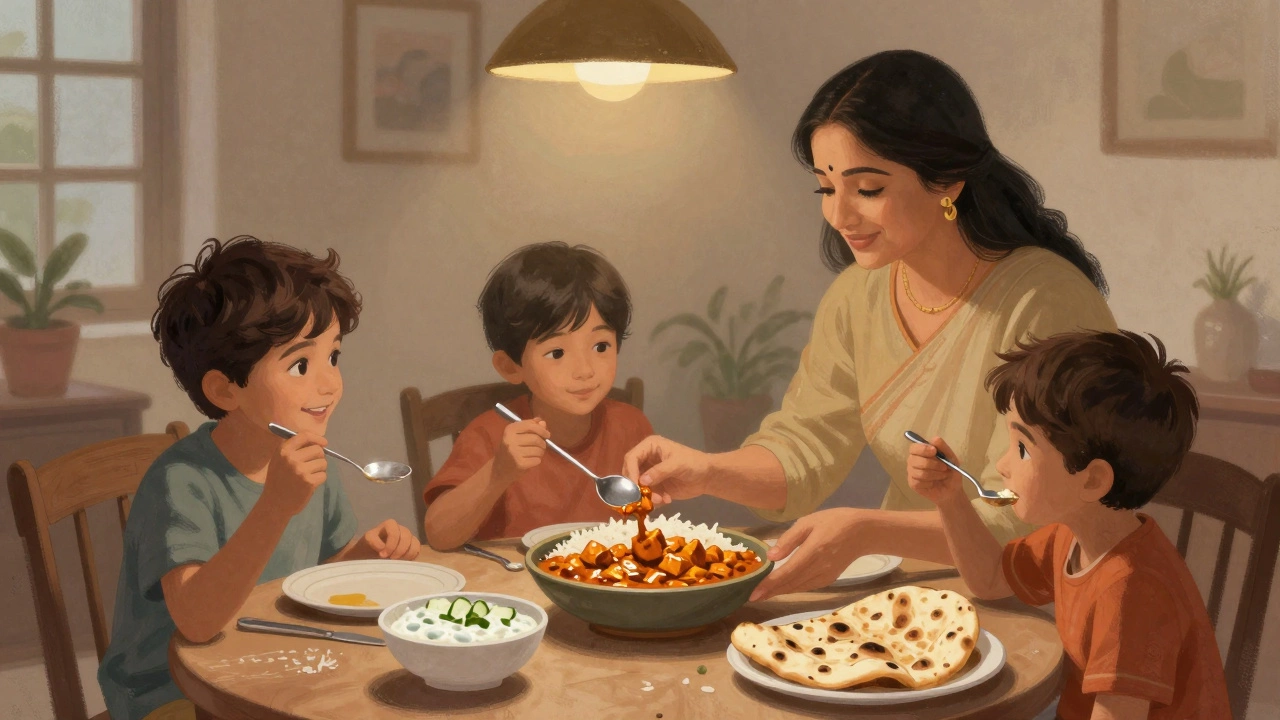
Mild curries are forgiving. They go well with almost anything:
- Basmati rice - Long-grain, fragrant, and fluffy. Perfect for soaking up sauce.
- Naan or roti - Soft, warm bread for scooping. Store-bought works fine.
- Cucumber raita - Yogurt with grated cucumber, a pinch of roasted cumin, and mint. It’s cooling and refreshing.
- Steamed vegetables - Carrots, peas, or green beans add texture and nutrients.
- Plain yogurt - A small bowl on the side helps balance any lingering spice.
My kids eat butter chicken with rice and a side of sliced apple. Yes, apple. It’s sweet, crunchy, and helps reset their palates between bites. It works.
Why Mild Curries Are Perfect for Beginners
If you’re new to Indian cooking, starting with a mild curry removes the fear factor. You don’t need to buy 15 exotic spices. You need:
- Onions
- Garlic and ginger
- Tomatoes
- Cumin seeds
- Coriander powder
- Turmeric
- Garam masala
- Yogurt or cream
That’s it. You can make butter chicken with just these. No fancy tools. No pressure. Just a pot, a wooden spoon, and 30 minutes.
Most beginners think they need to replicate restaurant flavors. But home-style Indian food is simpler. It’s about layers, not heat. A pinch of cinnamon here, a dash of cardamom there. It’s not about being loud-it’s about being warm.
Common Mistakes When Making Mild Curries
Even when you try to keep it mild, mistakes happen:
- Using pre-made curry paste. Many store-bought pastes have hidden chili. Always check the label. Stick to whole spices or plain powders.
- Adding too much garam masala at once. It’s a blend that can include black pepper and dried chilies. Add it slowly, taste, then add more if needed.
- Forgetting to cook the onions well. Burnt onions taste bitter. Cook them slowly until golden brown-that’s where the sweetness comes from.
- Using low-fat yogurt. It can curdle. Use full-fat plain yogurt for creaminess and stability.
- Skipping the cream at the end. It’s not just for richness-it’s a heat buffer.
One thing I see often: people think mild means bland. It doesn’t. Mild means the spices sing softly, not scream.
Where to Find Mild Indian Curries Outside India
If you’re outside India and want to try authentic mild curries, look for restaurants that specialize in North Indian or Punjabi cuisine. Avoid places that advertise "hot" or "spicy" as a selling point.
Ask for "no chili, no heat"-in Hindi, you can say, "Thoda mild, please. Kuch bhi nahi, sirf masala." (A little mild, please. Nothing spicy, just spices.)
Chain restaurants like Tandoor or Dishoom (in the UK) often have mild options clearly labeled. In the U.S., look for places run by families from Punjab or Uttar Pradesh-they tend to cook for all ages.
Why Mild Curries Are the Heart of Indian Home Cooking
Indian food isn’t just about spice. It’s about comfort. A mild curry is what’s served when someone is sick. It’s what grandparents eat. It’s what’s packed in lunchboxes for school. It’s the dish that brings everyone to the table, no matter their age or tolerance.
Some of my happiest memories are of Sunday dinners-my mom making paneer makhani, the smell of cumin and cream filling the kitchen, my little brother eating with his hands, laughing because the rice stuck to his face.
That’s the real magic of Indian food. It doesn’t need fire to be loved.
Is there such a thing as a completely non-spicy Indian curry?
Yes. Many traditional Indian curries are made without any chilies at all. Dishes like butter chicken, malai kofta, and kadai paneer (made without chilies) rely on spices like cumin, coriander, cardamom, and cinnamon for flavor. The heat comes from chilies, not other spices. If you skip chilies and chili powder, you get a flavorful, aromatic curry with zero burn.
Can I make mild curry with store-bought curry powder?
Most store-bought curry powders contain chili powder or cayenne. Even "mild" versions might still have heat. For true mildness, it’s better to use individual spices like ground cumin, coriander, turmeric, and garam masala. You can make your own blend: 2 parts coriander, 1 part cumin, 1 part turmeric, and a pinch of cinnamon and cardamom. Skip the chili.
What’s the best mild curry for kids?
Butter chicken and malai kofta are the top choices for kids. Both are creamy, slightly sweet, and packed with flavor but no heat. The sauce is smooth, the texture is soft, and the taste is familiar-like a mild tomato soup with Indian spices. Serve it with rice and a side of cucumber raita to cool things down further.
How do I make my curry taste richer without adding cream?
Use cashew paste. Soak 10-12 raw cashews in warm water for 20 minutes, then blend them into a smooth paste. Add it to your curry instead of cream. It thickens the sauce, adds natural sweetness, and gives a luxurious texture-without dairy. It’s a common trick in vegetarian Indian cooking.
Can I freeze mild Indian curries?
Yes, absolutely. Mild curries like butter chicken, paneer makhani, and chana masala freeze very well. Let them cool completely, then store in airtight containers for up to 3 months. Thaw overnight in the fridge and reheat gently on the stove. The cream or yogurt might separate a little, but a quick stir brings it back. Never microwave creamy curries on high-it can make them grainy.
If you’re looking for a way into Indian cooking without the burn, start here. Make butter chicken this weekend. Use plain yogurt, skip the chilies, and let the spices do the talking. You’ll find that mild doesn’t mean boring-it means balanced. And that’s the soul of Indian home cooking.