Urad Dal Soaking Time: How Long and Why It Matters
When working with Urad Dal Soaking Time, the period you let black gram sit in water before grinding or cooking. Also known as urad dal pre‑soak, it shapes texture, cooking speed, and nutrient availability. The same principle applies to Urad Dal, a protein‑rich lentil that forms the base of South Indian staples. Proper Soaking also kick‑starts Sprouting, a natural way to boost vitamins and digestibility. All of these steps feed directly into a smooth Dosa Batter that ferments well and yields light, fluffy dosas.
Key Factors That Affect Soaking Time
First, water‑to‑dal ratio matters. A common rule is three parts water to one part dal; too little water leaves the grains hard, while excess water can cause over‑absorption and mushy batter. Second, temperature plays a role: a warm kitchen (around 25‑30 °C) speeds up the softening process, so a 4‑hour soak may be enough, whereas a colder environment may need 8‑12 hours. Third, the purpose of the dal decides the length. For plain dal soups, a 2‑hour soak is sufficient, but for fermented batter you’ll want at least 6‑8 hours to allow enough moisture for the natural yeasts to work.
Third, altitude influences the timeline. At higher elevations, water boils at lower temperatures, slowing down the softening of the beans. Adding a pinch of baking soda can counteract this, but the safest route is to extend the soak by another hour or two. Fourth, the quality of the dal matters. Older stock absorbs water slower due to hardened seed coats, so older urad dal often needs an overnight soak (10‑12 hours) whereas fresh beans can be ready in 4‑5 hours.
When you nail the soaking window, you gain two big benefits. urad dal soaking time directly reduces cooking time by up to 50 %, saving gas or electricity. It also lowers anti‑nutrients like phytic acid, which improves iron and zinc absorption. The softer beans blend into a silky batter without gritty bits, giving you that signature airy texture in idlis and a crisp edge on dosas.
Beyond the kitchen, the soaking step interacts with health. Soaked and sprouted urad dal contains higher levels of vitamin C and B‑complex vitamins. Sprouting for just 12‑24 hours after the initial soak adds a fresh, nutty flavor and makes the protein more bioavailable. For anyone with digestive sensitivity, the reduced lectin content means fewer bloating episodes after a hearty breakfast.
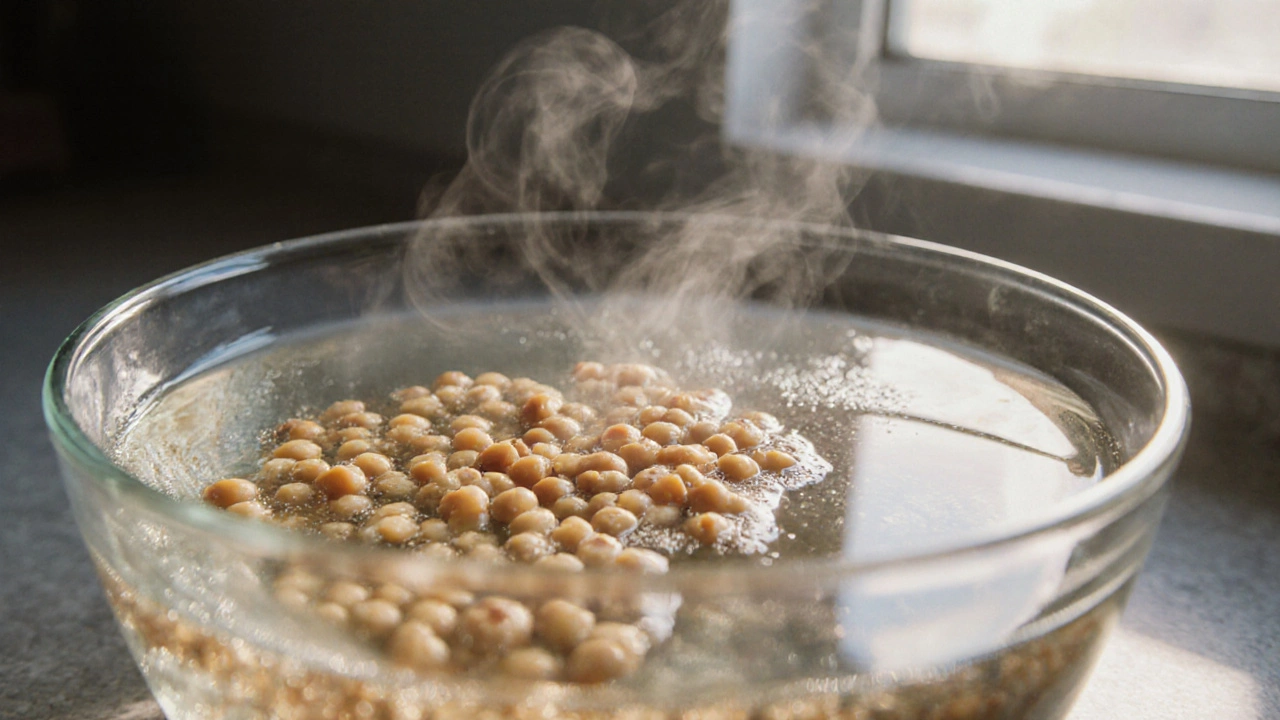
In practice, here’s a simple timeline many home cooks follow: rinse the dal thoroughly, place it in a bowl, add water (3‑4 × volume), and let it sit at room temperature. After 4‑6 hours, check the grain softness by pressing between thumb and forefinger; it should feel pliable but not mushy. If you’re preparing batter for fermentation, extend the soak to 8‑10 hours, then drain and grind with a little fresh water. The resulting mixture should be thick yet pourable—perfect for a 12‑hour fermentation period that yields the tangy flavor many love.
Finally, remember that soaking isn’t a one‑size‑fits‑all ritual. If you’re making a quick dal fry, a short 30‑minute soak combined with a pressure cooker works fine. For traditional idli batter, aim for the longer soak and allow the natural microbes to do their job. Adjusting the soak based on your recipe’s end goal is the smartest way to get consistent results every time.
Whether you’re a beginner trying to master your first dosa or a seasoned cook tweaking texture, understanding the science behind urad dal soaking time empowers you to control flavor, nutrition, and cooking efficiency. Below you’ll find a curated set of articles that dive deeper into related topics—like dal nutrition, sprouting techniques, and perfect dosa fermentation—so you can experiment with confidence and keep your kitchen humming.
Ideal Soaking Time for Urad Dal in Dosa Batter
Find the perfect soaking time for urad dal to make crisp, fluffy dosa batter. Learn temperature‑based guidelines, step‑by‑step instructions, common mistakes, and FAQs.