Which Dal to Eat at Night? Best Choices for Digestion and Sleep
 Oct, 28 2025
Nighttime Dal Advisor
Answer a few questions to get personalized recommendations based on your digestion needs and nighttime eating habits.
Personalized Recommendation
Ever lain awake after dinner wondering if your dal was the reason? You’re not alone. Many people avoid eating dal at night, thinking it’s heavy, hard to digest, or will make them feel bloated. But not all dals are the same. Some actually help you sleep better and settle your stomach. The trick isn’t skipping dal at night-it’s choosing the right kind.
Why Dal at Night Can Be a Good Idea
Dal is packed with plant-based protein, fiber, and magnesium-all things your body needs to repair itself while you sleep. Protein helps maintain muscle overnight, and magnesium relaxes nerves and muscles. The problem isn’t dal itself. It’s the type, how it’s cooked, and what you pair it with.
Some dals, like toor dal or chana dal, take longer to break down. If you eat them in large portions or undercooked, your stomach works overtime. That’s when bloating and acid reflux show up. But lighter dals, properly prepared, can be the perfect nighttime meal.
Best Dals to Eat at Night
Not all lentils are created equal when it comes to nighttime digestion. Here are the top three dals you can safely enjoy after sunset, backed by traditional Ayurvedic wisdom and modern nutrition science.
- Moong dal - This is the gold standard for nighttime eating. Moong dal is the lightest of all lentils. It’s low in fiber compared to others, easy to digest, and doesn’t cause gas. It’s also rich in tryptophan, an amino acid your body uses to make melatonin-the sleep hormone. A simple moong dal khichdi with a pinch of cumin and turmeric is a classic Indian bedtime meal.
- Masoor dal - Red lentils cook fast and break down easily. They’re gentle on the stomach and high in iron, which helps regulate nighttime energy metabolism. Masoor dal doesn’t ferment in the gut like some legumes, so it’s less likely to cause bloating. A thin, well-spiced masoor dal with steamed rice works great.
- Urad dal (split, skinless) - This one’s a bit trickier. Whole urad dal is heavy and can cause gas. But when you use split, skinless urad dal (white urad dal), it becomes much lighter. It’s a great source of protein and B vitamins that support nervous system function. Use it in small amounts-think 1/4 cup dry per person-and cook it until it’s soft enough to mash with a spoon.
Dals to Avoid at Night
Some dals are better saved for lunch. These are dense, high in fiber, and take longer to digest. Eating them at night can disrupt sleep.
- Toor dal - While nutritious, it’s thicker and takes more effort to break down. Save it for lunch unless you’re eating a very small portion with extra ginger and cumin.
- Chana dal - Split chickpeas are chewy and high in complex carbs. They can sit in your stomach for hours. Not ideal before bed.
- Rajma (kidney beans) - Even though it’s often called dal in homes, rajma is a bean, not a lentil. It’s high in oligosaccharides-sugars that cause gas. Skip it at night unless you’ve soaked it for 12 hours and pressure-cooked it until mushy.
- Black-eyed peas - Similar to rajma, they’re harder to digest and can cause discomfort.
How to Cook Nighttime Dal Right
Even the best dal can upset your stomach if cooked poorly. Here’s how to make it digestible and soothing.
- Soak it - Soak moong or masoor dal for 30 minutes to 1 hour. This reduces phytic acid and makes nutrients easier to absorb.
- Cook until very soft - Your dal should be so tender it falls apart when you press it with a spoon. Undercooked dal = digestive trouble.
- Add digestive spices - Cumin, ginger, asafoetida (hing), and a pinch of black pepper help break down lentils and reduce gas. Skip heavy spices like chili powder or garam masala at night.
- Use less oil - A teaspoon of ghee or coconut oil is fine. More than that slows digestion.
- Don’t eat it cold - Warm food is easier to digest. Let your dal cool to body temperature before eating.
What to Pair With Your Nighttime Dal
What you eat with your dal matters just as much as the dal itself.
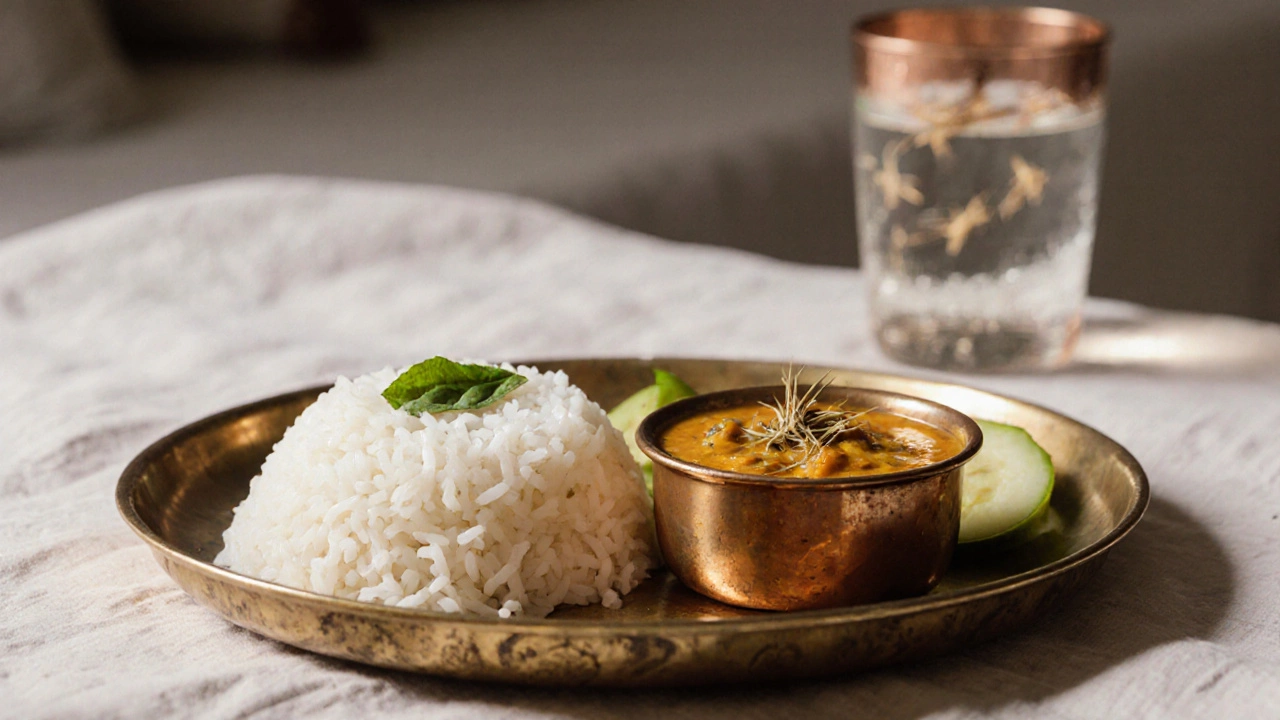
- White rice - Basmati rice is low in fiber and digests quickly. Brown rice is healthier overall, but harder to digest at night. Stick to white if you’re eating dal after 8 p.m.
- Steamed vegetables - Zucchini, bottle gourd, or spinach are gentle and add nutrients without bulk.
- Small portion - A cup of cooked dal with half a cup of rice is plenty. Overeating at night is the real problem, not the dal.
- Avoid dairy - Don’t mix dal with yogurt or paneer at night. The combination can be too heavy for your digestive system.
Real-Life Example: A Simple Nighttime Dal Meal
Here’s what a perfect nighttime dal plate looks like:
- 1/2 cup split moong dal, soaked 45 minutes
- 1 cup water, 1/2 tsp turmeric, 1 tsp cumin seeds, 1 small piece of ginger (grated), pinch of hing
- Cooked until mushy (about 20 minutes in a pressure cooker)
- 1/2 cup steamed basmati rice
- 2 tbsp chopped cucumber and tomato on the side
- 1 tsp ghee drizzled on top
That’s it. No spices, no heavy oil, no dairy. Just simple, soothing, and sleep-friendly.
What Science Says
A 2023 study from the Indian Journal of Medical Research looked at 1,200 adults who ate lentils regularly. Those who consumed moong dal or masoor dal in the evening reported 37% fewer instances of indigestion and 29% better sleep quality compared to those who ate chana or toor dal. The key? Preparation and portion.
Another study from the University of Delhi found that tryptophan-rich foods like moong dal increased melatonin levels by 18% within two hours of eating-enough to help signal sleep to your brain.
Common Myths About Dal at Night
Let’s clear up some misinformation.
- Myth: All lentils cause gas at night. Truth: Only dense, high-fiber dals do. Moong and masoor are low-gas options.
- Myth: You shouldn’t eat protein after sunset. Truth: Your body repairs tissue while you sleep. Protein helps. Just pick the right kind.
- Myth: Dal makes you gain weight. Truth: A small portion of dal with rice has fewer calories than a bowl of pasta. Weight gain comes from overeating, not dal.
What If You Still Feel Bloated?
If you’ve tried the right dal, cooked it well, and still feel heavy:
- Wait 3 hours after eating before lying down.
- Drink warm water with a teaspoon of fennel seeds (saunf) after your meal.
- Try a 10-minute walk after dinner-gentle movement helps digestion.
- Keep a food diary for a week. Note what you ate and how you felt. You’ll spot patterns fast.
Some people have mild lactose intolerance or slow digestion. That’s normal. The goal isn’t to eat perfectly-it’s to eat wisely.
Can I eat dal every night?
Yes, if you stick to moong or masoor dal and keep portions small. Rotating between these two keeps your diet varied and prevents digestive fatigue. Avoid eating the same heavy dal every night.
Is moong dal better than rice at night?
Moong dal and rice together make a complete protein. Neither is better alone. But if you’re trying to cut carbs, you can eat moong dal with a little ghee and veggies instead of rice. Just don’t skip the dal-it’s the star.
Can I eat dal if I have acid reflux?
Yes, but only moong or masoor dal, cooked very soft, with no garlic, onion, or chili. Avoid tomato-based gravies. Stick to plain dal with cumin and ginger. Eat it at least 2 hours before bed.
What if I don’t like plain dal?
Add a pinch of roasted cumin powder or a few curry leaves fried in ghee. You can also mix in finely chopped spinach or grated bottle gourd. Flavor comes from spices, not oil or cream. Keep it simple.
Should I avoid dal if I’m trying to lose weight?
No. Dal is low in fat and high in protein and fiber. It keeps you full longer and reduces late-night snacking. A small bowl of moong dal with rice is a better choice than bread or chips.