Indian Vegetarian Meal Explained: Dishes, Ingredients, and Nutrition
 Oct, 19 2025
Indian Vegetarian Plate Calculator
Build Your Balanced Meal
Select components to calculate nutritional value. Follow the 5-step formula for a balanced plate.
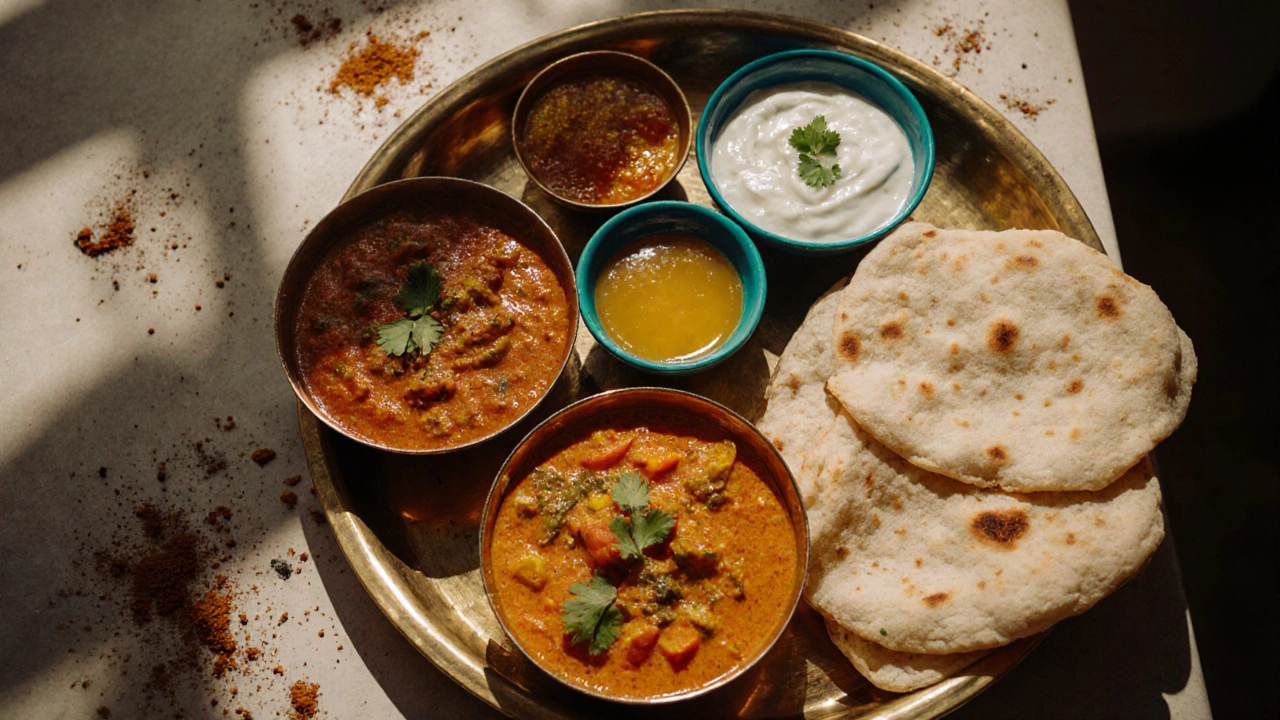
When you hear the phrase Indian vegetarian meal is a balanced plate that combines grains, legumes, vegetables, dairy, and spices, all without meat or fish, you probably picture a colorful thali piled high with bowls of curry, flatbreads, and sweets. That picture is more than just a visual - it’s a cultural framework that has evolved over centuries to deliver flavor, variety, and nutrition without any animal flesh.
What Makes a Meal ‘Indian Vegetarian’?
At its core, an Indian vegetarian meal follows three simple rules:
- No meat, poultry, fish, or seafood.
- Eggs may or may not be included, depending on personal belief (the term “eggless vegetarian” is common in many households).
- Dairy products such as milk, yogurt, and paneer are widely accepted sources of protein.
The cuisine relies heavily on plant‑based proteins - chiefly dal (lentils) and beans - as well as dairy like paneer. The result is a nutritionally complete plate that can meet daily protein, fiber, and micronutrient needs.
Core Components of a Typical Plate
Most Indian vegetarian meals are built around five pillars:
- Rice - the staple grain in the south and east.
- Chapati or other flatbreads (roti, naan) - the bread of the north and west.
- Dal - the protein‑rich pulse gravy.
- Sabzi - a vegetable side, which could be dry‑stir fried or saucy.
- Pickle or Raita - a tangy condiment that adds contrast.
These pillars can be swapped or expanded. For instance, a South Indian breakfast might replace chapati with idli or dosa, while a festive spread could feature biryani made with vegetables and paneer.
Regional Flavors and Signature Dishes
India’s culinary map is diverse. Understanding regional quirks helps you predict what will sit on the plate.
- North India: Wheat dominates; think chapati, paneer tikka, and creamy dal makhani.
- West India: Coastal Gujarat loves sweets, while Maharashtra offers hearty pav bhaji (vegetable mash with buttered buns).
- South India: Rice and fermented batters rule - idli, dosa, and tangy sambar or rasam broths.
- East India: Mustard seeds and poppy seed pastes are common; look for chole (spicy chickpeas) served with pulao.
Typical Daily Meal Plan
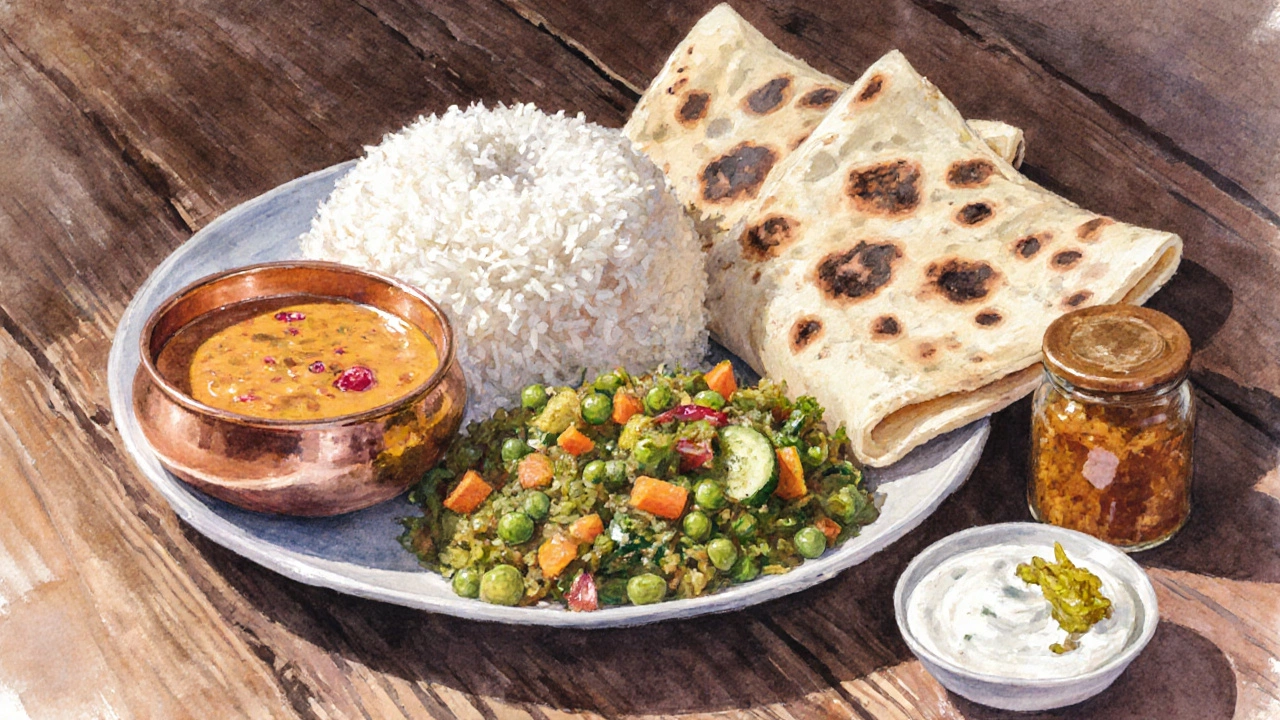
Here’s a realistic day‑long menu that many Indian vegetarians follow:
- Breakfast: Poha (flattened rice with peanuts) + a glass of buttermilk.
- Mid‑morning snack: A handful of roasted chickpeas and a piece of fruit.
- Lunch: Chapati (2), dal tadka, mixed vegetable sabzi, a small bowl of cucumber raita, and a side of mango pickle.
- Evening tea: Masala chai with a few pieces of besan ladoo.
- Dinner: Steamed rice, sambar, a dollop of coconut chutney, and a small serving of paneer bhurji.
This plan hits the recommended macronutrient split - roughly 55% carbs, 20% protein, 25% fats - and provides ample fiber from legumes and vegetables.
Nutrition Snapshot of Common Components
| Item | Calories | Protein (g) | Key Micronutrient |
|---|---|---|---|
| Chapati (1 medium) | 120 | 3 | Iron |
| Steamed rice (1 cup) | 205 | 4 | Magnesium |
| Dal (1 cup) | 230 | 18 | Folate |
| Paneer (100 g) | 265 | 18 | Calcium |
| Mixed Sabzi (1 cup) | 110 | 3 | Vitamin C |
| Sambar (1 cup) | 150 | 6 | Potassium |
By mixing these items, a single meal can easily deliver 15‑20 g of protein - comparable to a small portion of meat - while staying rich in fiber and micronutrients.
How to Build a Balanced Plate in Minutes
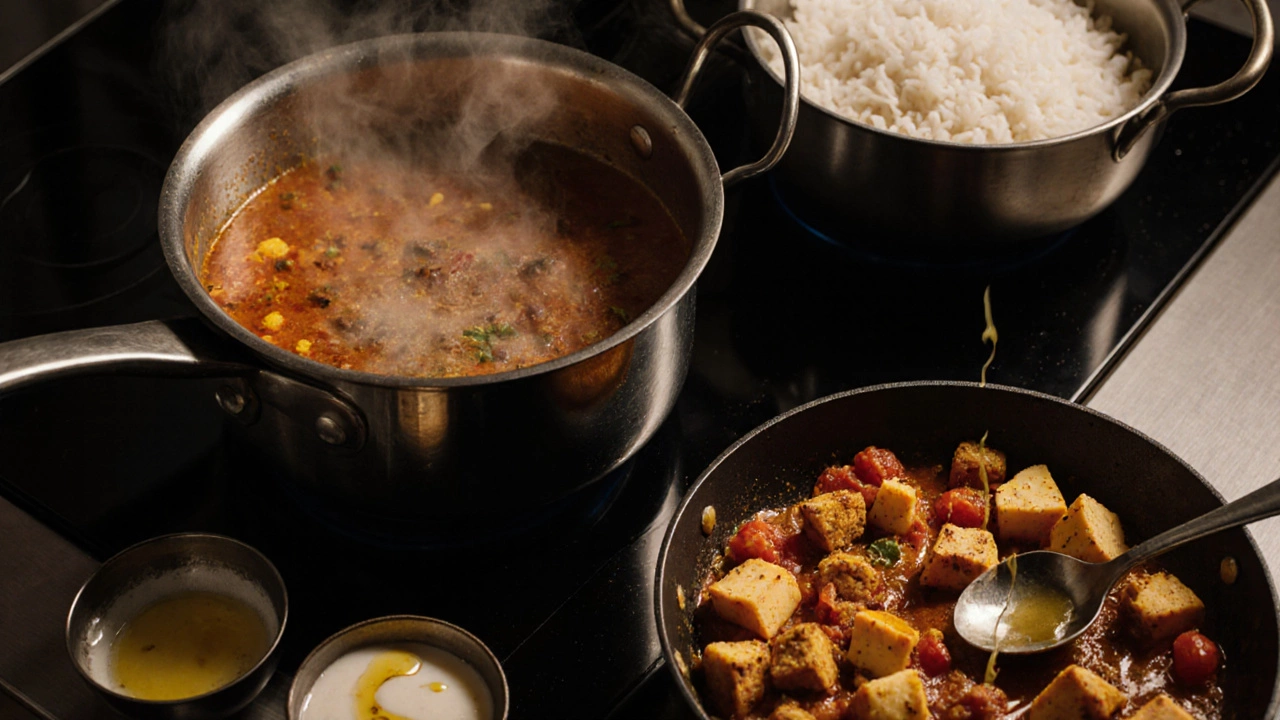
Follow this quick 5‑step formula whenever you’re short on time:
- Base: Choose either ½ cup cooked rice or 2 medium chapatis.
- Protein: Add 1 cup dal, ½ cup chole, or 100 g paneer.
- Veggies: Toss in 1 cup mixed sabzi or a bowl of sambar/rasam.
- Fat: Drizzle 1 tsp ghee or use a spoonful of coconut oil in the sabzi.
- Freshness: Finish with a side of cucumber raita or a small pickle for probiotic boost and palate contrast.
The result is a plate that looks vibrant, tastes layered, and ticks all nutritional boxes.
Common Misconceptions About Indian Vegetarian Meals
- “They’re all heavy and greasy.” - While festival dishes can be rich, everyday meals rely on steaming, boiling, and light sautéing. Using a teaspoon of ghee instead of a ladle keeps calories in check.
- “Protein is lacking.” - Pulses, beans, lentils, and paneer together provide ample complete‑protein sources.
- “It’s boring.” - The spice palette (cumin, mustard seeds, curry leaves, tamarind) creates endless flavor combos. Switch from tomato‑based gravies to coconut‑based ones for variety.
Quick Tips for Home Cooks
- Batch‑cook dal and store in the fridge for up to three days; it shortens daily prep.
- Keep a small stash of pre‑soaked beans (chickpeas, kidney beans) to speed up making chole or rajma.
- Use a pressure cooker for lentils - reduces cooking time from 30 minutes to 8‑10 minutes.
- Replace regular oil with mustard oil in West Bengal dishes for authentic flavor.
- Season each component with a pinch of hing (asafoetida) to aid digestion, especially for high‑fiber meals.
What proteins are typical in an Indian vegetarian meal?
Legumes (dal, chickpeas, kidney beans), dairy (paneer, curd), nuts and seeds (almonds, pumpkin seeds), and occasionally eggs provide the bulk of protein.
Can I get all essential amino acids without meat?
Yes. Combining grains (rice, wheat) with legumes (dal, beans) creates a complete amino‑acid profile. Adding dairy or nuts further balances it.
Is Indian vegetarian food high in calories?
It depends on cooking methods. Steamed rice, boiled dal, and sautéed vegetables are low‑calorie. Deep‑fried snacks or excessive ghee can raise the total quickly.
How much fibre does a typical meal provide?
A standard thali with dal, sabzi, and a whole‑grain roti supplies 10‑15 g of fibre, meeting about 30‑40% of the daily recommendation.
Can I follow a vegetarian Indian diet while training?
Absolutely. Focus on higher‑protein dals, add extra paneer or Greek‑style yogurt, and include nuts for healthy fats. Pair with complex carbs like brown rice or millet for sustained energy.