Indian Vegetarian Diet: Health, Flavor, and Everyday Tips
When exploring Indian vegetarian diet, a plant‑focused way of eating that blends legumes, dairy, grains, and spices to create balanced meals. Also known as veg Indian cuisine, it supports both tradition and modern nutrition. This lifestyle isn’t just about skipping meat; it’s a full‑bodied approach that covers protein, carbs, fats, and micronutrients in one plate.
One of the strongest protein pillars is dal, split pulses like moong, toor, and masoor that deliver protein, fiber, and iron. Alongside dal, paneer, fresh Indian cottage cheese rich in calcium and casein offers a dairy‑based boost. Together they let the Indian vegetarian diet encompass a complete amino‑acid profile without animal meat.
Carbohydrate staples keep the diet grounded. roti, whole‑wheat flatbread that’s quick to spin and perfect for scooping curries is the daily companion in most households. When paired with rice or millet, roti creates a flexible base for any regional flavor while supplying steady energy.
Flavor comes from the heart of curry, a blend of spices, herbs, and sometimes tomatoes or coconut that defines Indian cooking. Curry influences the taste profile of the diet, while condiments like chutney, a tangy blend of herbs, fruit, or nuts that adds zing to each bite bring fresh contrast. These spice‑rich elements turn simple ingredients into memorable meals.
Beyond the basics, the diet taps into modern superfoods. Moringa leaves, for example, pack more vitamin C than oranges and blend effortlessly into dal or chutney. Adding such nutrient‑dense foods upgrades the Indian vegetarian diet’s health quotient, supporting immunity and energy without compromising taste.
Practical tips make the diet work for busy kitchens. Soaking dal for 30 minutes cuts cooking time and improves digestibility. Fermenting dosa batter with a splash of curd creates airy crepes, while storing paneer in salted water extends freshness for a week. Small tweaks like these keep the diet efficient and flavorful.
Culture shapes every bite. From the festive richness of saffron‑infused biryani to the modest comfort of everyday vegetable sabzi, regional variations demonstrate how the Indian vegetarian diet adapts to climate, religion, and local produce. Whether you’re cooking in a Mumbai apartment or a Delhi home kitchen, the core principles stay the same: balance, spice, and plant‑forward nutrition.
Below you’ll find a curated collection of articles that dive deeper into each of these areas—protein sources, staple breads, spice science, and health‑focused tips. Use them as a toolbox to fine‑tune your own Indian vegetarian meals and explore the full spectrum of flavors this diet offers.
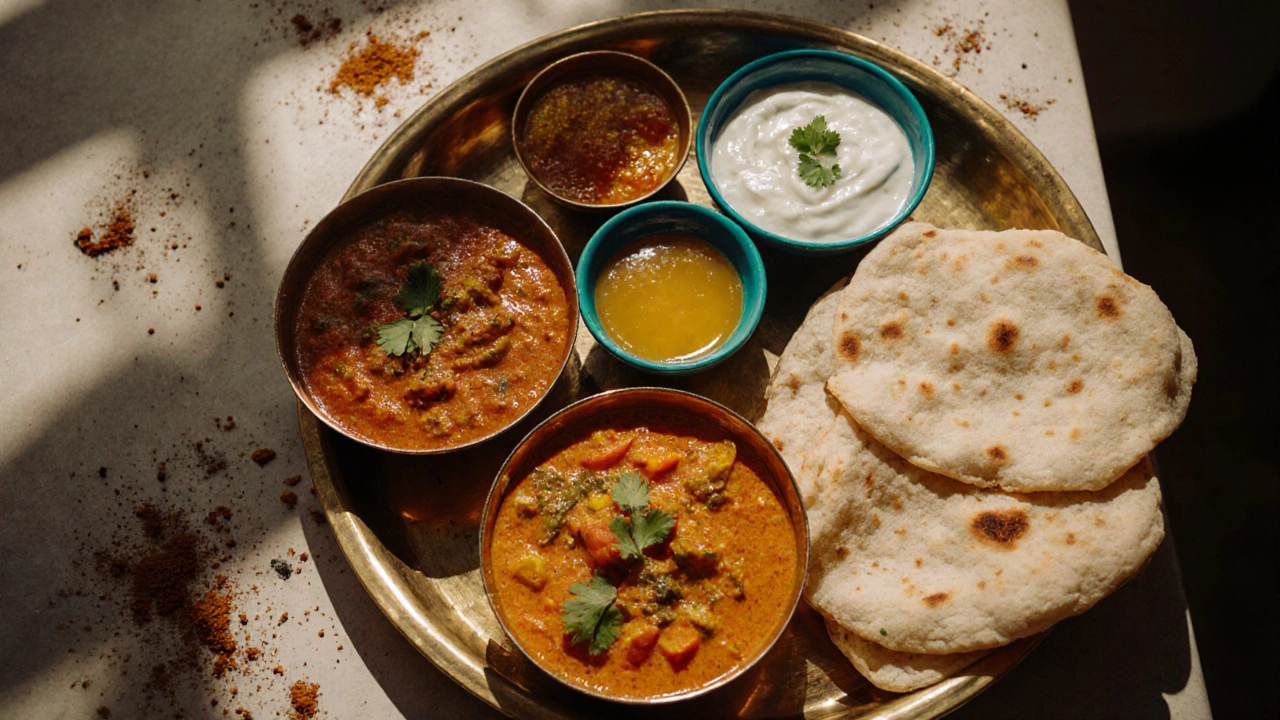
Indian Vegetarian Meal Explained: Dishes, Ingredients, and Nutrition
Explore what defines an Indian vegetarian meal, its staple dishes, regional twists, nutrition facts, and easy tips to build a balanced, flavorful plate.