Is Feta Cheese Paneer? Understanding the Differences for Homemade Indian Cooking
 Jul, 21 2026
Feta vs. Paneer: The Ultimate Comparison Tool
Click the attributes below to see how Feta and Paneer differ in every way.
Paneer
Indian Fresh CheeseFeta
Greek Brined CheesePaneer Result
Mild, milky, neutral. It acts as a blank canvas for spices.
Feta Result
Salty, tangy, sharp. Adds its own strong personality to dishes.
Calculate exactly how much milk you need to make fresh, soft paneer at home.
You will need:
*Based on standard yield ratios of approx 150-200g paneer per liter of milk.
Step-by-Step Guide
Heat your milk until it reaches a rolling boil. Stir occasionally.
Turn off heat. Add lemon juice/vinegar one tablespoon at a time while stirring gently.
Pour into a muslin cloth lined colander. Rinse curds under cold water immediately.
Hang for 15-20 mins for soft paneer, or weigh down for 1 hour for firm grilling blocks.
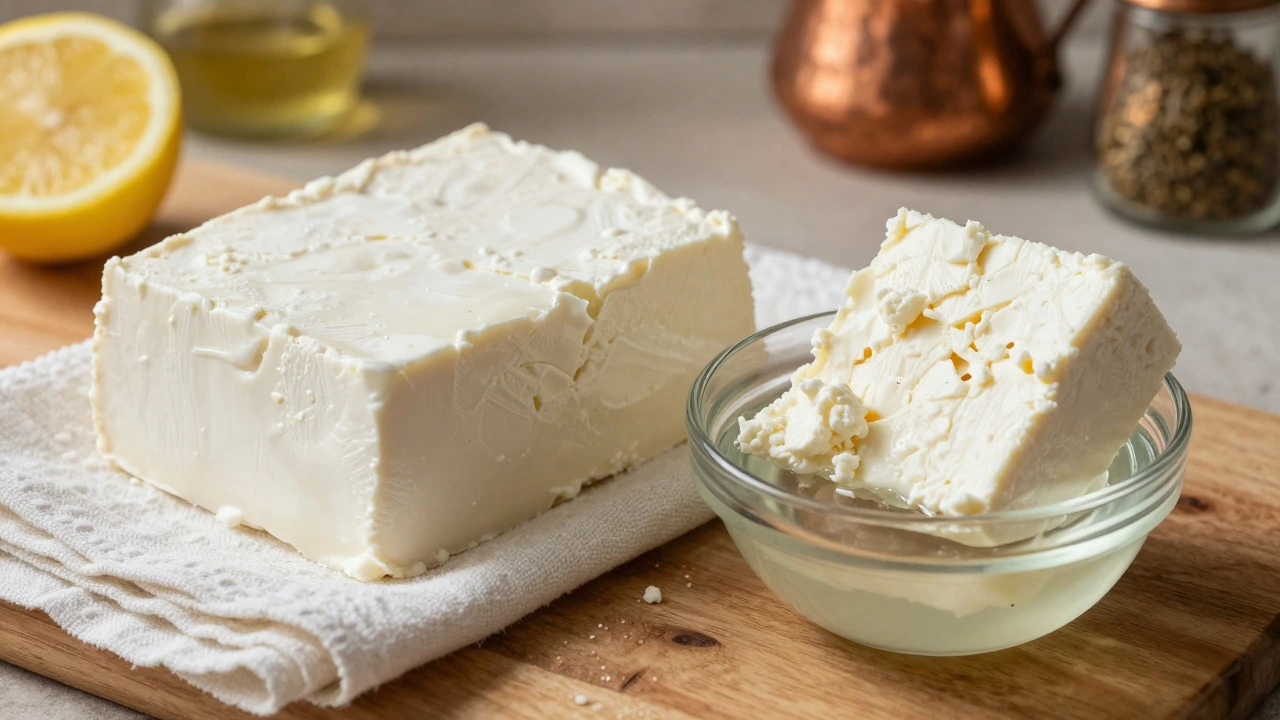
Have you ever stood in the dairy aisle, staring at a block of white cheese, wondering if you could swap Feta for Paneer in your curry? It’s a common dilemma, especially when you’re craving that creamy texture but only have one type on hand. The short answer is no-they are not the same thing. While they might look similar from a distance, both being fresh white cheeses, their flavors, textures, and culinary roles are worlds apart.
As someone who spends a lot of time in the kitchen here in Mumbai, I’ve seen this confusion happen more than once. You try to use salty, crumbly Greek cheese in a rich Korma, and suddenly your dish tastes like a salad instead of a curry. Or worse, you try to melt paneer into a pasta sauce, and it just sits there, stubborn and unmelted. Understanding the distinction isn't just about semantics; it's about getting your recipes right.
The Fundamental Difference: Acid vs. Rennet
To understand why these two cheeses behave so differently, we need to look at how they are made. This is where the science gets interesting, but don’t worry, it’s simple enough to follow.
Paneer is a fresh, unaged Indian cheese made by curdling milk with an acid. Typically, you heat full-fat milk and add lemon juice or vinegar. The acid causes the milk proteins (casein) to separate from the liquid (whey). You strain out the whey, press the solids, and you have paneer. Because it uses acid, the curds remain soft and moist. It doesn’t age, so it stays mild and bland, acting as a blank canvas for spices.
Feta, on the other hand, is a brined cheese originating from Greece, traditionally made from sheep’s milk or a mix of sheep and goat milk. Unlike paneer, feta often involves rennet (an enzyme) to help coagulate the milk, though some modern versions use acid too. The key difference comes after curdling: feta is cut into cubes and soaked in saltwater brine. This brining process preserves the cheese and gives it that signature tangy, salty kick. It is technically an aged cheese, even if it’s considered "fresh" compared to cheddar or parmesan.
Texture and Taste: What Happens in Your Mouth?
If you were to blindfold someone and feed them a cube of each, they’d know immediately which was which. Here is the breakdown:
| Feature | Paneer | Feta |
|---|---|---|
| Taste Profile | Mild, milky, neutral | Salty, tangy, sharp |
| Texture | Firm, smooth, rubbery when heated | Crumbly, moist, grainy |
| Melting Point | Does not melt (holds shape) | Semi-melts (softens but holds structure) |
| Milk Source | Cow or Buffalo milk | Sheep, Goat, or mixed |
| Storage | Refrigerator (wet cloth) | Submerged in Brine |
Paneer has a dense, spongy feel. When you bite into it, it offers slight resistance. Feta is brittle. If you try to slice a thick slab of feta like you would paneer, it will likely shatter. That crumbly nature makes it perfect for sprinkling over salads, while paneer’s firmness makes it ideal for cubing and tossing into stews without disintegrating.
Can You Substitute One for the Other?
This is the question everyone really wants answered. Can I use feta in my Palak Paneer? Can I put paneer in my Greek Salad? Let’s break down the scenarios.
Using Feta Instead of Paneer:
If you swap feta for paneer in an Indian curry, be prepared for a shock. Feta is incredibly salty. If you add it to a dish that already has salted tomatoes and onions, your meal will become inedible unless you rinse the feta thoroughly first. Even then, the tanginess of the feta clashes with the warm, earthy spices like garam masala and turmeric. However, in fusion dishes-like a spicy tomato pasta or a Mediterranean-style flatbread-feta can work surprisingly well because its acidity cuts through the richness.
Using Paneer Instead of Feta:
Trying to replace feta with paneer is harder because paneer lacks flavor. In a Greek salad, the feta provides the main punch of taste. If you use paneer, you’ll have bland white cubes floating among crisp cucumbers and olives. To make this work, you’d need to marinate the paneer in olive oil, lemon juice, oregano, and plenty of salt before adding it to the salad. It won’t be authentic, but it’s edible.
How to Make Perfect Homemade Paneer
Since feta and paneer aren’t interchangeable, knowing how to make high-quality paneer at home is a superpower for any Indian cook. Store-bought paneer can sometimes be too hard or dry. Fresh homemade paneer is soft, tender, and absorbs sauces beautifully.
- Choose the Right Milk: Use full-fat cow’s milk or buffalo milk. Skimmed milk won’t yield enough curds. For every liter of milk, expect about 150-200 grams of paneer.
- Boil Vigorously: Heat the milk in a heavy-bottomed pan until it reaches a rolling boil. Stir occasionally to prevent burning at the bottom.
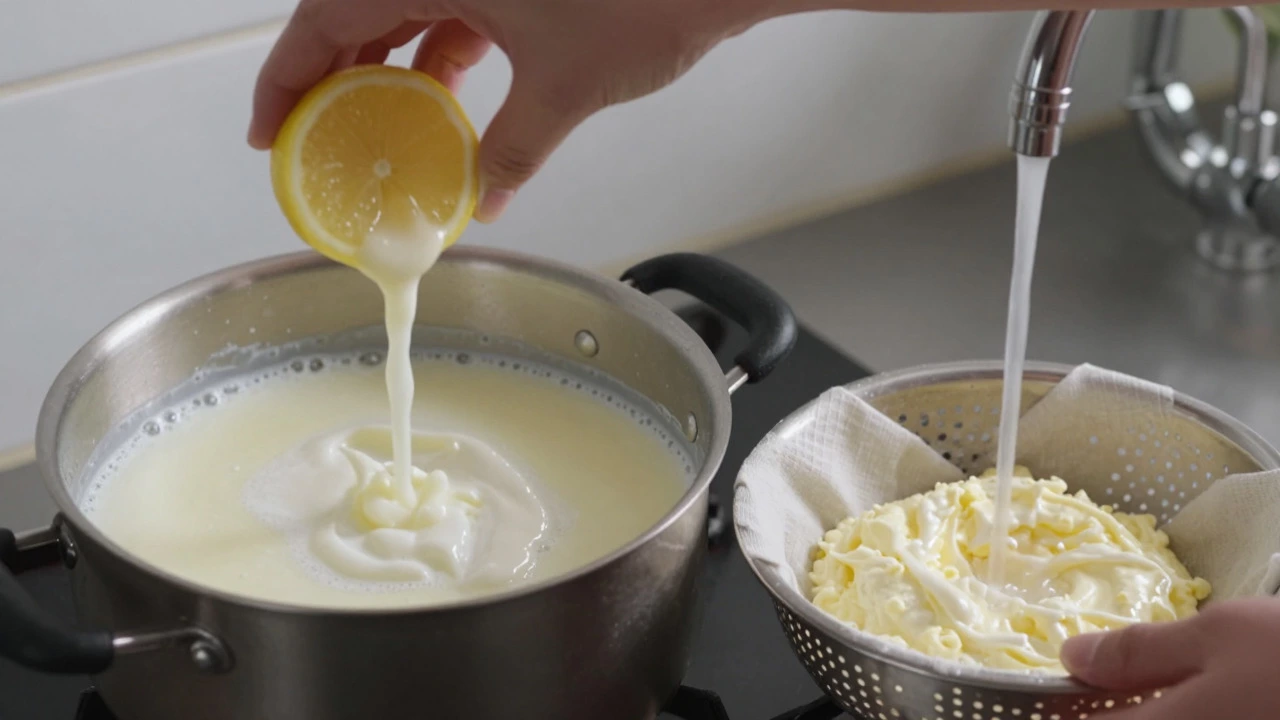
- Add the Acid: Turn off the heat. Wait for 30 seconds. Add lemon juice or white vinegar slowly, one tablespoon at a time, while stirring gently. You should see the milk split into white curds and greenish-yellow whey within minutes.
- Strain Immediately: Line a colander with a muslin cloth or cheesecloth. Pour the mixture into it. Rinse the curds under cold running water to stop the cooking process and remove the sour taste of the lemon.
- Press Lightly: Gather the corners of the cloth and tie them. Hang the bundle for 15-20 minutes for soft paneer (great for sautéing). For firmer paneer (good for grilling), place a weight on top for an hour.
A pro tip from my own kitchen: Don’t over-press your paneer if you plan to use it in a gravy-based dish like Butter Paneer. Over-pressing squeezes out all the moisture, making the cheese tough and chewy. Soft paneer melts into the sauce better.
Culinary Applications: Where Each Shines
Understanding the strengths of each cheese helps you decide what to cook. Paneer is the backbone of North Indian vegetarian cuisine. Its ability to hold its shape when fried or boiled makes it perfect for:
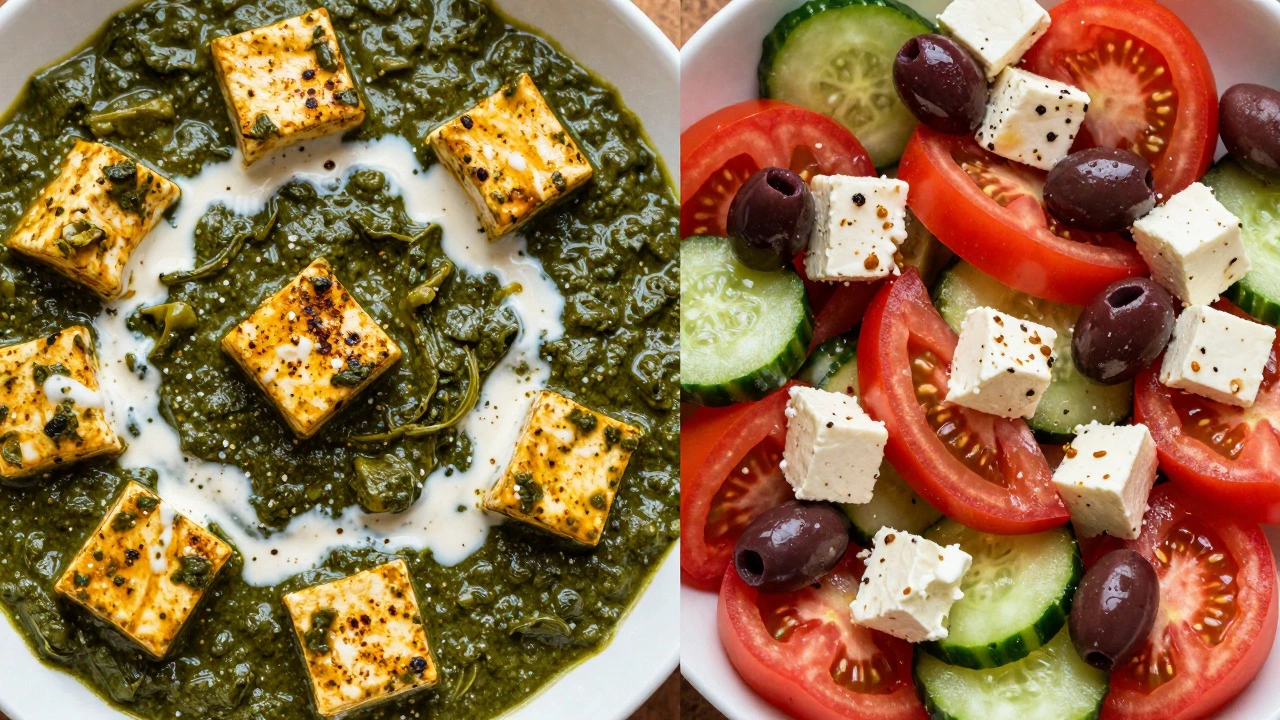
- Palak Paneer: Cubes of paneer simmered in a puree of spinach and spices.
- Paneer Tikka: Marinated cubes grilled in a tandoor until charred and smoky.
- Kadai Paneer: A spicy stir-fry with bell peppers and onions.
Feta, conversely, thrives in applications where its saltiness and crumble factor are assets. It is rarely cooked into a thick stew in traditional Greek cuisine. Instead, you’ll find it in:
- Greek Salads: Crumbled over tomatoes, cucumbers, and olives.
- Baked Dishes: Mixed into spanakopita (spinach pie) or baked potatoes.
- Breakfast: Spread on toast with honey or served with figs.
Nutritional Comparison
If you are watching your intake, the choice matters. Both are good sources of protein and calcium, but their fat and sodium profiles differ significantly.
Paneer is calorie-dense because it is made from full-fat milk. A 100g serving can contain around 265 calories and 21g of fat. However, it is very low in sodium, usually less than 1mg per 100g, unless you add salt during cooking.
Feta varies by brand and milk source, but generally, it has fewer calories (around 210 per 100g) and slightly less fat. The big difference is sodium. Because it is stored in brine, feta can contain up to 1,100mg of sodium per 100g. If you have high blood pressure, you might want to rinse your feta before eating it to reduce the salt content.
Common Mistakes to Avoid
Even experienced cooks make errors when handling these cheeses. Here are three pitfalls to watch out for:
- Adding Acid Too Fast: When making paneer, if you dump all the lemon juice in at once, the curds become tight and rubbery. Slow addition ensures tender curds.
- Storing Paneer Dry: Never store paneer uncovered in the fridge. It will dry out and turn into a rock. Keep it submerged in cold water or wrapped in a damp cloth, changing the water daily.
- Confusing Ricotta with Paneer: Some people think ricotta is a substitute for paneer. It’s not. Ricotta is a whey cheese with a grainy, spreadable texture. Paneer is a curd cheese with a solid, sliceable texture. They do not swap well.
Final Thoughts on Choosing the Right Cheese
So, is feta cheese paneer? Definitely not. They are distinct products with unique histories, production methods, and flavor profiles. Paneer is the humble, adaptable hero of Indian kitchens, soaking up every spice you throw at it. Feta is the bold, assertive star of Mediterranean plates, bringing its own personality to the table.
Knowing the difference saves you from culinary disasters. Next time you’re planning a meal, ask yourself: Do I need a neutral base for my spices (paneer), or do I want a salty, tangy accent (feta)? Once you nail that decision, your dishes will taste exactly as intended.
Can I use feta cheese in Palak Paneer?
It is not recommended. Feta is much saltier and tangier than paneer. Using it will overpower the delicate spinach flavor and make the dish excessively salty. If you must use it, rinse the feta thoroughly in water first and reduce the salt in the recipe, but the texture will still be different.
Why does my homemade paneer turn out hard?
Hard paneer is usually caused by pressing it for too long or using low-fat milk. Full-fat milk creates softer curds. Additionally, if you press the paneer under heavy weight for more than an hour, it loses moisture and becomes dense and rubbery. For soft paneer, hang it for just 15-20 minutes.
Does paneer melt like mozzarella?
No, paneer does not melt. Because it is an acid-coagulated cheese, the protein bonds are strong and do not break down easily with heat. This is why paneer holds its shape in curries and grills. If you want a melting cheese for Indian breads, use processed cheese slices or mozzarella.
What is the best way to store feta cheese?
Feta should always be stored submerged in its brine solution in an airtight container in the refrigerator. If you buy a block without brine, create your own by dissolving 1 tablespoon of salt in 1 cup of water. Change the brine every week to keep the cheese fresh for up to a month.
Can I make paneer from soy milk?
Yes, you can make a vegan version of paneer using unsweetened, unflavored soy milk. The process is identical: boil the soy milk and add lemon juice or vinegar. The yield might be slightly lower, and the texture may be a bit more fragile, but it works well for most curries.